
One Bowl 30 Minute Butter Cookies
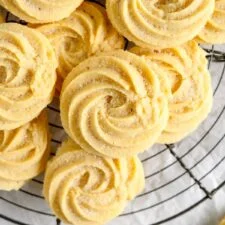
These tender, buttery cookies are piped into rosettes and baked until just set, with lightly golden edges. They come together in one bowl and can be baked straight away or prepared ahead and chilled or frozen.
Ingredients
- 200 gsalted butter, at room temperature
- 70 gicing sugar, sifted if lumpy
- 1/2 tspvanilla bean paste or vanilla extract
- 210 gplain flour, sifted if lumpy
- 30 gcornflour
- 20 gdouble cream or milk, at room temperature
- To finish, optionalgranulated sugar
Instructions
- 1
Heat the oven
Preheat the oven to 165°C (325°F) and line a baking sheet with baking parchment.
- 2
Prepare the piping bag
Fit a large, sturdy piping bag with a large open star nozzle of your choice; the original recipe uses an Ateco #827.
- 3
Whip butter and sugar
In a medium bowl, use an electric hand mixer, or use a stand mixer with the paddle attachment, to beat the butter, icing sugar and vanilla on medium-high speed until light and fluffy. Stop once or twice to scrape down the bowl so everything mixes evenly.
- 4
Mix the dough
Add the plain flour and cornflour and mix just until incorporated. Add the double cream and mix again to combine.
- 5
Fill the bag
Transfer the mixture to the piping bag. To make filling easier, stand the bag in a glass jar or deli container and fold its edges over the rim; use a bench scraper or similar tool to push the mixture towards the nozzle. Secure the open end with a clip if you like.
- 6
Secure the paper
If you wish, use a tiny dab of dough at each corner to hold the baking parchment in place while piping.
- 7
Pipe the rosettes
Pipe the cookies, leaving room for them to spread; the original recipe makes three rows of five. Hold the bag vertically and apply even pressure as you pipe a circle that loops back onto itself, finishing with a small flick of the wrist. Aim for rosettes about 4.5 cm across, though the nozzle affects their size.
- 8
Finish piping
Continue with the remaining mixture, leaving a little space between cookies. If a rosette does not look right, scrape it back into the piping bag and pipe it again.
- 9
Bake the cookies
Sprinkle with granulated sugar if using, then bake for 13–14 minutes, until set and lightly golden at the edges. For a crunchier, more golden cookie, bake slightly longer.
- 10
Add more sugar
Remove the cookies from the oven. If you sugared them before baking, sprinkle them with another coating while they are hot.
- 11
Cool the cookies
Leave the cookies on the baking sheet for 15–20 minutes, then move them to a wire rack to cool completely.
- 12
Store in a tin
Keep the cooled butter cookies in an airtight container at room temperature for up to a week.
What are butter cookies?
Butter cookies are a simple, rich biscuit made with butter, sugar and flour. This American-style version is piped into rosettes, giving it a decorative shape and a tender, delicate texture.
The combination of icing sugar and cornflour helps make the crumb fine, while a little cream keeps the dough workable enough to pipe.
Nutrition and macros by portion
The nutrition label shows one serving as written: 177 calories, 2g protein, 17g carbs, 11g fat.
| Portion | Adjustment | kcal | Protein | Carbs | Fat |
|---|---|---|---|---|---|
| Lighter | Smaller rosettes | 124 kcal | 1g | 12g | 8g |
| This serving | As written | 177 kcal | 2g | 17g | 11g |
| Hungry | Larger portion | 266 kcal | 2g | 26g | 17g |
Most of the carbohydrates come from the flour, icing sugar and cornflour, while butter supplies most of the fat. There is relatively little protein, mainly from the flour and butter. Pair a cookie or two with fruit and yoghurt for a more varied snack.
Choosing the ingredients
Butter: Use salted butter at room temperature so it can whip smoothly with the sugar. If it is too cold, it will be harder to beat and pipe.
Flour and cornflour: Plain flour forms the structure, while cornflour contributes to the tender texture. Sift either one if it has lumps.
Cream: Double cream or milk loosens the mixture. Keep it at room temperature so it blends evenly into the dough.
Getting the dough ready
Whipping: Beat the butter, icing sugar and vanilla until the mixture looks pale and fluffy, scraping down the bowl as needed. Mix the flour and cornflour in only until incorporated to avoid overworking the dough.
Filling: Stand the piping bag in a jar and fold its edges over the rim to keep it open. Push the mixture towards the nozzle so the bag is ready to pipe evenly.
Piping neat rosettes
Nozzle: A large open star nozzle gives the cookies their ridged edges. The exact size and look will vary with the nozzle you choose.
Pressure: Hold the bag upright and apply steady pressure as you make each circle. Finish with a small flick, and scrape up any rosette you want to pipe again.
Knowing when they are done
Look for cookies that are set with lightly golden edges after 13–14 minutes. They should remain tender rather than deeply browned.
For a crunchier, more golden result, leave them in the oven a little longer and keep an eye on the edges.
Cooling and finishing
Sugar: Granulated sugar is optional before baking. A second light coating can be added as soon as the cookies come out of the oven.
Cooling: Let the cookies rest on the baking sheet for 15–20 minutes before moving them to a wire rack. They are delicate while hot, so give them time to firm up.
Serving ideas
Serve these cookies with tea or coffee, or add them to a biscuit plate alongside other small treats. Their buttery flavour also works well with a simple glaze or icing.
For a more decorative finish, dip half of each cooled cookie in chocolate, as suggested in the recipe description.
Recipe notes & tips
- Bring the butter and cream to room temperature so they combine smoothly.
- Scrape down the bowl during whipping to catch any butter or sugar clinging to the sides.
- Use a large, sturdy piping bag to make piping the dough easier.
- Leave space between rosettes because the cookies spread as they bake.
- Use a small dab of dough under each corner of the parchment to stop it shifting.
- Let the cookies cool on the baking sheet before moving them, as they are fragile while hot.
Variations
- Chocolate dip: Dip half of each fully cooled cookie in melted chocolate.
- Glaze: Add your favourite glaze or icing once the cookies have cooled.
- Sugar finish: Sprinkle with granulated sugar before baking and again while hot.
- Vanilla choice: Use vanilla extract in place of vanilla bean paste.
- Cream choice: Use milk instead of double cream to mix the dough.
Common mistakes to avoid
- Cold butter: It is difficult to whip smoothly; let it soften to room temperature first.
- Overmixing the flour: This can make the dough less tender; stop once the dry ingredients are incorporated.
- Crowded baking sheet: The cookies need room to spread; leave a little space between rosettes.
- Uneven piping: Hold the bag vertically and use steady pressure for consistent shapes.
- Moving them too soon: Hot cookies can break; leave them on the tray for 15–20 minutes.
- Baking until deeply brown: The recipe aims for lightly golden edges; extend the bake only slightly for a crunchier finish.
How to store
Store completely cooled cookies in an airtight container at room temperature for up to a week. The recipe description also notes that the piped dough can be chilled or frozen until you are ready to bake it.
Frequently asked questions
Can I make the dough ahead?
Yes. The recipe description says the piped dough can be chilled or frozen until you are ready to bake the cookies.
How big should I pipe the rosettes?
Aim for rosettes about 4.5 cm across. Their size will vary with the piping nozzle.
What nozzle should I use?
Use a large open star nozzle. The recipe uses an Ateco #827, but another large open star tip will work.
Can I use milk instead of double cream?
Yes. The recipe allows either double cream or milk, and both should be at room temperature.
How do I know when the cookies are baked?
After 13–14 minutes, they should be set and lightly golden around the edges. Bake slightly longer if you prefer a crunchier, more golden cookie.
Why are my cookies difficult to pipe?
Check that the butter is at room temperature and that you have added the cream. Use a sturdy bag with a large open star nozzle, and push the dough towards the tip as you fill it.
Cook it from the original
This recipe comes from cloudykitchen.com. Their page has the author’s own photos, notes and tips — the best place to cook it from.
Open the recipe on cloudykitchen.com