
Chili Garlic Noodles
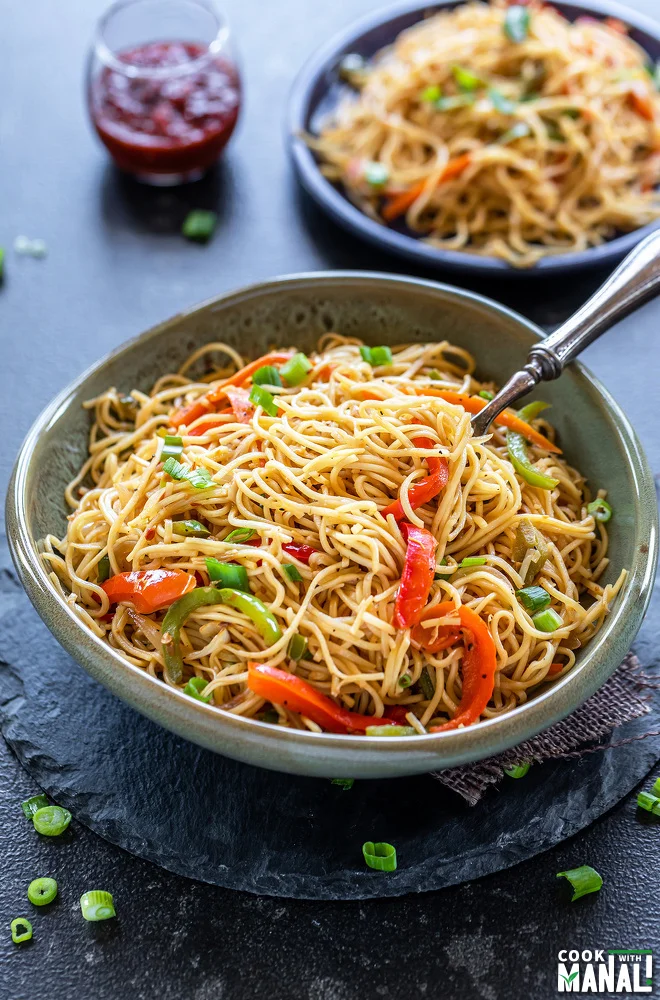
These quick Indo-Chinese noodles combine garlic, chilli, soy and rice vinegar with a generous mix of crisp vegetables. They make a colourful vegan weeknight meal, with the sauce and vegetables coming together in one pan.
Ingredients
- 400 gnoodles (thin noodles recommended)
- 2 tablespoons (30 ml)oil (avocado oil recommended)
- 2 tablespoonsgrated garlic
- 1 largered onion, thinly sliced
- 1jalapeño, chopped, or 2 green chillies
- 1 mediumred pepper, thinly sliced
- 1 mediumgreen pepper, thinly sliced
- 2 mediumcarrots, thinly sliced
- 4 tablespoons (60 ml)soy sauce
- 1 tablespoon (15 ml)hot sauce (sambal oelek recommended)
- 1.5 tablespoons (22 ml)rice vinegar
- 1 teaspoonsugar (optional)
- 1/4 teaspoon, or to tasteblack pepper
- 1/4 teaspoon, or to tastesalt
- 1 teaspoon (5 ml)toasted sesame oil
- to tastespring onions, chopped, to garnish
Instructions
- 1
Prep and boil
Prepare and slice all the vegetables before you begin, as the cooking is done over high heat. Boil the noodles according to the packet instructions; thin noodles may take just 3–4 minutes. Drain in a colander, toss with 1/2 tablespoon oil to help prevent sticking, and set aside.
- 2
Fry the garlic
Heat 2 tablespoons oil in a pan over medium-high heat. When hot, add the grated garlic and cook over high heat for about 30 seconds, until it starts to change colour.
- 3
Cook onion and chilli
Add the sliced onion and chopped jalapeño, or green chillies, and toss to combine. Cook for about 1–2 minutes, stirring often.
- 4
Add the vegetables
Add the sliced red pepper and carrots, mix, and cook over high heat for 2 minutes.
- 5
Mix the sauce
Reduce the heat and push the vegetables to one side of the pan. Add the soy sauce, hot sauce, rice vinegar, optional sugar, black pepper and salt, then mix well.
- 6
Toss the noodles
Add the boiled noodles and toss them with the sauce and vegetables. Use a fork and spoon or a pair of tongs to mix everything together, then cook for about another minute.
- 7
Finish and serve
Stir in the toasted sesame oil and turn off the heat. Garnish with chopped spring onions and serve warm with chilli paneer or gobi manchurian.
What are chili garlic noodles?
Chili garlic noodles are a stir-fried noodle dish built around garlic, chilli and a savoury, tangy sauce. This version is Indo-Chinese in style, drawing on the pairing of Chinese-inspired stir-frying with bold flavours popular in Indian Chinese cooking.
Thin noodles cook quickly and take on the sauce readily, while onion, peppers and carrots add colour and crunch. The combination makes a substantial, vegetable-packed meal without needing an animal-based ingredient.
Nutrition and macros by portion
The nutrition label shows one serving as written: 509 calories, 17g protein, 88g carbs, 10g fat.
| Portion | Adjustment | kcal | Protein | Carbs | Fat |
|---|---|---|---|---|---|
| Lighter | Use less cooking oil | 356 kcal | 12g | 62g | 7g |
| This serving | As written | 509 kcal | 17g | 88g | 10g |
| Hungry | Add another noodle portion | 764 kcal | 26g | 132g | 15g |
The noodles supply most of the carbohydrates, while the cooking oil and toasted sesame oil account for much of the fat. The noodles and vegetables contribute some protein, with soy sauce adding flavour and salt; serve with extra vegetables or a protein-rich side such as chilli paneer to make the plate more substantial.
Get everything ready first
High heat: Slice and measure the vegetables, sauces and seasonings before turning on the hob. The cooking moves quickly, so having each ingredient within reach helps prevent the garlic or vegetables from overcooking.
Noodles: Follow the packet timing rather than relying on a fixed cooking time; thin varieties can be ready in 3–4 minutes. Drain them well and toss with the stated 1/2 tablespoon oil so they are easier to separate in the pan.
Build the flavour in stages
Garlic: Give the grated garlic only about 30 seconds in the hot oil, stopping as soon as it begins to change colour. It can turn bitter if it browns too far.
Vegetables: Cook the onion and chilli first, then add the peppers and carrots. This sequence gives the onion a little longer while keeping the later additions lively rather than soft.
Keep the vegetables lively
Thin slices: Uniformly sliced vegetables cook quickly and are easy to mix through the noodles. Stir often, and use the stated short cooking times as a guide to retaining some bite.
Pan space: A roomy pan or wok makes it easier to toss the noodles without crushing the vegetables. If your pan is small, work carefully when combining everything so the sauce coats the noodles evenly.
Balance the sauce
Savoury and tangy: Soy sauce brings saltiness, while rice vinegar adds acidity and hot sauce supplies heat. The optional teaspoon of sugar rounds those flavours without making the noodles notably sweet.
Seasoning: Soy sauce already contributes salt, so taste before adding extra salt if you prefer a less salty result. The recipe gives black pepper and salt amounts as a starting point, with more or less to taste.
Finish with sesame oil
Late addition: Stir the toasted sesame oil in after the noodles have cooked with the sauce. Adding it at the end preserves its fragrant character, and switching off the heat keeps the finish from becoming too harsh.
Serving: Chopped spring onions add a fresh finish. These noodles are suggested alongside chilli paneer or gobi manchurian, or can be served on their own as a complete noodle meal.
Recipe notes & tips
- Slice the vegetables before cooking so they are ready to add as soon as needed.
- Check the noodles early and drain them as soon as they are just cooked.
- Drain the noodles thoroughly before tossing them with oil.
- Stir the garlic continuously and take care not to let it brown too much.
- Use tongs or a fork and spoon to distribute the sauce through the noodles.
- Taste before adding extra salt, as the soy sauce is already salty.
Variations
- Adjust the chilli: Use green chillies instead of jalapeño, or reduce the amount for a gentler heat.
- Change the hot sauce: Use sambal oelek as suggested, or another hot sauce you enjoy.
- Add more vegetables: Include another thinly sliced vegetable while keeping the quick cooking time in mind.
- Make it saucier: Increase the sauce ingredients proportionally if you prefer more coating on the noodles.
- Serve with a side: Pair with chilli paneer or gobi manchurian as suggested.
Common mistakes to avoid
- Starting without prep: The pan cooks quickly over high heat; slice and measure everything before heating the oil.
- Overcooking the noodles: They can become difficult to toss; check them at the packet's lower cooking time.
- Burning the garlic: It can turn bitter; cook it for about 30 seconds and remove it from the heat of the pan if it darkens quickly.
- Softening the vegetables too much: They lose their bite; follow the brief cooking times and stir often.
- Clumping the noodles: They stick together if left plain after draining; toss them with the stated 1/2 tablespoon oil.
- Oversalting the sauce: Soy sauce is already salty; taste the mixture before adding extra salt.
How to store
Refrigerate leftovers in a covered container and use within 3 days. Reheat in a pan until hot throughout, adding a small splash of water if the noodles have become dry.
Frequently asked questions
Can I use a different type of noodle?
Yes. Choose noodles that can be boiled and tossed in a stir-fry, and follow the cooking time on their packet.
How can I make the noodles less spicy?
Use less jalapeño or green chilli and reduce the hot sauce. You can add more to taste at the end if you want extra heat.
Are these noodles vegan?
The recipe is described as vegan. Check the noodle and sauce labels if you need to confirm that your particular products contain no animal-derived ingredients.
Can I prepare anything in advance?
You can slice the vegetables and measure the sauce ingredients before cooking. Keep them ready to hand, then boil the noodles and stir-fry everything close to serving time.
What can I serve with chili garlic noodles?
The recipe suggests serving them warm with chilli paneer or gobi manchurian. They can also be served on their own.
Cook it from the original
This recipe comes from cookwithmanali.com. Their page has the author’s own photos, notes and tips — the best place to cook it from.
Open the recipe on cookwithmanali.com