
Vegan Bolognese Sauce
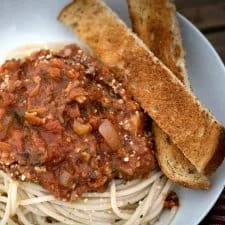
This vegan Bolognese combines cauliflower, mushrooms and walnuts for a savoury, hearty sauce simmered with tomatoes, wine and herbs. Make it when you want a richly flavoured pasta topping without meat.
Ingredients
- 240 g (2 cups)cauliflower, riced or finely chopped
- 75 g (1 cup)mushrooms, finely diced
- 30 g (1/4 cup)walnuts, finely chopped
- 30 ml (2 tbsp)low-sodium soy sauce
- 15 ml (1 tbsp)Italian seasoning
- 10 ml (2 tsp)paprika
- 1 mediumonion, finely diced
- 1 ribcelery, finely diced
- 1 largecarrot, shredded
- A few tablespoonsvegetable broth or water
- 4 clovesgarlic, minced
- 240 ml (1 cup)white wine
- 794 g (28 oz)San Marzano tomatoes
- 170 g (6 oz)tomato paste
- 240 ml (1 cup)unsweetened almond milk
- 15 g (1/4 cup)fresh basil, chopped
- 15 ml (1 tbsp)oregano
- 5 ml (1 tsp)rubbed sage
- 1.25 ml (1/4 tsp)salt
- 1.25 ml (1/4 tsp)pepper
- 1.25 ml (1/4 tsp)red pepper flakes
- 1.25 ml (1/4 tsp)nutmeg
Instructions
- 1
Mix the vegetables
Add the riced or finely chopped cauliflower to a large bowl. Mix in the diced mushrooms, walnuts, soy sauce, Italian seasoning and paprika.
- 2
Bake the mixture
Spread the mixture on a baking sheet lined with parchment paper. Bake at 175°C (350°F) for 30 minutes, stirring once or twice as it cooks.
- 3
Soften the vegetables
Cook the onion, celery and carrot in a few tablespoons of vegetable broth or water until softened. Stir in the garlic and cook for about 30 seconds, until fragrant.
- 4
Deglaze with wine
Pour in the wine and stir, scraping any stuck onion pieces from the bottom of the pan.
- 5
Add the tomatoes
Stir in the tomatoes, tomato paste and almond milk until combined.
- 6
Simmer the sauce
Mix in all the seasonings and simmer uncovered for 20–30 minutes to bring the flavours together.
- 7
Finish the Bolognese
Stir in the baked cauliflower mixture and keep simmering until the sauce thickens. Adjust the seasonings and serve over your favourite pasta.
What is vegan Bolognese?
Bolognese is a slow-simmered Italian-style meat sauce, commonly served with pasta. This plant-based version uses cauliflower, mushrooms and walnuts in place of minced meat.
Roasting the vegetable mixture before it goes into the sauce gives it a more concentrated, savoury flavour. Tomatoes, wine and herbs then bring the components together.
Nutrition and macros by portion
The nutrition label shows one serving as written: 240 calories, 7g protein, 36g carbs, 9g fat.
| Portion | Adjustment | kcal | Protein | Carbs | Fat |
|---|---|---|---|---|---|
| Lighter | Use less walnut | 168 kcal | 5g | 25g | 6g |
| This serving | As written | 240 kcal | 7g | 36g | 9g |
| Hungry | Serve a larger portion | 360 kcal | 11g | 54g | 14g |
The tomatoes, carrot and other vegetables provide most of the carbohydrates, while the walnuts and cooking wine contribute much of the fat and energy. Mushrooms, walnuts and soy sauce add some protein, though the sauce is not especially protein-rich. Serve it with pasta and vegetables, or choose a higher-protein pasta to make the meal more balanced.
Building the meat-like base
Cauliflower: Riced or finely chopped pieces give the mixture its bulk. Keep the pieces small and fairly even so they bake at a similar rate.
Mushrooms and walnuts: Mushrooms contribute savoury depth, while walnuts add a richer, more substantial bite. Finely chopping both helps them blend into the sauce.
Roast before simmering
Spread the cauliflower mixture across the lined tray rather than piling it up. Stir once or twice during the 30-minute bake so it cooks evenly.
The oven step concentrates the flavour before the mixture joins the sauce. The pieces should be cooked through and lightly dried, rather than wet and raw-looking.
Make the sauce base
Softened onion, celery and carrot form the aromatic base. Cook them in the broth or water until tender, then give the garlic only about 30 seconds to become fragrant.
Deglazing: Pour in the wine and scrape the bottom of the pan to release any stuck pieces. This also helps prevent them from catching as the sauce simmers.
Let the flavours come together
Simmer the tomato, paste, almond milk and seasonings uncovered for 20–30 minutes. The sauce should bubble gently; lower the heat if it is boiling hard.
Add the roasted mixture afterwards and simmer until the sauce thickens. Since the recipe gives no fixed finishing time, use the consistency of the sauce as your cue.
Serve it with pasta
Spoon the sauce over your favourite pasta, or serve it with another pasta alternative that suits your meal. A green salad or simply cooked vegetables make a fresh side.
If the sauce becomes thicker than you like, loosen it with a little water while reheating or just before serving.
Recipe notes & tips
- Chop the mushrooms and walnuts finely so they mix evenly with the cauliflower.
- Keep the vegetable mixture in a single layer on the baking sheet for more even baking.
- Scrape the pan thoroughly when adding the wine to lift the browned bits.
- Simmer the sauce gently and uncovered so it can reduce without splattering too much.
- Taste the sauce after adding the roasted mixture and adjust the seasonings before serving.
Variations
- Add lentils: Stir in cooked lentils for a more substantial texture.
- Change the herbs: Use fresh oregano in place of dried, adjusting the amount to taste.
- Turn up the heat: Add extra red pepper flakes for a spicier sauce.
- Use vegetable stock: Choose stock instead of water to cook the onion, celery and carrot.
- Finish with basil: Add some of the chopped basil just before serving for a fresher flavour.
Common mistakes to avoid
- Crowding the tray: The mixture may bake unevenly; spread it out in a single layer.
- Skipping the stirring: The edges can cook faster; stir once or twice during the 30-minute bake.
- Burning the garlic: It needs only about 30 seconds; add the wine promptly once fragrant.
- Leaving the pan unscraped: Stuck onion can remain on the base; loosen it with the wine.
- Simmering too hard: The sauce can catch or splatter; keep it at a gentle simmer.
How to store
Cool the sauce and refrigerate it in an airtight container for up to 3 days. Reheat gently in a saucepan, stirring occasionally, and add a splash of water if it has thickened. Freeze for up to 3 months and thaw in the fridge before reheating.
Frequently asked questions
Can I make the sauce ahead?
Yes. Prepare the sauce and refrigerate it in an airtight container, then reheat gently before serving. Add a little water if it has become too thick.
Can I use fresh cauliflower?
Yes. Finely chop fresh cauliflower to about the same size as riced cauliflower, then follow the same baking step.
What can I use instead of white wine?
Use water or vegetable stock to deglaze the pan if you prefer not to cook with wine. Scrape up the browned pieces as you stir.
How do I know when the sauce is thick enough?
After adding the baked mixture, simmer until the sauce looks cohesive and holds on a spoon. The recipe does not specify a finishing time, so check it as it cooks.
Is this sauce gluten-free?
The listed ingredients are intended to be gluten-free, but check the labels on the soy sauce, seasonings and other packaged ingredients. Serve it with pasta labelled gluten-free if needed.
Cook it from the original
This recipe comes from brandnewvegan.com. Their page has the author’s own photos, notes and tips — the best place to cook it from.
Open the recipe on brandnewvegan.com