
Tsukemen : Dipping Ramen Noodles
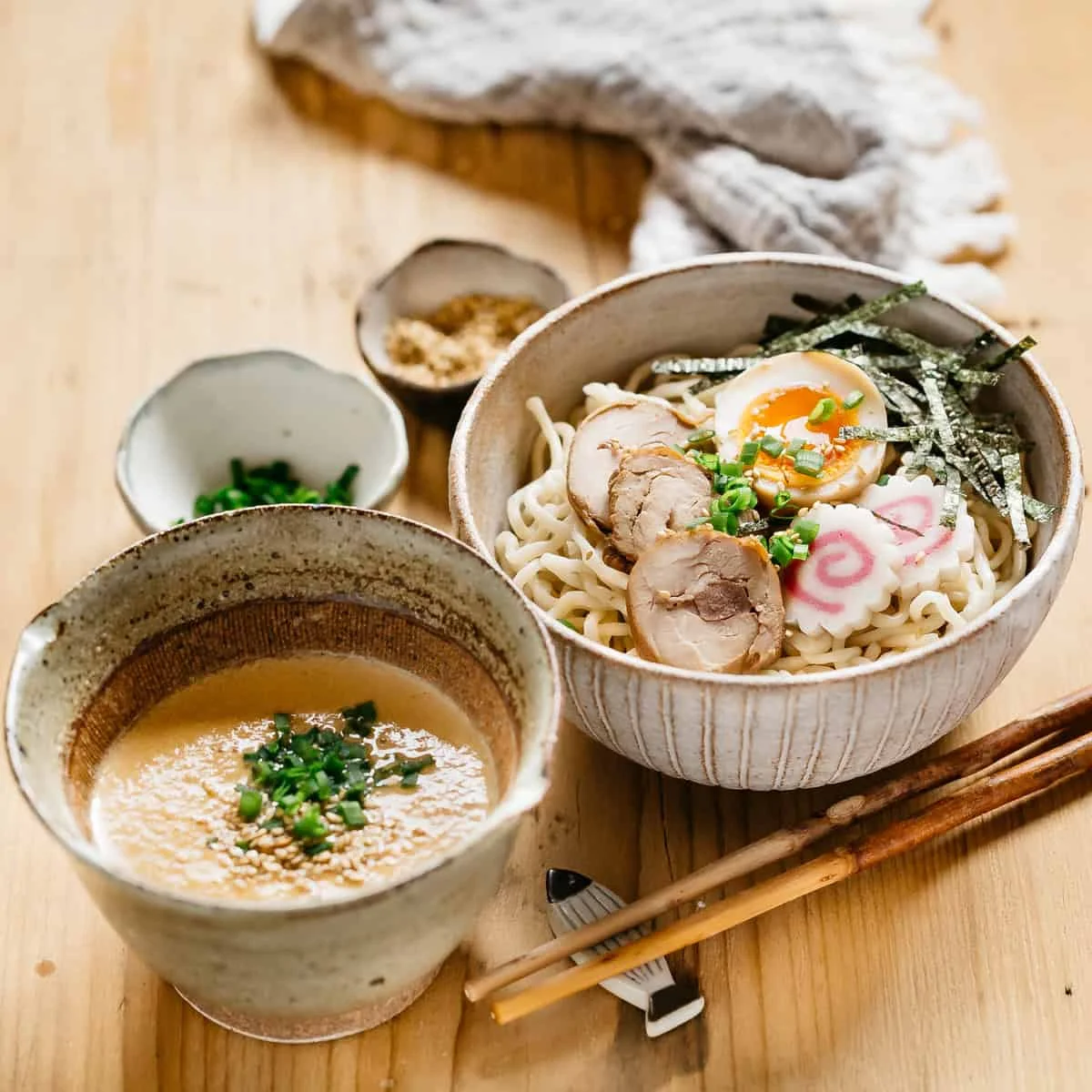
Tsukemen is a Japanese dipping ramen: chilled noodles are served separately from a warm, savoury dipping sauce. This quick version pairs fresh ramen with sesame-mentsuyu sauce and classic toppings including chashu, ajitama and narutomaki.
Ingredients
- 2 portionsfresh ramen noodles
- 6 sliceschashu
- 1ajitama ramen egg
- 6 slicesnarutomaki fish cake
- 15 mlfinely chopped spring onions
- 30 mlshredded nori
- 7.5 mltoasted sesame seeds
- 30 mltoasted sesame paste
- 30 mlmentsuyu
- 60 ml (¼ cup)water
Instructions
- 1
Boil the water
Bring plenty of water, not included in the ingredient list, to the boil in a large saucepan.
- 2
Cook the noodles
Add the fresh ramen noodles and cook for about 3 minutes.
- 3
Drain the noodles
Turn off the heat and drain the noodles.
- 4
Rinse the noodles
Rinse them under cold running water to stop the cooking and wash away excess starch.
- 5
Arrange the noodles
Put the cooked noodles in a ramen bowl.
- 6
Add the toppings
Top the noodles with sliced chashu, narutomaki and the ajitama ramen egg.
- 7
Garnish the noodles
Sprinkle over the chopped spring onions and toasted sesame seeds.
- 8
Grind the sesame
Put the toasted sesame paste in a Japanese mortar.
- 9
Warm the mentsuyu
Mix the mentsuyu with the water in a small saucepan and heat over a medium heat.
- 10
Blend the sauce
Gradually add the hot mentsuyu mixture to the sesame paste while grinding it.
- 11
Heat the sauce
Transfer the mixture to a small saucepan and warm it over a medium heat.
- 12
Serve the tsukemen
When the sauce has boiled, turn off the heat and pour it into a bowl. Serve it alongside the bowl of noodles.
What is tsukemen?
Tsukemen is a Japanese ramen style in which the noodles and dipping broth are served separately. Rather than sitting in the soup, each mouthful of noodles is dipped into the concentrated sauce.
This version keeps the noodles cool after cooking and builds a quick sesame-rich dip from mentsuyu and toasted sesame paste. Chashu, ajitama and narutomaki make it feel like a ramen-shop bowl at home.
Nutrition and macros by portion
The nutrition label shows one serving as written: 179 calories, 9g protein, 9g carbs, 12g fat.
| Portion | Adjustment | kcal | Protein | Carbs | Fat |
|---|---|---|---|---|---|
| Lighter | Use less sesame paste | 125 kcal | 6g | 6g | 8g |
| This serving | As written | 179 kcal | 9g | 9g | 12g |
| Hungry | Add another noodle portion | 269 kcal | 14g | 14g | 18g |
The noodles provide most of the carbohydrate, while sesame paste and seeds contribute much of the fat. Chashu, the egg and fish cake provide protein alongside the noodles. For a more balanced plate, add a side of vegetables such as cucumber or greens.
Why the sesame sauce works
Sesame paste: Its thick, nutty texture gives the dipping sauce body. Grinding in the warm mentsuyu gradually helps the paste loosen into a smoother mixture.
Mentsuyu: This Japanese soup base provides the savoury seasoning. Diluting it with water makes a sauce suitable for dipping rather than serving as a concentrated paste.
Get the noodles right
Cooking time: Fresh ramen cooks quickly, so start checking at about 3 minutes and follow the packet guidance if it differs. Drain as soon as the noodles are cooked to your preferred bite.
Cold rinse: Rinsing under running cold water stops the cooking and removes excess starch. Drain them well so they do not water down the dipping sauce.
Build the toppings
Chashu and egg: These bring savoury richness to the noodle bowl, while the narutomaki adds a mild fish-cake topping. Arrange them over the noodles so they are easy to pick up between dips.
Finishing touches: Spring onions and sesame seeds add freshness and a little texture. Keep the shredded nori ready as a topping or serve it alongside the bowl.
Serve sauce and noodles separately
The defining feature of tsukemen is the separate dipping bowl. Keep the sauce warm and the rinsed noodles in their own bowl, then dip a small amount of noodles for each bite.
If the sauce thickens while standing, stir it before serving. Avoid pouring it over the noodles, since that changes the dipping style and can make the noodles less distinct.
What to serve alongside
The noodles and toppings make a substantial bowl on their own, but a simple side of lightly dressed greens or cucumber can add a fresh contrast. Serve any extra nori at the table for sprinkling over the noodles.
Set out the dipping sauce while it is warm and serve the noodles promptly after rinsing and draining.
Recipe notes & tips
- Have the toppings ready before cooking, as fresh ramen takes only a few minutes.
- Rinse the noodles thoroughly under cold running water to stop them cooking.
- Drain the noodles well after rinsing so they do not dilute the dip.
- Add the warm mentsuyu mixture to the sesame paste gradually while grinding.
- Serve the sauce and noodles in separate bowls for dipping.
Variations
- Add chilli: Stir chilli oil into the dipping sauce for a hotter finish.
- Add vegetables: Serve with blanched greens or sliced cucumber for a fresh contrast.
- Swap the protein: Use cooked chicken in place of the chashu.
- Add garlic: Mix a little finely grated garlic into the sauce for a sharper savoury note.
- Use extra nori: Add more shredded nori over the noodles for a stronger seaweed flavour.
Common mistakes to avoid
- Overcooking the noodles: They can turn soft; check them around the 3-minute mark.
- Skipping the cold rinse: The noodles keep cooking; rinse them under cold running water after draining.
- Leaving excess water on the noodles: It can thin the dip; drain them thoroughly.
- Adding all the mentsuyu at once: The sesame paste may not blend smoothly; pour it in gradually while grinding.
- Serving the sauce over the noodles: This loses the dipping style; keep the sauce in a separate bowl.
How to store
For the best texture, serve the noodles and sauce as soon as they are prepared. If needed, refrigerate the noodles and sauce separately in covered containers and use within 1–2 days; reheat the sauce gently in a saucepan and serve the noodles cold.
Frequently asked questions
Can I use dried ramen noodles?
Yes. Cook them according to the packet instructions, then rinse under cold running water and drain well.
Can I serve the sauce cold?
This method heats the dipping sauce before serving. You can let it cool if you prefer, though the recipe is designed to serve it warm.
What is mentsuyu?
Mentsuyu is a Japanese seasoning base used for noodle soups and dipping sauces. It is diluted with water here before being mixed into the sesame paste.
What can I use instead of a Japanese mortar?
Use a small bowl and a sturdy spoon or pestle to work the warm mentsuyu mixture gradually into the sesame paste.
How do I know the noodles are ready?
The recipe gives about 3 minutes for fresh ramen. Check the packet and taste a strand so the noodles are cooked but still pleasantly firm.
Cook it from the original
This recipe comes from chopstickchronicles.com. Their page has the author’s own photos, notes and tips — the best place to cook it from.
Open the recipe on chopstickchronicles.com