
Unagi Sushi 鰻寿司
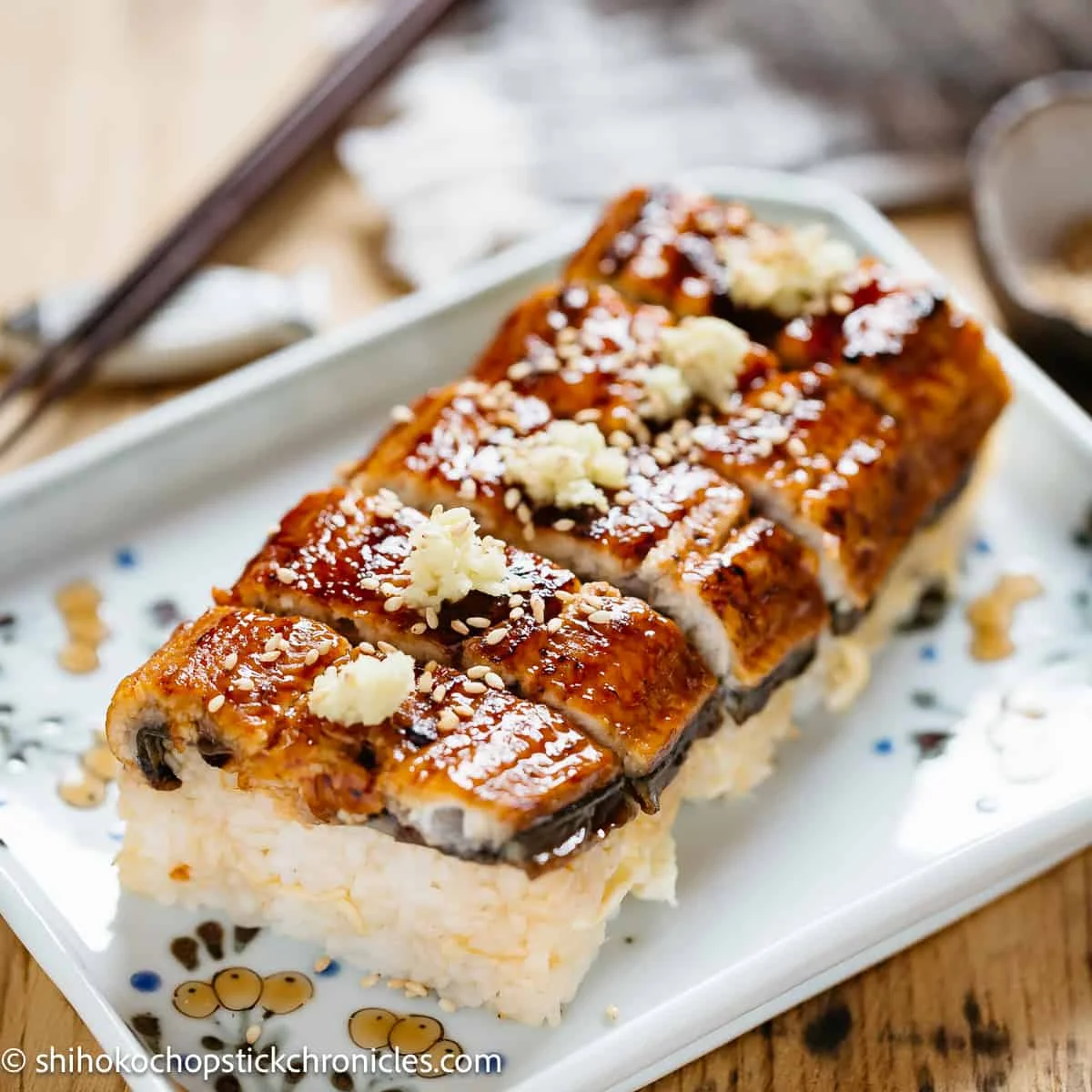
Unagi sushi is a pressed sushi made with sweet-savoury grilled eel, seasoned rice and a layer of thin egg strips. An oshibako mould gives it neat slices, and the method is manageable at home with a sharp knife and gentle pressure.
Ingredients
- 1frozen unagi kabayaki
- 400 g (2 cups)sushi rice
- 5 ml (1 tsp)grated ginger (optional)
- 2.5 ml (½ tsp)roasted sesame seeds (optional)
- 15 ml (1 tbsp)unagi sauce
Instructions
- 1
Prepare the ingredients
Cook the sushi rice, make kinshi tamago (thin egg strips), and cut the unagi kabayaki to fit your sushi press mould.
- 2
Line the mould
Line the oshibako, or wooden mould, with plastic wrap or parchment paper so the rice does not stick.
- 3
Add the eel
Place a layer of unagi kabayaki fillet in the bottom of the prepared mould, with the skin facing upwards.
- 4
Layer the rice
Spread an even layer of sushi rice over the eel and press gently so it is packed together.
- 5
Add egg and rice
Arrange the egg strips evenly over the rice, then add another even layer of sushi rice.
- 6
Close and press
Fold the plastic wrap over the ingredients, then set the mould’s wooden lid in place and press to compact the layers.
- 7
Slice and serve
Slice the sushi with a sharp knife and drizzle with unagi sauce to serve.
What is unagi sushi?
Unagi means freshwater eel, often served grilled and glazed as kabayaki. Pressed sushi, called oshizushi, is associated with Japan’s Kansai region, where sushi is compacted in a wooden mould rather than shaped by hand.
This version layers eel, rice and thin egg strips for a tidy, savoury-sweet bite. The mould helps hold the layers together, making it easier to cut and serve.
Nutrition and macros by portion
The nutrition label shows one serving as written: 341 calories, 13g protein, 148g carbs, 2g fat.
| Portion | Adjustment | kcal | Protein | Carbs | Fat |
|---|---|---|---|---|---|
| Lighter | Smaller rice portion | 239 kcal | 9g | 104g | 1g |
| This serving | As written | 341 kcal | 13g | 148g | 2g |
| Hungry | Larger sushi portion | 512 kcal | 20g | 222g | 3g |
The rice provides most of the carbohydrate, while the eel contributes protein and some fat; the sauce adds sweetness and extra carbohydrate. Pair a serving with a vegetable-rich side such as cucumber salad to add freshness and round out the plate.
Getting the rice ready
Rice first: cook the sushi rice before assembling so it is ready to layer. It should be tender and cohesive, but not so wet that it turns mushy under pressure.
Recipe note: the method calls for sushi rice but does not specify a seasoning step. The ingredient list also does not give an amount for the egg used to make kinshi tamago.
Working with kabayaki
Eel layer: thaw the frozen kabayaki according to its packaging before cutting it to fit the mould. Keep the glazed side intact and place the fillet skin-side up as directed.
The eel is already prepared as kabayaki, so this recipe uses it as a ready-to-layer ingredient rather than cooking eel from scratch.
Pressing without squashing
Gentle pressure: line the mould fully with plastic wrap or parchment, then compact the layers with the wooden lid. Press firmly enough for the rice to hold its shape, but avoid crushing the grains.
Even layers: spread the rice across the mould rather than piling it in the middle. This helps the finished block hold together and gives each slice a balanced mix.
Cutting neat slices
Sharp knife: use a clean, sharp blade to cut through the packed layers. If rice sticks to the blade, wipe it clean between cuts.
Serve soon after slicing, with unagi sauce drizzled over the top. Ginger and roasted sesame seeds are listed as optional accompaniments.
Serving ideas
For a simple meal, serve the pressed sushi with a light miso soup or a crisp cucumber salad. These sides bring freshness alongside the eel’s rich glaze and the rice’s soft texture.
Keep the accompaniments modest so the pressed sushi remains the centre of the plate.
Recipe notes & tips
- Thaw the eel before cutting it to fit the mould.
- Line the mould carefully so the packed sushi can be lifted out cleanly.
- Spread each rice layer evenly right to the edges.
- Press with steady, gentle force so the rice holds without becoming crushed.
- Wipe the knife between slices if rice begins to cling to it.
Variations
- Add ginger: include the optional grated ginger for a fresh, peppery note.
- Finish with sesame: scatter the optional roasted sesame seeds over the sliced sushi.
- Use extra sauce: add a little more unagi sauce at the table if you prefer a stronger glaze.
- Adjust the layers: make thinner rice layers for a more pronounced eel and egg flavour in each bite.
Common mistakes to avoid
- Skipping the lining: rice can stick to the mould; cover it with plastic wrap or parchment first.
- Uneven rice layers: the slices may not hold together consistently; spread rice to the edges.
- Overpressing: crushed rice can become dense; use firm but gentle pressure.
- Cutting with a blunt knife: the layers can drag apart; use a sharp blade and clean it between cuts.
- Using frozen eel directly: it can be difficult to cut and layer; thaw it according to its packaging first.
How to store
Refrigerate leftover sushi in an airtight container and eat within 1 day for the best texture. The rice will firm up when chilled; let it lose some of its chill before eating, rather than reheating, which can soften the layers unevenly.
Frequently asked questions
Do I need an oshibako mould?
It is the mould specified for this recipe and helps create compact, even slices. If you do not have one, use a small, straight-sided container lined with plastic wrap and press evenly.
Should I thaw the eel first?
Yes. Thaw the frozen unagi kabayaki according to the packaging instructions before cutting it to fit the mould.
What is kinshi tamago?
Kinshi tamago is egg cooked thinly and cut into fine strips. The method calls for it, although the ingredient list does not provide an egg quantity.
Is the sushi rice seasoned?
The ingredient list does not specify rice vinegar, sugar or salt, and the method does not describe a seasoning step. Follow the recipe as written, or use sushi rice prepared to your usual preference.
How do I stop the rice sticking to the knife?
Use a sharp knife and wipe the blade clean between cuts. Cutting with steady strokes also helps keep the layers intact.
Can I leave out the ginger and sesame?
Yes. Both are marked optional in the ingredient list, so the sushi can be made without them.
Cook it from the original
This recipe comes from chopstickchronicles.com. Their page has the author’s own photos, notes and tips — the best place to cook it from.
Open the recipe on chopstickchronicles.com