
Tonkatsu (Japanese Fried Pork Cutlets) 豚カツ
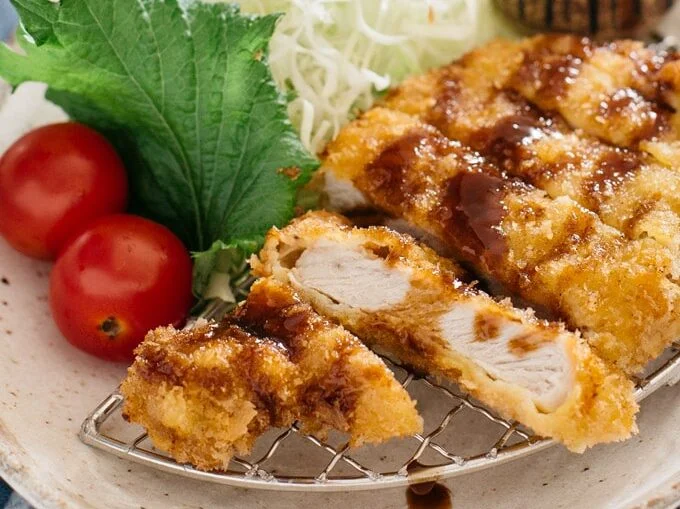
Tonkatsu is a Japanese pork cutlet coated in crisp panko and deep-fried until golden. This version uses a quick egg, water and mayonnaise batter, and is served with shredded cabbage, tomatoes and tonkatsu sauce.
Ingredients
- 3 (about 400 g total)pork sirloin steaks
- 1 largeegg
- 60 ml (¼ cup)water
- 1 tbspJapanese mayonnaise
- 4 tbspplain flour
- 150 g (3 cups)panko breadcrumbs
- 50 goil for deep-frying
- 200 gcabbage
- 6cherry tomatoes
- 3shiso leaves (optional)
- to tastesalt and pepper
- to tastetonkatsu sauce
Instructions
- 1
Prepare the pork
Make small cuts along the edge of each steak at 2 cm intervals to help stop the pork curling as it fries.
- 2
Flatten the steaks
Use a meat mallet to bash each steak until it is about 1 cm thick.
- 3
Season the meat
Season the pork with salt and pepper.
- 4
Mix the wet ingredients
In a mixing bowl, combine the egg, water and Japanese mayonnaise.
- 5
Add the flour
Add the plain flour to the egg mixture and briefly combine with chopsticks. Avoid overmixing.
- 6
Set up the coating
Arrange the batter bowl, a tray of panko and a separate tray for the coated pork.
- 7
Dip the pork
Dip one steak into the batter, coating it well. Let excess batter drip off, then move the steak to the panko tray.
- 8
Press on panko
Cover both sides of the pork with panko, pressing gently so the crumbs adhere and cover the edges too.
- 9
Coat the steaks
Place the crumbed steak on the clean tray, then repeat the coating process with the remaining pork.
- 10
Heat the oil
Heat the oil in a deep frying pan or deep fryer to 170°C. Meanwhile, line a wire rack set over a tray with kitchen paper.
- 11
Start frying
Once the oil reaches 170°C, gently add one steak. Fry the pork one piece at a time.
- 12
Fry until golden
Fry without moving the steak for a few minutes. When the edges are golden brown, carefully turn it with chopsticks, raise the oil temperature to 190°C and cook for another 2–3 minutes, until golden brown.
- 13
Drain the cutlets
Transfer the fried pork to the kitchen-paper-lined rack to drain. Fry the remaining crumbed steaks in the same way.
- 14
Slice the pork
Cut each fried steak into 1.5 cm strips. Slide the knife underneath the cut pieces to lift them together onto a plate.
- 15
Add the vegetables
Serve with finely shredded cabbage, shiso leaves and cherry tomatoes.
- 16
Finish with sauce
Pour tonkatsu sauce over the pork.
What is tonkatsu?
Tonkatsu is a Japanese dish of breaded, deep-fried pork cutlet, usually served with shredded cabbage and a savoury-sweet tonkatsu sauce. It developed in Japan as a Western-style cutlet adapted to local tastes and ingredients.
Here, panko gives the coating its light, craggy crunch, while the pork is flattened so it cooks evenly. Cabbage, tomatoes and optional shiso bring a fresh contrast to the fried cutlet.
Nutrition and macros by portion
The nutrition label shows one serving as written: 646 calories, 42g protein, 56g carbs, 27g fat.
| Portion | Adjustment | kcal | Protein | Carbs | Fat |
|---|---|---|---|---|---|
| Lighter | Use less frying oil | 452 kcal | 29g | 39g | 19g |
| This serving | As written | 646 kcal | 42g | 56g | 27g |
| Hungry | Add extra cabbage | 969 kcal | 63g | 84g | 41g |
The pork supplies most of the protein, while the flour and panko contribute most of the carbohydrates. The pork, mayonnaise and frying oil account for much of the fat. Serve with the cabbage and tomatoes as directed, and add another vegetable side if you want a more substantial balance of vegetables on the plate.
Why the pork is prepared this way
Edge cuts: Small cuts at 2 cm intervals help release the tension around the steak, reducing the chance it curls in the hot oil.
Even thickness: Bashing the meat to about 1 cm helps it cook through in the stated frying time while keeping the pieces a manageable size for serving.
The quick batter
Egg mixture: The egg, water and Japanese mayonnaise make a coating for the flour and breadcrumbs to cling to. Brief mixing with chopsticks is all that is needed.
Light mixing: Stop once the flour is incorporated; overmixing can make the batter heavier and less easy to coat the steaks with.
Getting panko to stick
Full coverage: Let excess batter drip off before moving each steak to the panko. Press crumbs onto both faces and around the edges so the pork is covered.
Separate trays: Keeping a clean tray ready for the coated cutlets makes it easier to handle each piece without disturbing its crumb layer.
Frying and doneness cues
First fry: Start at 170°C and leave the cutlet undisturbed for a few minutes, until the edges turn golden brown. Turn it carefully with chopsticks.
Finish: Raise the oil to 190°C and fry for a further 2–3 minutes, until the coating is golden brown. Drain the cutlet on the lined rack before slicing.
Serving the cutlets
Cabbage: Finely shredded cabbage is the classic fresh side and provides a crisp contrast to the hot, crunchy pork. Cherry tomatoes add another fresh element.
Shiso and sauce: Add the shiso leaves as an optional garnish, then pour tonkatsu sauce over the pork. Serve soon after frying to enjoy the crisp coating.
Recipe notes & tips
- Pat the pork dry before coating if its surface is wet, so the batter can adhere evenly.
- Keep the panko on a shallow tray so you can press the crumbs onto the cutlets without crushing them.
- Use chopsticks to turn the cutlets carefully and help keep the coating intact.
- Let excess batter drip off before coating each steak in panko.
- Prepare the shredded cabbage and tomatoes while the oil heats, so the cutlets can be served promptly.
- Use a kitchen thermometer to check the oil temperature at both stages.
Variations
- Add lemon: Serve with lemon wedges for a bright squeeze at the table.
- Try a different cabbage: Use finely shredded green or white cabbage in place of sugarloaf cabbage.
- Skip the shiso: Leave out the optional leaves or replace them with a little extra cabbage.
- Make smaller cutlets: Cut the pork into smaller pieces before coating and keep a close eye on the frying time.
- Serve with rice: Add steamed rice alongside the cabbage and tomatoes for a more filling meal.
Common mistakes to avoid
- Skipping the edge cuts: The steaks may curl as they fry; snip the edges at 2 cm intervals first.
- Overmixing the batter: The coating can become heavy; mix briefly with chopsticks and stop once combined.
- Leaving gaps in the panko: Bare patches will not have the same crisp coating; press crumbs onto the faces and edges.
- Moving the cutlet too soon: The coating may be disturbed; leave it alone for the first few minutes of frying.
- Crowding the pan: The cutlets need room to fry evenly; cook one piece at a time as directed.
- Slicing before draining: Oil can collect around the cutlets; drain them on the lined rack before cutting.
How to store
Refrigerate leftover cutlets in an airtight container for up to 3 days. Reheat in an oven or air fryer until hot to help restore some crispness; the coating will soften if reheated in a microwave.
Frequently asked questions
Can I prepare the cutlets ahead?
You can coat the pork shortly before frying and keep it chilled until needed. For the crispest result, fry close to serving time.
How do I know when the pork is cooked?
Follow the stated frying times and look for a golden-brown coating. If you have a food thermometer, check the centre of the pork as well.
Can I use ordinary breadcrumbs instead of panko?
Yes, but the coating will have a different texture. Panko is lighter and makes the characteristic crisp, coarse crumb.
Why does the recipe use two oil temperatures?
The cutlet starts frying at 170°C, then the oil is raised to 190°C for the final 2–3 minutes. Follow those temperatures and the golden-brown cues in the method.
Can I cook the cutlets in an air fryer?
This method is written for deep-frying, so air-frying will not produce exactly the same result. Use an air-fryer method designed for breaded pork cutlets if you want to adapt it.
What can I serve with tonkatsu?
Serve it with finely shredded cabbage, cherry tomatoes, optional shiso and tonkatsu sauce, as in this recipe. Steamed rice is another suitable side.
Cook it from the original
This recipe comes from chopstickchronicles.com. Their page has the author’s own photos, notes and tips — the best place to cook it from.
Open the recipe on chopstickchronicles.com