
Gobi Manchurian
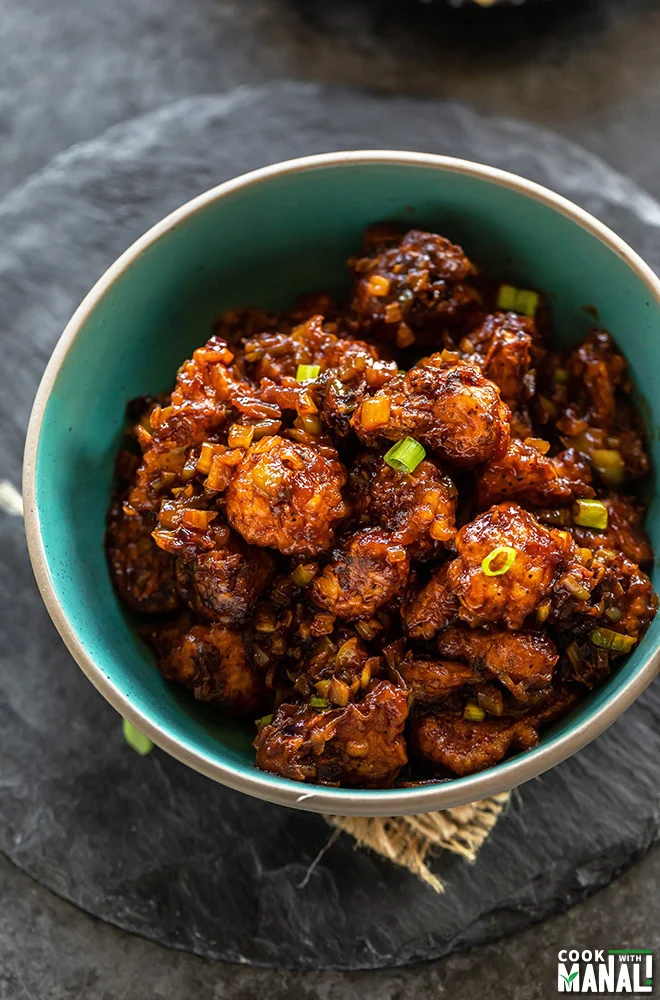
Gobi Manchurian is a vegan Indo-Chinese dish of crisp, battered cauliflower tossed in a punchy sauce with soy, tomato, vinegar and chilli. Serve it as a snack or appetiser, or alongside rice or noodles for a fuller meal.
Ingredients
- 15 ml (1 tablespoon)avocado oil, or another oil of your choice
- 15 ml (1 tablespoon)toasted sesame oil
- 15 ml (1 tablespoon)grated garlic
- 15 ml (1 tablespoon)grated ginger
- 1–2green chillies, chopped
- 2 stalkscelery, chopped
- 1 smallred onion, chopped
- 1 mediumgreen pepper, chopped
- 2–3 stalksspring onions, chopped
- 30 ml (2 tablespoons)soy sauce (or 15 ml each regular and dark soy sauce)
- 30 ml (2 tablespoons)tomato ketchup
- 15 ml (1 tablespoon)rice vinegar
- 5 ml (1 teaspoon)sriracha or another hot sauce, to taste
- ¾ teaspoonsugar
- ⅛ teaspoonground white pepper
- to taste, if neededsalt
- 1 small head (about 2½ cups florets)cauliflower, cut into medium florets
- 6 tablespoonsflour
- 4 tablespoonscornflour
- 1 teaspoonginger-garlic paste
- ¼ teaspoonsalt
- ¼ teaspoonground black pepper
- 155–170 ml (½ cup plus 2–3 tablespoons), approximatelywater, to make a flowing batter
- as neededoil for frying (the recipe uses avocado oil)
Instructions
- 1
Make the sauce
Heat the avocado oil in a skillet over a high heat. When hot, add the garlic, ginger, green chillies and celery, and sauté for 1 minute, until the aromatics begin to change colour.
- 2
Cook the vegetables
Add the chopped onion, green pepper and spring onions. Cook over a high heat for about 3 minutes.
- 3
Season the sauce
Stir in the soy sauce, ketchup, vinegar, hot sauce, sugar and white pepper. Taste and add salt if needed, then set the sauce aside.
- 4
Prepare cauliflower
Cut and clean the cauliflower into florets, then place them in hot salted water. Simmer over a medium heat for about 4 minutes. Drain and lay the florets on kitchen paper, patting each one dry.
- 5
Mix the batter
Put the flour, cornflour, ginger-garlic paste, salt and black pepper in a large bowl and whisk together. Add the water a little at a time to make a smooth, free-flowing batter that is neither too thick nor too thin.
- 6
Heat the oil
Heat frying oil in a kadai or pan over a medium heat. Once it is hot, dip the cauliflower florets into the batter and coat them well.
- 7
Fry until crisp
Let excess batter drip off, then carefully lower the florets into the hot oil. Fry over a medium heat for 6–7 minutes, until crisp and browned.
- 8
Toss in sauce
Transfer the fried cauliflower into the sauce while it is still warm. Toss until the florets are evenly coated.
- 9
Garnish and serve
Garnish with spring onions and serve with Hakka noodles, or enjoy on its own.
What is Gobi Manchurian?
Gobi means cauliflower, and Gobi Manchurian is part of the Indo-Chinese tradition of combining Chinese-inspired cooking with ingredients and flavours popular in India. It is often served as a starter, though it can also be made part of a main meal.
This version coats cauliflower in a crisp batter, then dresses it in a savoury, tangy sauce with aromatics, vegetables and chilli. The contrast between crunchy florets and glossy sauce is what makes the dish work.
Nutrition and macros by portion
The nutrition label shows one serving as written: 269 calories, 6g protein, 39g carbs, 10g fat.
| Portion | Adjustment | kcal | Protein | Carbs | Fat |
|---|---|---|---|---|---|
| Lighter | Use less frying oil | 188 kcal | 4g | 27g | 7g |
| This serving | As written | 269 kcal | 6g | 39g | 10g |
| Hungry | Serve with rice | 404 kcal | 9g | 59g | 15g |
The cauliflower and flour provide most of the carbohydrates, while the frying oil, avocado oil and sesame oil contribute much of the fat. Cauliflower and the small amount of protein in the flour contribute some protein, while soy sauce adds sodium. For a more balanced plate, serve a portion with rice or noodles and an additional vegetable side.
Why the sauce works
Aromatic base: garlic, ginger, green chilli and celery are briefly cooked first, building flavour before the other vegetables go in.
Sweet and sharp notes: soy sauce brings saltiness, while ketchup and rice vinegar balance it with sweetness and acidity. Adjust the hot sauce to suit your preferred heat.
Getting the cauliflower ready
Even florets: cut the cauliflower into medium pieces so they cook at a similar rate and are easy to coat.
Dry surfaces: after the brief simmer, pat each floret thoroughly dry. Excess water can thin the batter and cause more spluttering in the frying oil.
A batter that clings
Add the water gradually, whisking as you go, until the batter flows from a spoon but still coats the cauliflower. The stated water quantity is approximate, so use the texture as your guide.
Let excess batter drip back into the bowl before frying. A thick coating can turn heavy rather than crisp.
Frying for crispness
Keep the oil at a steady medium heat and fry the florets for 6–7 minutes, until browned and crisp. If the pan is crowded, fry in batches so the pieces have room to cook evenly.
Have the sauce warm and ready before the cauliflower finishes frying. Tossing the florets soon after cooking helps the coating take on the sauce without a long wait.
How to serve it
Serve Gobi Manchurian on its own as an appetiser, with spring onions scattered over the top. For a meal, pair it with Hakka noodles or rice.
The cauliflower is at its crispest soon after it is tossed, so bring it to the table promptly rather than letting it sit in the sauce.
Recipe notes & tips
- Keep the florets a similar size so they simmer and fry evenly.
- Pat the cauliflower dry individually before dipping it in batter.
- Add water to the batter little by little to control its consistency.
- Fry in batches if needed to avoid crowding the pan.
- Taste the sauce before adding salt, as the soy sauce is already salty.
- Toss the cauliflower in the warm sauce just before serving.
Variations
- Adjust the chilli: use fewer green chillies or less sriracha for a milder sauce.
- Use dark soy: replace half the soy sauce with dark soy for a deeper-coloured sauce.
- Add more vegetables: increase the pepper, onion or celery for extra texture.
- Change the garnish: finish with extra chopped spring onions just before serving.
- Serve as a meal: pair with rice or Hakka noodles instead of serving as an appetiser.
Common mistakes to avoid
- Wet cauliflower: the batter may slip or thin out; pat every floret thoroughly dry.
- Batter too thick: the coating can become heavy; whisk in water a little at a time.
- Batter too thin: it may not cling to the florets; add water gradually and stop once it flows freely.
- Crowded pan: the florets may not crisp evenly; fry in batches with space between them.
- Cool sauce: the cauliflower can lose heat as it is tossed; warm the sauce before combining.
- Waiting to serve: the coating softens as it sits in sauce; toss just before serving.
How to store
For the best texture, eat Gobi Manchurian soon after tossing. Refrigerate leftovers in an airtight container for up to 2 days; reheat in an oven or air fryer until hot, noting that the coating will be softer than when freshly made.
Frequently asked questions
Can I make the sauce ahead?
Yes. Prepare the sauce in advance and reheat it before adding the freshly fried cauliflower.
How do I know when the cauliflower is cooked?
After 6–7 minutes of frying over a medium heat, the coating should be crisp and browned. The florets are briefly simmered first, so frying mainly finishes the coating and heats them through.
Can I make this less spicy?
Yes. Use one green chilli or omit it, and reduce or leave out the sriracha. Taste the sauce before tossing it with the cauliflower.
What can I serve with Gobi Manchurian?
Serve it as an appetiser on its own, or pair it with Hakka noodles or rice for a more filling meal.
Can I use another frying oil?
Yes. The recipe allows any oil of your choice for the sauce and uses avocado oil for frying; use a suitable alternative you already have.
Cook it from the original
This recipe comes from cookwithmanali.com. Their page has the author’s own photos, notes and tips — the best place to cook it from.
Open the recipe on cookwithmanali.com