
Octopus with a Squid Ink Beurre Noir
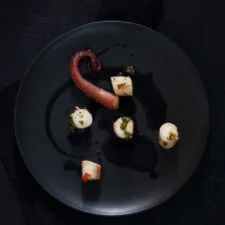
Tender octopus is marinated, seared until caramelised and served with a glossy, dark beurre noir made with squid ink. It is a striking seafood dish for a special meal, with bright lemon and fennel balancing the rich butter sauce.
Ingredients
- 600 gcleaned octopus tentacles
- 100 mlred wine
- to tasteblack peppercorns
- 1lemon, halved and deseeded
- 1bay leaf
- 2–3garlic cloves
- 120 mlolive oil
- 100 gonion, sliced
- 200 gfennel
- 1chilli
- 5 mlsalt
- 1, optionalcork
- 1chilli, chopped
- 2garlic cloves, chopped
- 15 mlparsley, chopped
- 2.5 mlblack pepper
- 30 mlolive oil
- Zest of ½lemon
- Juice of 1lemon
- 5 mlsalt
- 125 mlwhite wine
- 30–45 mlwhite wine vinegar
- 80 gonion, finely chopped
- 1star anise, gently crushed
- 30 mlcream
- 10 gsquid ink
- 200 gunsalted butter, chilled
- 5 mllemon juice
Instructions
- 1
Prepare the octopus
Put the octopus in a large saucepan with the red wine, peppercorns, lemon, bay leaf, garlic, sliced onion, whole chilli, fennel and the optional cork.
- 2
Simmer until tender
Cover everything with water and bring it to a simmer. Cook until a knife tip slips into the thickest part easily; this may take 40 minutes to just over an hour. Leave the octopus to cool in the cooking liquid, then remove its skin, cut it into pieces and set aside.
- 3
Mix the marinade
Combine the chopped chilli, chopped garlic, parsley, black pepper, 30 ml olive oil, lemon zest, juice of 1 lemon and 5 ml salt. Slice the tentacles into 2 cm pieces and toss them in the marinade.
- 4
Sear the octopus
Heat a pan or griddle and cook the marinated octopus until well caramelised, taking care not to overcook it.
- 5
Reduce the sauce
Put the white wine, white wine vinegar, finely chopped onion and star anise in a saucepan and reduce the mixture by more than half. Add the cream and squid ink, then continue cooking until reduced. Pass it through a very fine sieve; the strained liquid should yield about 2 tablespoons.
- 6
Whisk in butter
Return the strained liquid to the heat and whisk in the chilled butter and 5 ml lemon juice until smooth. Adjust the seasoning to taste.
- 7
Plate and serve
Arrange the octopus pieces on serving plates, drizzle with the squid ink beurre noir and serve.
What is squid ink beurre noir?
Beurre noir is a butter-based sauce with a dark appearance; here, squid ink gives it its dramatic colour. The method takes inspiration from the wine-and-vinegar reduction used for beurre blanc, then finishes it with butter.
This version pairs the rich sauce with octopus that is first gently simmered and then seared. Fennel, chilli and lemon bring aromatic and bright notes to the plate.
Nutrition and macros by portion
The nutrition label shows one serving as written: 630 calories, 31g protein, 12g carbs, 49g fat.
| Portion | Adjustment | kcal | Protein | Carbs | Fat |
|---|---|---|---|---|---|
| Lighter | Use less beurre noir | 441 kcal | 22g | 8g | 34g |
| This serving | As written | 630 kcal | 31g | 12g | 49g |
| Hungry | Add potatoes on the side | 945 kcal | 47g | 18g | 74g |
The octopus supplies most of the protein, while the wine, onion and fennel contribute some carbohydrates. Butter and olive oil account for much of the fat, so serve a moderate drizzle of sauce alongside vegetables or salad to balance the plate.
Why simmer the octopus first?
Gentle cooking in water with wine, aromatics and lemon tenderises the tentacles before the quick, high-heat sear. The recipe gives a broad cooking window because tenderness, rather than the clock alone, is the useful cue.
Cool the octopus in its cooking liquid before peeling and cutting it. This keeps the preparation in sequence and gives you manageable pieces for the pan.
Building the marinade
Citrus: lemon zest and juice sharpen the marinade, while parsley, garlic and chilli add freshness and warmth.
Oil and seasoning: olive oil helps coat the octopus, and salt and black pepper season each piece. Toss thoroughly so the slices are covered before they go onto the hot surface.
Getting a good sear
Caramelisation: use a hot pan or griddle and let the octopus develop colour before turning it. The tentacles are already tender from simmering, so the final cooking is for browning rather than prolonged cooking.
Doneness: look for well-coloured surfaces and take the pieces off the heat before they become overcooked. Work in batches if needed so the pan stays hot.
Reducing the ink sauce
Reduction: simmer the wine, vinegar, finely chopped onion and crushed star anise until the liquid has reduced by more than half. After adding cream and squid ink, reduce it further before straining.
Straining: a very fine sieve removes the solids and leaves a smooth base for the butter. The recipe expects roughly 2 tablespoons of strained liquid.
Finishing the beurre noir
Butter: whisk the chilled butter into the hot strained reduction until the sauce looks smooth. Add the lemon juice at this stage, then taste and adjust the seasoning.
Keep the sauce under control while whisking; the aim is a smooth, emulsified finish rather than a greasy pool of separated butter.
Serving the dish
Serve the seared octopus straight away, with the dark sauce drizzled over the pieces so their browned surfaces remain visible.
A simple green salad or plainly cooked vegetables make a fresh side. Bread or potatoes can also help make the plate more substantial without competing with the sauce.
Recipe notes & tips
- Check tenderness with a knife at the thickest part rather than relying only on the cooking time.
- Let the octopus cool in its cooking liquid before peeling and slicing it.
- Pat excess marinade from the pieces if it is pooling in the pan and stopping them from browning.
- Use a very fine sieve to give the sauce base a smooth texture.
- Whisk the chilled butter in gradually for a cohesive sauce.
- Serve the octopus soon after searing so it retains its browned exterior.
Variations
- Adjust the chilli: use less for a gentler marinade or more for extra heat.
- Change the herbs: replace the parsley with another soft herb for a different fresh note.
- Add extra citrus: finish with a little more lemon juice if you prefer a sharper sauce.
- Make it more substantial: serve the octopus with boiled or roasted potatoes.
- Serve with greens: add simply cooked green vegetables for a lighter accompaniment.
Common mistakes to avoid
- Rushing the simmer: octopus can remain tough; keep cooking until a knife enters the thickest part easily.
- Skipping the cooling step: the tentacles are harder to handle; let them cool in their cooking liquid before peeling.
- Overcrowding the pan: the octopus may not caramelise well; sear it in batches.
- Cooking too long after simmering: the pieces can become overcooked; sear only until well coloured.
- Reducing too little: the sauce base may be too thin; reduce the wine mixture by more than half before adding cream and ink.
- Adding butter without whisking: the sauce can separate; whisk the chilled butter into the hot liquid until smooth.
How to store
Refrigerate leftover octopus and sauce separately in airtight containers for up to 2 days. Reheat the octopus gently in a pan, and warm the sauce over low heat while whisking; avoid boiling it.
Frequently asked questions
How do I know when the octopus is tender?
Insert the tip of a knife into the thickest part. It should enter easily; cooking may take 40 minutes to just over an hour.
Can I leave out the cork?
Yes. The cork is listed as optional, so you can omit it without changing the rest of the method.
Can I prepare the octopus ahead?
You can simmer it ahead and cool it in its cooking liquid. Peel, cut and marinate it before searing when you are ready to serve.
What should the sauce look like?
It should be dark from the squid ink and smooth after the butter has been whisked in. Strain the reduced base through a very fine sieve before adding the butter.
Can I make the sauce without squid ink?
You can omit it, but the sauce will lose the defining black colour and characteristic squid ink flavour.
What can I serve with the octopus?
A green salad or simply cooked vegetables offer a fresh contrast. Potatoes or bread make the meal more filling.
Cook it from the original
This recipe comes from crushmag-online.com. Their page has the author’s own photos, notes and tips — the best place to cook it from.
Open the recipe on crushmag-online.com