
Lamb Shanks Milanese
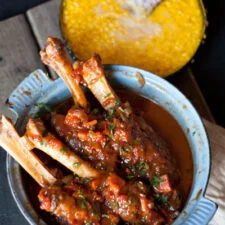
Lamb Shanks Milanese pairs slow-braised lamb with saffron risotto, taking its cue from the classic Milanese dish made with veal shanks. It is a comforting choice for a relaxed meal, with tender meat and a creamy rice side.
Ingredients
- 4Karoo lamb shanks
- 100 gstone-ground flour
- 50 gbutter
- 4carrots, peeled and diced
- 1 largeonion, peeled and diced
- 3celery sticks, diced
- 3 clovesgarlic, crushed
- 350 mldry white wine
- 450 g tinwhole peeled tomatoes
- 2 sprigsrosemary
- 1bay leaf
- 1orange
- 250 mlchicken, beef or vegetable stock
- to tastesea salt and black pepper
- 125 mldry white wine
- 1/2 tspsaffron threads
- 90 g (6 Tbsp)unsalted butter
- 1onion, very finely diced
- 250 gArborio risotto rice
- about 50 g (1/2 C)grated Grana Padano
- 1.2 litres (5 C)chicken stock, warm
Instructions
- 1
Preheat the oven
Heat the oven to 160°C.
- 2
Coat the shanks
Season the flour generously in a small tray, then roll the lamb shanks in it until well coated.
- 3
Brown the lamb
Set a large casserole over medium heat and melt the 50 g butter. Brown the shanks on every side, then lift them out and set aside.
- 4
Sweat the vegetables
Add the carrots, diced onion, celery and garlic to the casserole and cook gently for 5 minutes.
- 5
Deglaze the pan
Pour in 350 ml white wine, scrape up the browned bits and bring the liquid to the boil.
- 6
Add tomatoes and herbs
Break up the tinned tomatoes by hand and add them to the casserole with the bay leaf and rosemary.
- 7
Add orange
Finely zest the orange directly into the liquid, then squeeze in its juice.
- 8
Braise the shanks
Return the lamb to the casserole, making sure the sauce just covers it. Add a little stock if needed, bring the sauce back to a gentle simmer, then cover the casserole.
- 9
Cook until tender
Transfer the covered casserole to the oven for 3 hours, or until the shanks are soft and tender.
- 10
Soak the saffron
Stir the saffron threads into 125 ml white wine and leave to stand for about 30 minutes.
- 11
Soften the onion
Set a large, heavy-based saucepan over medium heat. Melt 1 tablespoon of the unsalted butter and cook the finely diced onion until soft and translucent.
- 12
Toast the rice
Add the Arborio rice and cook over medium heat for 3 minutes.
- 13
Cook the risotto
Add the saffron wine and raise the heat slightly. When almost all the wine has evaporated, add a ladle of warm chicken stock and stir regularly. Continue adding stock a ladle at a time, stirring and tasting as you go, until the rice is al dente rather than raw or grainy.
- 14
Finish the risotto
Turn the heat right down and stir in the Grana Padano. Add a little stock if needed, then gently fold in the remaining butter. Taste and adjust the seasoning, taking care not to over-season if using salted butter.
What is Lamb Shanks Milanese?
This is a lamb-based variation on Osso Buco alla Milanese, a northern Italian braise traditionally made with veal shanks. Here, lamb cooks slowly with vegetables, wine, tomatoes, herbs and orange, then is served with saffron risotto.
The two-part approach makes the dish work: the shanks have time to become tender while the risotto is cooked close to serving. The orange adds a fragrant lift to the rich braising liquid.
Nutrition and macros by portion
The nutrition label shows one serving as written: 1050 calories, 57g protein, 90g carbs, 47g fat.
| Portion | Adjustment | kcal | Protein | Carbs | Fat |
|---|---|---|---|---|---|
| Lighter | Smaller risotto portion | 735 kcal | 40g | 63g | 33g |
| This serving | As written | 1050 kcal | 57g | 90g | 47g |
| Hungry | Extra risotto | 1575 kcal | 86g | 135g | 71g |
The lamb contributes most of the protein and a substantial share of the fat, while the Arborio rice and flour provide much of the carbohydrate. Butter, cheese and the lamb also add fat; the exact amount depends on the size and edible yield of the shanks. Balance the plate with green vegetables or salad alongside the lamb and risotto.
Building flavour in the braise
Floured shanks: coat them well and brown them on all sides before braising. This gives the sauce a savoury foundation, while the flour also helps it gain body as it cooks.
Wine and vegetables: let the wine come to the boil after deglazing so it loosens the browned fond. The diced carrots, onion, celery and garlic soften into the sauce during the long oven cook.
Orange and herbs: add the zest and juice with the rosemary and bay leaf. They season the braising liquid as the lamb cooks.
Slow cooking the lamb
Keep the shanks just covered with sauce before putting on the lid. If the liquid seems short, top it up with a little stock, as directed, rather than leaving much of the meat exposed.
The recipe gives 3 hours at 160°C as a guide, but tenderness is the key cue. The meat should feel soft when tested; if it is still firm, continue cooking until tender.
Getting the risotto right
Saffron wine: allow the threads to soak for about 30 minutes so their colour and aroma infuse the wine. Add it after the rice has cooked for 3 minutes.
Warm stock: add it a ladle at a time, stirring regularly and waiting until most of the liquid has been absorbed before adding more. Taste as the rice cooks; it should be tender with a slight bite, not raw or grainy.
Butter and cheese: lower the heat before stirring in the Grana Padano, then fold in the remaining butter. A little extra stock can loosen the risotto if it has thickened too much.
Serving the meal
Spoon the risotto onto warm plates and serve a lamb shank with some of its sauce alongside or over it. The braising vegetables and sauce bring plenty of savoury flavour, while the saffron rice makes a soft, creamy base.
A simply dressed green salad or steamed green vegetables make a fresh contrast. Serve promptly so the risotto stays loose and the lamb remains hot.
Recipe notes & tips
- Brown the shanks in batches if they crowd the casserole, so they colour rather than steam.
- Use warm stock for the risotto to keep the cooking temperature steady.
- Taste the rice repeatedly near the end of cooking; it can move from firm to tender quickly.
- Keep the casserole covered during the oven braise to help the shanks stay moist.
- Season the risotto at the end, especially if your butter or stock is already salted.
Variations
- Use another stock: choose chicken, beef or vegetable stock for the lamb braise, as listed.
- Try a different herb: use the listed rosemary and bay as the base, adjusting their balance to suit your taste.
- Add bone marrow: replace one third of the risotto butter with marrow for a richer, traditional-style finish.
- Choose the braising stock: top up with chicken, beef or vegetable stock if the lamb needs more liquid.
- Serve with greens: add steamed green vegetables or a crisp salad for a fresh contrast.
Common mistakes to avoid
- Skipping the browning: the sauce misses a savoury base; brown every side of the shanks before braising.
- Leaving the shanks uncovered: they may not cook evenly; check that they are just covered with sauce.
- Adding cold stock: it can interrupt the risotto's steady cooking; keep the stock warm.
- Pouring in all the stock at once: the rice is harder to control; add it a ladle at a time.
- Overcooking the risotto: it can turn soft and lose its bite; taste as you go and stop at al dente.
How to store
Refrigerate leftover lamb and sauce in a covered container for up to 3 days; store the risotto separately if possible. Reheat the lamb gently in a covered pan until piping hot, adding a splash of stock if needed; warm the risotto with a little stock and stir to loosen it. The risotto is best freshly made, as it thickens in storage.
Frequently asked questions
Can I make the lamb shanks ahead?
Yes. Cook the lamb and sauce ahead, cool them promptly and refrigerate in a covered container. Reheat gently until piping hot, and make the risotto close to serving.
How do I know when the shanks are done?
They should be very tender after about 3 hours at 160°C. If the meat still feels firm, return the covered casserole to the oven and continue cooking.
Can I use a different type of stock?
Yes. The recipe lists chicken, beef or vegetable stock for topping up the lamb braise, and warm chicken stock for the risotto.
Can I make the risotto without saffron?
You can omit it, though the rice will lose its distinctive saffron aroma and colour. The saffron is soaked in the white wine for about 30 minutes before use.
Why is my risotto too thick?
Risotto thickens as it stands. Stir in a little warm stock, as the recipe directs, to loosen it gently.
Can I use bone marrow in the risotto?
Yes. The recipe suggests replacing one third of the risotto butter with bone marrow. Soak the marrow bones in water for an hour, push the marrow out and melt it into the pan when frying the onion.
Cook it from the original
This recipe comes from crushmag-online.com. Their page has the author’s own photos, notes and tips — the best place to cook it from.
Open the recipe on crushmag-online.com