
Chirashi Sushi ちらし寿司
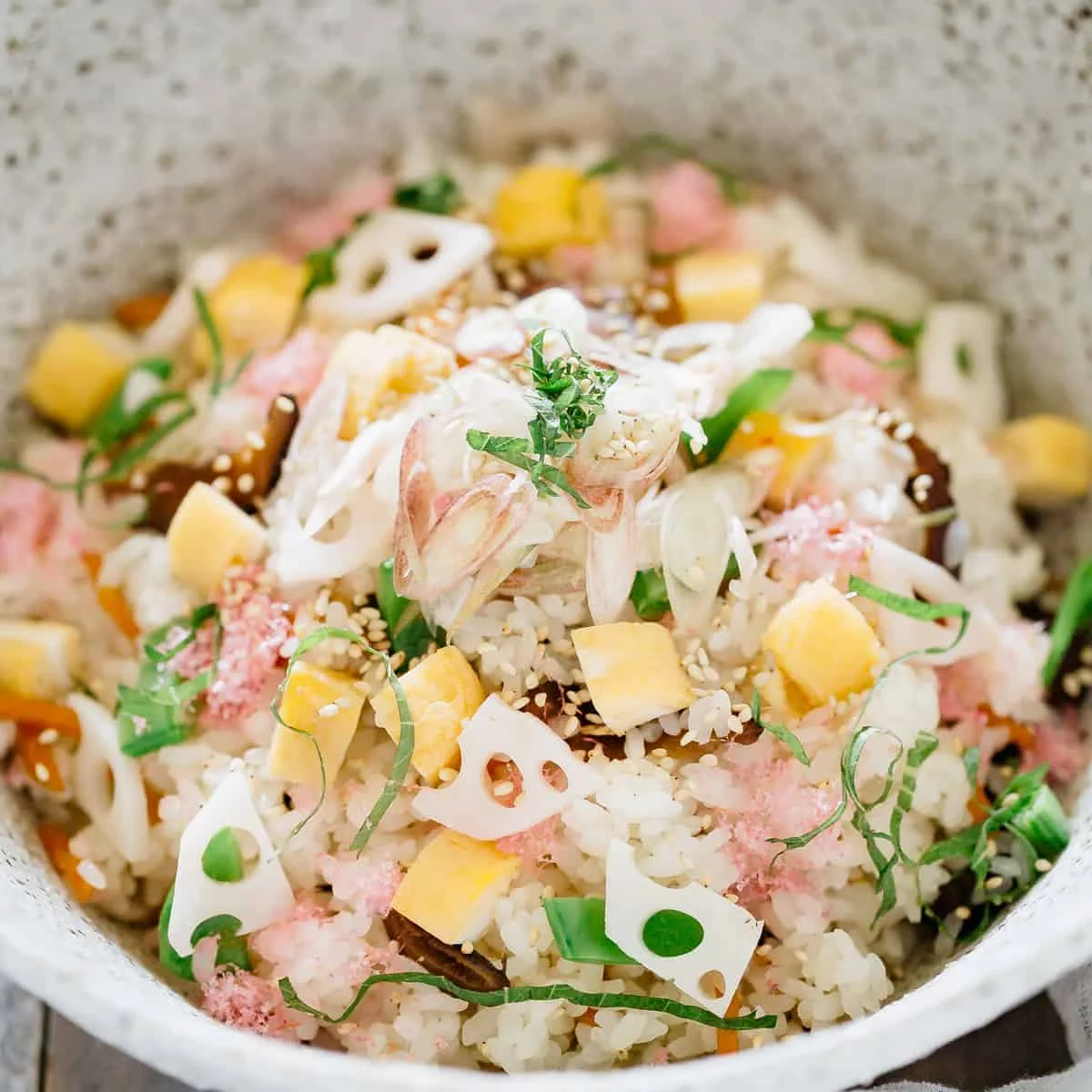
Chirashi sushi is seasoned sushi rice topped with colourful ingredients, including sweet-savoury shiitake, egg, snow peas and lotus root. It makes a celebratory-looking Japanese meal that can be prepared in stages and shared at the table.
Ingredients
- 360 g (2 cups)Japanese short-grain rice
- 430 ml (1.8 cups)water
- 1 strip, 5 cm longkombu kelp
- 60 ml (4 tbsp)vinegar
- 30 ml (2 tbsp)sugar
- 10 ml (2 tsp)sea salt
- 4dried shiitake mushrooms, soaked overnight
- 1/2 (or 70 g)carrot, cut into matchsticks
- 1/4kanpyo
- 160 ml (2/3 cup)shiitake dashi
- 30 ml (2 tbsp)sugar
- 30 ml (2 tbsp)mirin
- 10 ml (2 tsp)soy sauce
- 1.25 ml (1/4 tsp)salt
- 3 largeeggs
- 10 ml (2 tsp)sugar
- 2.5 ml (1/2 tsp)salt
- 30 ml (2 tbsp)water
- 5 ml (1 tsp)cooking oil
- 4snow peas, blanched and cut
- 60 ml (1/4 cup)lotus root (renkon), thinly sliced
- 30 ml (2 tbsp)sakura denbu (pink cod flakes)
- 2myoga flower buds, for garnish
- 2–3green shiso leaves, for garnish
- 15 ml (1 tbsp)white sesame seeds
Instructions
- 1
Wash the rice
Rinse the rice several times, until the water runs clear. Drain it and put it in a rice cooker with the water, using 10% less water than rice, and the kombu strip if using. Cook according to the rice cooker's instructions.
- 2
Make sushi vinegar
While the rice cooks, heat the vinegar, sugar and salt in a small saucepan over medium heat until the sugar dissolves.
- 3
Season the rice
Wet a wooden tub and wipe away the excess water with a cloth. When the rice is cooked, remove the kombu if used and transfer the rice to the tub. Pour over the sushi vinegar and mix with a wooden spatula, fanning the rice as you go to cool it.
- 4
Prepare shiitake
While the rice cooks, squeeze excess water from the soaked mushrooms, reserving the liquid as shiitake dashi. Remove the stems and slice the mushrooms thinly.
- 5
Cook the vegetables
Put the shiitake dashi, sliced mushrooms, carrot, kanpyo and all the seasonings in a saucepan. Bring to the boil, then simmer until most of the liquid has evaporated. Turn off the heat and drain any remaining excess liquid through a sieve.
- 6
Whisk the eggs
Crack the eggs into a small bowl, add the tamagoyaki seasonings and whisk together. Strain the mixture through a sieve twice.
- 7
Roll the omelette
Heat the oil in a rectangular frying pan over medium heat. Pour in one third of the egg mixture, break any bubbles with chopsticks and gently scramble. When the surface is partly set, fold the egg and push it to one end of the pan.
- 8
Finish the omelette
Wipe the empty side of the pan with oil-soaked kitchen paper and pour in another third of the mixture. Lift the folded egg so the uncooked mixture runs underneath, then fold and roll the egg from one side of the pan. Wipe the empty area with the oiled paper and repeat with the final third. Turn off the heat, remove the omelette and, once cool, cut it into small cubes.
- 9
Prepare toppings
Defrost the lotus root if frozen. Remove the strings from the snow peas, blanch them along with the lotus root, and set them aside.
- 10
Assemble the sushi
Fold the cooked, drained shiitake and vegetable mixture into the sushi rice using a cutting motion so the rice does not become mashed. Scatter over the tamagoyaki cubes, snow peas, lotus root and sakura denbu. Garnish with chopped shiso and thinly sliced myoga, then sprinkle with sesame seeds.
What is chirashi sushi?
Chirashi means “scattered”, and chirashi sushi is a Japanese dish of seasoned sushi rice topped or mixed with an assortment of ingredients. It is often served for celebrations and special occasions, with toppings that make the rice colourful and varied.
This version combines vegetables simmered in shiitake dashi with sweet egg, lotus root and crisp garnishes. The rice is seasoned separately, then mixed gently so its grains keep their shape.
Nutrition and macros by portion
The nutrition label shows one serving as written: 430 calories, 7g protein, 92g carbs, 3g fat.
| Portion | Adjustment | kcal | Protein | Carbs | Fat |
|---|---|---|---|---|---|
| Lighter | More vegetables, less rice | 301 kcal | 5g | 64g | 2g |
| This serving | As written | 430 kcal | 7g | 92g | 3g |
| Hungry | Larger rice portion | 645 kcal | 11g | 138g | 5g |
Most of the carbohydrates come from the rice, with smaller amounts from the sugar and vegetables. The eggs provide most of the protein and fat, while the recipe also includes a little oil; pair a serving with extra vegetables or a light soup for a more rounded plate.
The rice sets the foundation
Short-grain rice gives the dish its tender, slightly sticky base. Rinse it until the water runs clear to remove excess surface starch, and follow the rice cooker's instructions for cooking.
Save the mushroom soaking liquid
Shiitake dashi: the mushrooms' soaking liquid provides the cooking liquid for the vegetables, so reserve it when squeezing the mushrooms. Simmer the mixture until most of the liquid evaporates, then drain any remainder before folding it into the rice.
Kanpyo: this dried gourd adds another texture to the cooked mixture. The recipe lists it as a quarter portion without specifying a unit.
Handle the rice gently
Sushi vinegar: pour it over the cooked rice and mix with a wooden spatula while fanning the rice to cool it. Use a cutting motion rather than stirring or pressing, both when seasoning and when adding the cooked vegetables.
Roll the egg in stages
Tamagoyaki: adding the egg in thirds makes it possible to fold each layer into the next. Lift the folded egg when adding more mixture so the uncooked egg can run beneath it, and cook over medium heat.
Look for contrasting textures
The finished rice should remain distinct rather than mashed, while the simmered vegetables should be tender and not swimming in liquid. The rolled egg is cut into cubes once cool; snow peas and lotus root are blanched and used as toppings.
Serve it as a meal
The colourful toppings make this dish easy to serve from a shared platter or individual bowls. A simple soup or lightly dressed vegetables can accompany it without competing with the seasoned rice.
Recipe notes & tips
- Soak the dried shiitake overnight as directed, and keep their soaking liquid for the vegetable mixture.
- Drain the rice well after rinsing before adding it to the rice cooker.
- Fan the rice as you fold in the sushi vinegar to help it cool.
- Drain the cooked shiitake and vegetables thoroughly before mixing them into the rice.
- Let the tamagoyaki cool before cutting it so the cubes hold their shape.
- Prepare and arrange the toppings before assembling, so they can be scattered evenly.
Variations
- Add prawns: Scatter cooked prawns over the rice with the other toppings.
- Use extra vegetables: Add more carrot or snow peas for a vegetable-forward topping.
- Swap the garnish: Use thinly sliced spring onion in place of myoga if needed.
- Change the mushrooms: Use fresh shiitake and prepare the cooking liquid separately.
- Make it vegetarian: Check that the sakura denbu is suitable for your diet, or leave it out.
Common mistakes to avoid
- Discarding the soaking liquid: Reserve it to make the shiitake dashi used for cooking the vegetables.
- Mashing the rice: Fold in the cooked mixture with a cutting motion rather than stirring forcefully.
- Leaving excess liquid: Drain the cooked vegetables well before adding them to the rice.
- Adding all the egg at once: Cook it in thirds so the layers can be folded into a roll.
- Cutting the egg while hot: Let the tamagoyaki cool first for neater cubes.
- Overcooking the egg: Keep the pan over medium heat and turn off the heat once the roll is cooked.
How to store
Refrigerate leftovers in a covered container and eat within 1–2 days. The rice is best at room temperature; if reheating, warm it gently until just heated through, knowing that the toppings and rice may lose some of their original texture.
Frequently asked questions
Can I make any parts ahead?
Yes. Soak the shiitake overnight, and cook the vegetable mixture and tamagoyaki ahead of assembling. Keep prepared components covered and chilled, then assemble when ready.
What is kanpyo?
Kanpyo is dried gourd, often sold in strips. This ingredient list gives a quantity of 1/4 but does not specify a unit.
What can I use instead of a wooden tub?
Use a wide, shallow bowl. Mix the rice gently with a wooden spatula while fanning it to cool.
Can I leave out the kombu?
Yes. The method says to add the kombu to the rice cooker if you have it, and to remove it after cooking.
How do I know when the vegetable mixture is ready?
Simmer it until most of the liquid has evaporated, then drain any excess through a sieve before mixing it into the rice.
Can I serve chirashi sushi cold?
It can be served at room temperature or chilled. Chilling may firm the rice, so let it stand briefly before serving if you prefer a softer texture.
Cook it from the original
This recipe comes from chopstickchronicles.com. Their page has the author’s own photos, notes and tips — the best place to cook it from.
Open the recipe on chopstickchronicles.com