
Oshinko roll お新香巻き
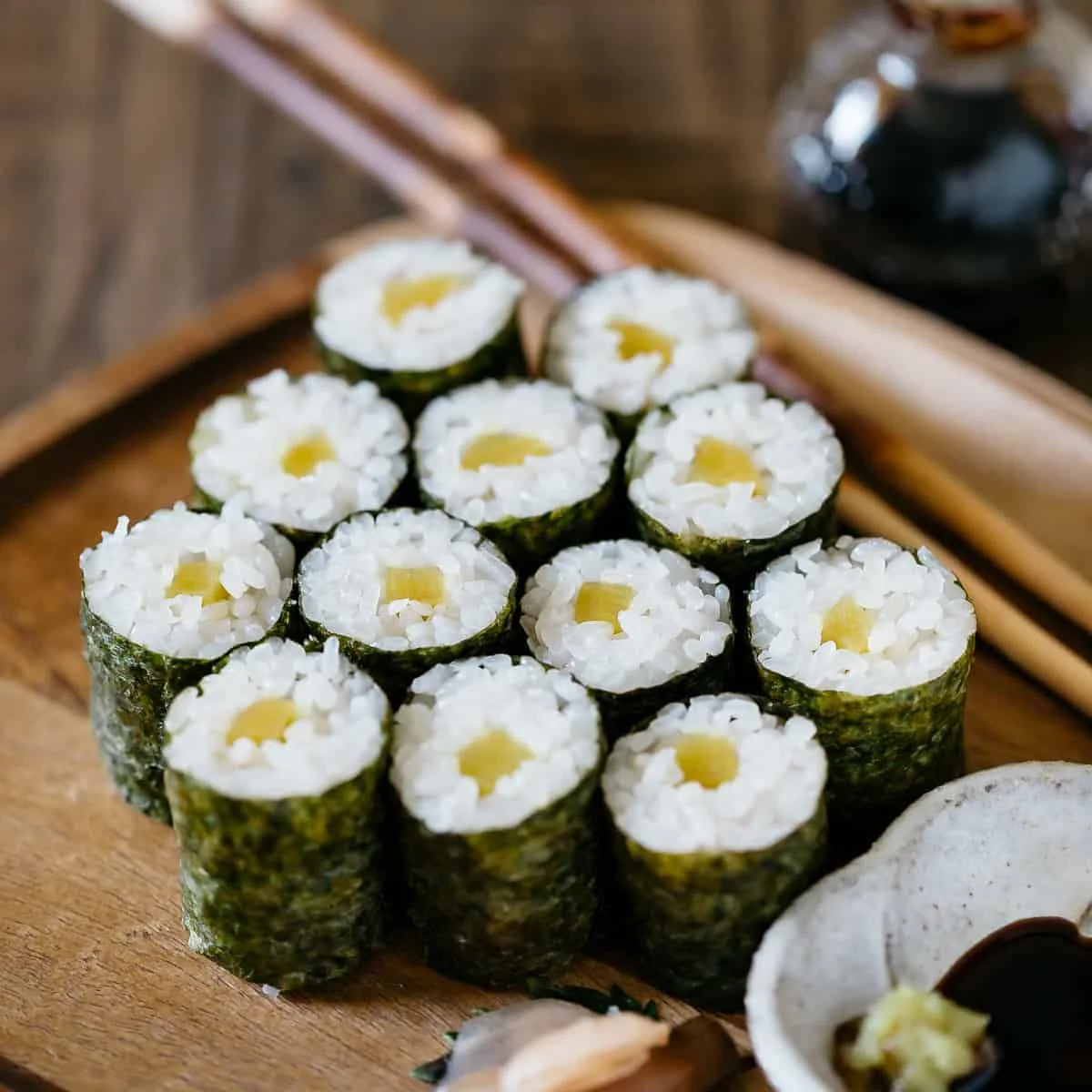
Oshinko maki is a Japanese sushi roll filled with tangy pickled daikon and seasoned rice, wrapped in crisp nori. It makes a colourful vegan option for a sushi meal and is easy to portion into bite-sized pieces.
Ingredients
- 360 g (2 cups)uncooked rice
- 450 ml (1.9 cups)water
- 1 piecekombu kelp
- 60 ml (4 tbsp)rice vinegar
- 30 ml (2 tbsp)sugar
- 10 ml (2 tsp)sea salt
- 5 sheets, cut in halfnori seaweed
- 1/4oshinko pickled daikon
- 30 ml (2 tbsp)water or rice vinegar
Instructions
- 1
Wash the rice
Rinse the uncooked rice, then drain away all the washing water.
- 2
Set up the cooker
Put the washed rice in a rice cooker with the water and kombu kelp.
- 3
Cook the rice
Cook the rice according to your rice cooker's instructions.
- 4
Mix sushi vinegar
Combine the rice vinegar, sugar and sea salt. Stir until the sugar and salt have dissolved while the rice cooks.
- 5
Season the rice
Once the rice is cooked, remove the kombu. Transfer the rice to a large mixing bowl or a hangiri wooden tub, if you have one, and mix in the sushi vinegar.
- 6
Portion the rice
Divide the sushi rice into portions of 80 g (1/2 cup) and cover them with a kitchen cloth to stop them drying out.
- 7
Cut the nori
Cut each nori sheet in half along its longer side.
- 8
Toast the nori
Pass each nori sheet over a medium flame to toast it and make it crisper.
- 9
Slice the daikon
Cut the oshinko into sticks about 5 mm (0.2 inch) square, matching their length to the long edge of the nori.
- 10
Set up the mat
Place a nori sheet on a bamboo sushi rolling mat.
- 11
Spread the rice
Spread one 80 g (1/2 cup) portion of sushi rice evenly over the nori, leaving 1.5 cm (0.6 inch) clear along the far edge.
- 12
Add the daikon
Place the oshinko along the centre of the rice.
- 13
Wet the edge
Use your fingertip to moisten the far edge of the nori with the water or rice vinegar.
- 14
Roll the sushi
Hold the oshinko in place with your fingers. Lift the edge of the bamboo mat with your thumb and index finger, then bring the near edge of the nori and rice over to meet the other side of the rice.
- 15
Press the roll
Press the bamboo mat firmly around the sushi roll with your hands.
- 16
Repeat the rolling
Repeat the same process with the remaining ingredients.
- 17
Slice the rolls
Cut each roll into six pieces with a sharp knife, wiping the blade with a well-moistened kitchen cloth between cuts.
- 18
Serve the sushi
Serve with sushi ginger, wasabi and a small bowl of soy sauce.
What is oshinko maki?
Oshinko maki is a type of Japanese makizushi, or rolled sushi, with oshinko—pickled daikon—as its filling. The word oshinko is commonly used for Japanese pickles, and the daikon gives this roll a tangy, lightly crunchy centre.
This version pairs the pickle with rice seasoned with vinegar, sugar and salt, all wrapped in nori. The simple filling lets the contrast between the tender rice, crisp seaweed and pickled radish come through.
Nutrition and macros by portion
The nutrition label shows one serving as written: 148 calories, 3g protein, 33g carbs, 1g fat.
| Portion | Adjustment | kcal | Protein | Carbs | Fat |
|---|---|---|---|---|---|
| Lighter | Smaller rice portions | 104 kcal | 2g | 23g | 1g |
| This serving | As written | 148 kcal | 3g | 33g | 1g |
| Hungry | Extra oshinko rolls | 222 kcal | 5g | 50g | 2g |
The rice supplies most of the carbohydrates, while the pickled daikon contributes flavour and crunch. The rice vinegar, sugar and sea salt season the dish, and it contains little fat; serve it with edamame or tofu for a more substantial plate.
The rice makes the roll
Rice choice: Use sushi rice or another short-grain rice that becomes cohesive when cooked. Rinsing it first removes excess surface starch and helps the cooked grains stay distinct rather than turning gluey.
Kombu: The piece of kelp cooks with the rice, then is removed before the vinegar is mixed in. Keep it intact so it is easy to lift out.
Season while the rice is warm
Vinegar mixture: Stir the rice vinegar, sugar and salt until dissolved before adding it to the rice. This distributes the seasoning evenly without leaving pockets of undissolved sugar or salt.
Mixing: Transfer the cooked rice to a wide bowl or hangiri and combine it with the vinegar. Handle the rice gently so you season it without crushing the grains.
Prepare the filling and nori
Daikon sticks: Cut the oshinko into even sticks about 5 mm square, with each stick long enough to span the nori. A uniform filling is easier to position and helps the roll keep an even shape.
Nori: The recipe calls for halving the sheets along their longer side, then toasting them briefly over a medium flame. Keep the seaweed moving and avoid scorching it.
Roll neatly and firmly
Rice layer: Spread one 80 g (1/2 cup) portion evenly over the nori, leaving a 1.5 cm (0.6 inch) strip bare at the far edge. That uncovered strip is moistened to help close the roll.
Rolling: Keep the daikon centred as you bring the near edge of the mat over the filling. Press firmly enough to make a compact roll, without squeezing so hard that the rice spills out.
Slice and serve
Clean cuts: Use a sharp knife and wipe it with a well-moistened cloth between each cut, as directed. This helps prevent rice from sticking to the blade and dragging the roll out of shape.
To serve: Offer the pieces with sushi ginger, wasabi and a small bowl of soy sauce. They also sit well alongside other sushi or a simple Japanese-style meal.
Recipe notes & tips
- Keep the cooked rice covered with a kitchen cloth while you prepare the rolls so it does not dry out.
- Dissolve the sugar and salt fully in the rice vinegar before seasoning the rice.
- Cut the daikon sticks to a consistent thickness so they sit evenly along the roll.
- Toast the nori briefly over a medium flame, keeping it in motion to avoid scorching.
- Moisten the knife blade between slices to make cleaner cuts.
- Use the water or rice vinegar listed in the ingredients to seal the nori edge.
Variations
- Add cucumber: Place a thin cucumber stick alongside the oshinko for another crisp element.
- Try another pickle: Use a different Japanese pickle in place of the oshinko while keeping the same rolling method.
- Serve with sesame: Sprinkle toasted sesame seeds over the rice before adding the filling.
- Make smaller pieces: Cut each roll into more than six pieces for bite-sized servings.
- Add avocado: Include a narrow strip of avocado with the daikon for a softer filling.
Common mistakes to avoid
- Rice left uncovered: It can dry while you prepare the nori; keep the portions under a kitchen cloth.
- Uneven rice layer: Thick patches make the roll harder to close; spread the portion evenly and leave the specified bare strip.
- Overfilled nori: Too much filling can make the roll difficult to seal; centre the oshinko and keep it to a manageable layer.
- Loose rolling: The pieces may fall apart when sliced; press the mat firmly around the roll.
- Dry sealing edge: The nori may not close securely; moisten the far edge with water or rice vinegar.
- Sticky knife: Rice can pull the roll out of shape; wipe the blade with a well-moistened cloth between cuts.
How to store
Store leftover rolls in an airtight container in the fridge and eat them within a day for the best texture. The rice will firm up when chilled, so let the rolls stand briefly at room temperature before serving; avoid reheating, which can soften the nori.
Frequently asked questions
What is oshinko?
Oshinko refers to Japanese pickles; in this recipe it is pickled daikon radish. It gives the roll its tangy flavour and crisp texture.
Can I make the rice without a rice cooker?
Yes, cook the washed rice with the water and kombu using your usual method for short-grain rice. Follow the same steps to remove the kombu and mix in the sushi vinegar.
Do I need a bamboo rolling mat?
A bamboo mat makes it easier to roll and press the sushi evenly. The recipe uses one, so use a clean mat if you have it.
Why is the nori toasted?
Briefly passing the nori over a medium flame makes it crisper. Keep it moving so it does not burn.
How many pieces does each roll make?
The recipe directs you to cut each roll into six pieces. Wipe the knife between cuts to help keep the pieces neat.
What should I serve with oshinko rolls?
Serve them with sushi ginger, wasabi and a small bowl of soy sauce, as the recipe suggests. Edamame or tofu can make the meal more substantial.
Cook it from the original
This recipe comes from chopstickchronicles.com. Their page has the author’s own photos, notes and tips — the best place to cook it from.
Open the recipe on chopstickchronicles.com