
Vietnamese Crispy Pork Belly with Fine Rice Vermicelli
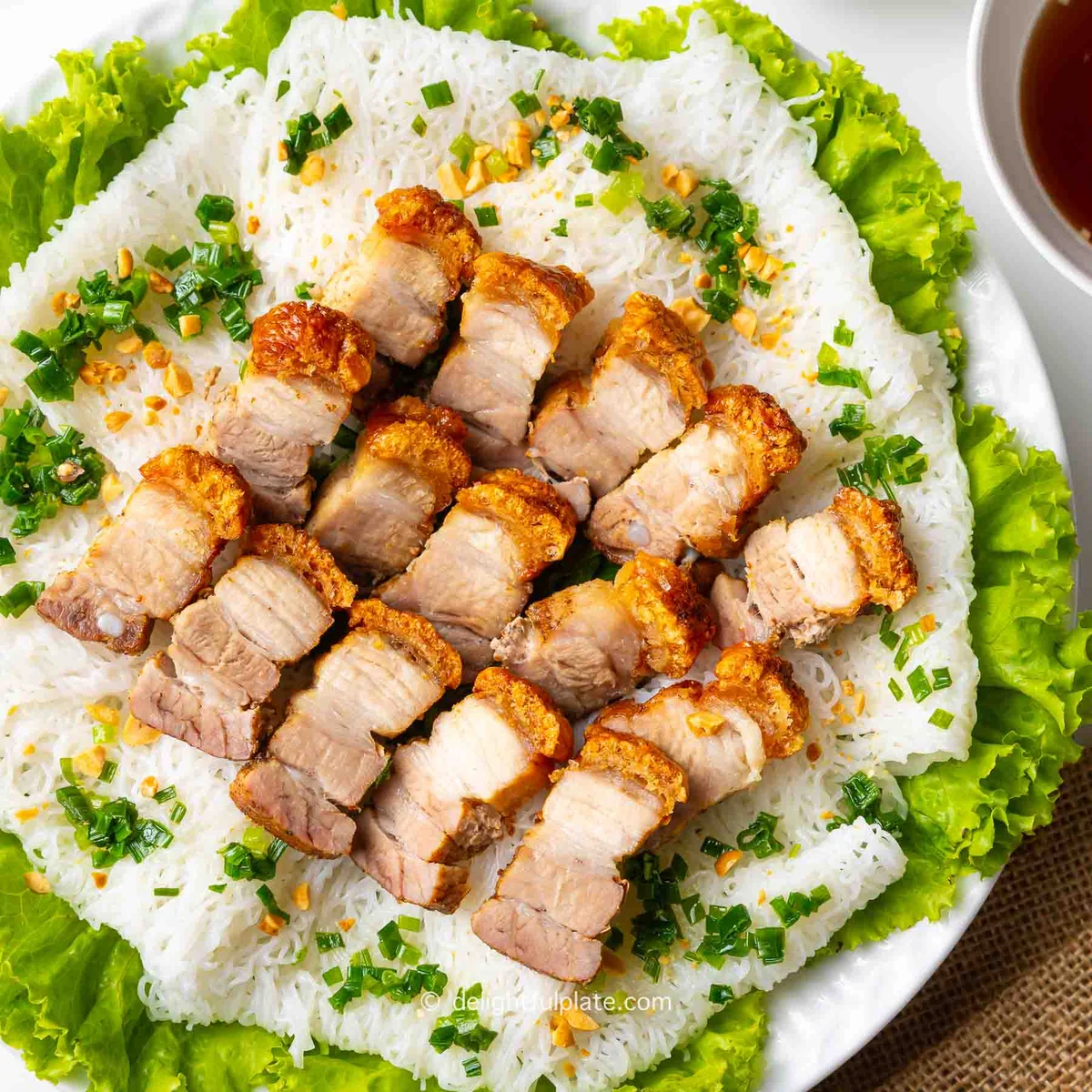
Heo quay bánh hỏi pairs Vietnamese roast pork belly with fine rice vermicelli sheets, scallion oil, herbs and a tangy nước chấm dressing. It is a celebratory-feeling platter with crisp, blistered skin and plenty of fresh accompaniments.
Ingredients
- 680 gpork belly slab with skin
- 1/4 teaspoonsalt
- 1/8 teaspoonblack pepper
- 1/8 teaspoonfive-spice powder
- 1/4 teaspoonrice vinegar
- 80–120 mlcoarse salt
- 90 mlwater
- 1 1/2 tablespoonsfish sauce
- 2 teaspoons, to tastesugar
- 2 teaspoons, to tastelime juice
- 1 teaspoonminced garlic
- As neededfine rice vermicelli sheets
- 60 mlcooking oil
- 150 mlthinly sliced green scallions
- To tasteroasted peanuts, lightly crushed
- To tastechopped soft green lettuce
- To tastea mix of fresh herbs such as coriander, mint and Thai basil
Instructions
- 1
Dry the pork
Pat the pork belly dry. Lightly score the skin in a crosshatch pattern with a sharp knife, or prick it all over with a fork or another sharp implement.
- 2
Season the meat
Mix the salt, pepper and five-spice powder, then rub the mixture over the meat side. Keep the skin dry and unseasoned.
- 3
Air-dry the skin
Set the pork skin-side up, uncovered, in a cool spot on the counter for about 1 hour, or refrigerate it overnight to dry the skin.
- 4
Preheat the oven
Heat the oven to 200°C.
- 5
Add the salt crust
Brush the skin lightly with rice vinegar. Wrap the meat side tightly in foil, leaving the skin uncovered, then spread an even layer of coarse salt over it, about 80–120 ml.
- 6
Roast the pork
Put the wrapped pork on a wire rack over a baking sheet and roast for 1 hour.
- 7
Remove the crust
Take the pork out of the oven and carefully remove the salt crust.
- 8
Finish roasting
Raise the oven temperature to 210°C. Return the pork, still wrapped in foil, and roast for another 30 minutes, or until the skin is golden and blistered and the meat is tender.
- 9
Mix the dressing
Combine the water, fish sauce, sugar, lime juice and minced garlic. Adjust the sweetness or acidity to taste.
- 10
Prepare vermicelli
Prepare the fine rice vermicelli sheets according to the packet instructions.
- 11
Make scallion oil
Heat the oil in a small saucepan over medium heat. When hot, add the sliced scallions and stir briefly. Take the pan off the heat and transfer the mixture to a bowl.
- 12
Rest and chop
Remove the pork from the oven and leave it to rest for about 10 minutes before handling. Chop it into bite-sized pieces.
- 13
Assemble the platter
Arrange the bánh hỏi sheets on a large platter. Drizzle with scallion oil, scatter over the roasted peanuts and top with the pork pieces.
- 14
Serve with sides
Serve the platter with lettuce, fresh herbs and the dressing on the side.
What is bánh hỏi?
Bánh hỏi is a fine rice vermicelli preparation associated with southern Vietnamese cooking. Here, its delicate sheets are served with heo quay, roast pork belly with crisp, blistered skin.
The contrast makes the platter work: tender, rich pork is balanced by soft noodles, fresh greens and a savoury, bright nước chấm dressing.
Nutrition and macros by portion
The nutrition label shows one serving as written: 1356 calories, 22g protein, 4g carbs, 139g fat.
| Portion | Adjustment | kcal | Protein | Carbs | Fat |
|---|---|---|---|---|---|
| Lighter | More herbs, less pork | 949 kcal | 15g | 3g | 97g |
| This serving | As written | 1356 kcal | 22g | 4g | 139g |
| Hungry | Larger noodle portion | 2034 kcal | 33g | 6g | 209g |
The pork belly supplies most of the fat and protein, while the fine rice vermicelli provides the main carbohydrate component. Serve a moderate amount of pork with a generous helping of lettuce and herbs to add freshness and balance the rich meat.
Dry skin for crisp crackling
Scoring: Make shallow cuts or prick the skin so it can blister as it roasts, taking care not to cut deeply into the meat.
Air-drying: Leave the skin uncovered for about an hour, or refrigerate the pork overnight. Keeping the skin dry and unseasoned is central to the method.
Season and shield the pork
Meat side: The salt, pepper and five-spice mixture seasons the flesh, while the skin is left plain.
Salt crust: A thin brush of rice vinegar goes on the skin before coarse salt is spread over it. Foil protects the meat side during the first roast, with the skin exposed.
Watch the roasting stages
First roast: Cook at 200°C for 1 hour, then carefully remove the salt crust.
Final roast: At 210°C, give the pork another 30 minutes. Look for golden, blistered skin and tender meat; the recipe gives these as the doneness cues.
Prepare the accompaniments
Dressing: Mix the water, fish sauce, sugar, lime and garlic, then adjust the balance of sweetness and acidity to your taste.
Scallion oil: Heat the oil and briefly stir in the scallions, removing the pan from the heat once they are added. Prepare the vermicelli as directed on its packet.
Serve it as a platter
Rest the pork for about 10 minutes before chopping, which makes it easier to handle. Layer the bánh hỏi with scallion oil and peanuts, then add the pork.
Keep the lettuce, fresh herbs and dressing on the side so everyone can add them to their portion. Coriander, mint and Thai basil are suggested herb choices.
Recipe notes & tips
- Dry the skin thoroughly before roasting for the best chance of blistering.
- Keep the seasoning rub on the meat side and leave the skin unseasoned.
- Wrap the meat tightly in foil while keeping the skin uncovered.
- Remove the coarse salt carefully after the first hour of roasting.
- Rest the pork for about 10 minutes before chopping it.
- Adjust the dressing gradually, tasting as you add sugar or lime.
Variations
- Change the herbs: Use the suggested coriander, mint and Thai basil in whatever combination you have.
- Adjust the dressing: Add sugar or lime juice to taste for a sweeter or sharper finish.
- Add extra crunch: Scatter more lightly crushed roasted peanuts over the assembled platter.
- Serve extra greens: Offer additional lettuce alongside the platter for wrapping bites.
- Prepare ahead: Dry the pork uncovered in the refrigerator overnight before roasting.
Common mistakes to avoid
- Wet skin: Pat it dry and allow the uncovered pork to air-dry before roasting.
- Seasoned skin: Keep the salt, pepper and five-spice mixture on the meat side only.
- Deep scoring: Cut or prick the skin lightly so you do not cut far into the meat.
- Salt left on: Carefully remove the coarse salt after the first hour, before the hotter final roast.
- Skipping the rest: Leave the cooked pork for about 10 minutes before handling and chopping.
How to store
Refrigerate leftover pork, vermicelli and accompaniments separately in covered containers and use within 3 days. Reheat the pork in an oven until hot; the skin may lose some of its crispness. Assemble the platter just before serving.
Frequently asked questions
Can I dry the pork belly overnight?
Yes. The method allows the pork to rest uncovered in the refrigerator overnight, which helps dry the skin before roasting.
How do I know when the pork is ready?
After the final 30 minutes at 210°C, look for golden, blistered skin and tender meat.
Can I make the dressing ahead?
Yes. Mix it ahead and taste it before serving, adjusting the sweetness or acidity to suit your preference.
What can I use instead of Thai basil?
The recipe suggests a mix of fresh herbs, such as coriander and mint, so you can use those if Thai basil is unavailable.
How should I serve the vermicelli sheets?
Prepare them according to the packet instructions, then layer them on a platter with scallion oil, peanuts and pork. Serve the lettuce, herbs and dressing on the side.
Cook it from the original
This recipe comes from delightfulplate.com. Their page has the author’s own photos, notes and tips — the best place to cook it from.
Open the recipe on delightfulplate.com