
Onion Bhajji
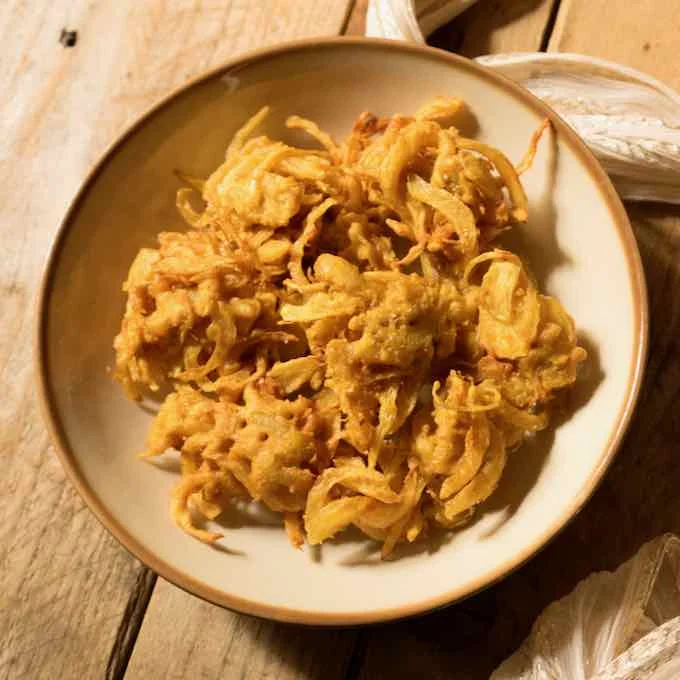
Onion bhajji are crisp, spiced onion fritters coated in chickpea-flour batter, served here with a cool cucumber and mint yoghurt dip. They make a satisfying hot snack or a starter to share.
Ingredients
- 2onions, thinly sliced
- 120 g (1 cup)chickpea flour
- 80 ml (⅓ cup), or more as neededcold water
- 1 clovegarlic, pressed
- ½ teaspoonbaking powder
- ½ teaspoonchilli powder
- ½ teaspoonturmeric powder
- 1green chilli, deseeded and very finely chopped
- ½ teaspoonsalt
- For fryingvegetable oil
- ½cucumber
- 142 g (5 oz)dahi or yoghurt
- 2 tablespoonschopped mint
Instructions
- 1
Soak the onions
Put the sliced onions in a large bowl of cold water and leave them to soak.
- 2
Mix the dry ingredients
Sieve the chickpea flour and baking powder into a bowl. Stir in the chilli powder, turmeric, chopped green chilli, garlic and salt.
- 3
Make the batter
Gradually mix in 80 ml (⅓ cup) cold water, adding more if needed, up to 125 ml (½ cup), until you have a thick paste. Set it aside.
- 4
Coat the onions
Drain the onions thoroughly, then stir them into the batter.
- 5
Heat the oil
Pour about 7 cm of vegetable oil into a wok or deep frying pan and heat it to 170°C (350°F).
- 6
Fry the bhajji
Add a few tablespoons of batter to the hot oil at a time, without crowding the pan. Fry for 3–4 minutes, turning once, until evenly browned and crisp.
- 7
Drain and serve
Lift the bhajji out with a skimmer and drain them on kitchen paper. Sprinkle with a little salt and serve hot with the raita.
- 8
Grate the cucumber
Peel and deseed the cucumber, then grate it into a colander set over a bowl.
- 9
Remove the moisture
Let the cucumber drain, then press it with your hands to squeeze out any remaining liquid.
- 10
Mix the raita
Combine the yoghurt, chopped mint and drained cucumber in a large bowl, then transfer the raita to a serving bowl.
What are onion bhajji?
Bhajji are spiced fritters associated with Indian cooking, and onion bhajji are made by coating sliced onion in a chickpea-flour batter before frying. They are commonly enjoyed as a snack or starter.
This version seasons the batter with chilli, turmeric and garlic, then pairs the fritters with cucumber and mint yoghurt. The contrast between the crisp coating and cool dip is part of the appeal.
Nutrition and macros by portion
The nutrition label shows one serving as written: 135 calories, 5g protein, 16g carbs, 6g fat.
| Portion | Adjustment | kcal | Protein | Carbs | Fat |
|---|---|---|---|---|---|
| Lighter | Smaller bhajji portion | 95 kcal | 3g | 11g | 4g |
| This serving | As written | 135 kcal | 5g | 16g | 6g |
| Hungry | Add rice and vegetables | 203 kcal | 7g | 24g | 9g |
The chickpea flour and onions provide most of the carbohydrates, while the flour and yoghurt contribute protein. Frying oil supplies much of the fat, so the final amount depends on how much the fritters absorb; pairing a serving with extra vegetables is a practical way to round out the plate.
Getting the batter right
Flour and leavening: the chickpea flour gives the coating its savoury flavour, while the baking powder helps it fry up less dense. Sifting them together helps distribute the baking powder evenly.
Water: add it gradually, starting with 80 ml and using up to 125 ml if needed. The batter should be thick enough to cling to the onion rather than run off it.
Preparing the onions
Soaking: the recipe begins by soaking the sliced onions in cold water. Drain them well before mixing them into the batter so excess water does not loosen the coating.
Slicing: aim for thin, fairly even slices so the onion cooks through in the short frying time. Mix them thoroughly into the batter so each piece gets coated.
Frying for a crisp finish
Oil temperature: bring the oil to 170°C before adding the batter. Oil that is not hot enough can leave the fritters greasy, while excessively hot oil can brown the outside before the onion is tender.
Small batches: fry only a few portions at a time, turning them once. Give each bhajji room in the pan so the oil stays hot and the fritters brown evenly.
When they are ready
Colour and texture: the bhajji should be evenly browned and crisp on the outside after about 3–4 minutes. Lift one out and check that the onion inside is tender before frying the next batch.
Drainage: let the fritters rest briefly on kitchen paper after lifting them from the oil. Serve them hot, when their coating is at its crispest.
Making the cucumber raita
Cucumber: peel and deseed it, then grate it into a colander. Press out as much liquid as you can; watery cucumber can make the yoghurt dip thin.
Yoghurt and mint: mix the drained cucumber with the dahi or yoghurt and chopped mint. Prepare it while the oil heats, then serve it alongside the freshly fried bhajji.
What to serve with bhajji
The cucumber raita is the dip specified here, balancing the warm spices with a cool, creamy texture. Offer it in a separate bowl so the fritters stay crisp.
For a fuller meal, serve the bhajji as a starter before a curry, or alongside rice and vegetables. They are best brought to the table soon after frying.
Recipe notes & tips
- Drain the soaked onions thoroughly before folding them into the batter.
- Add the water in stages so the batter stays thick enough to coat the onion.
- Use a cooking thermometer to bring the oil to 170°C.
- Fry a few bhajji at a time to avoid crowding the pan.
- Press the grated cucumber firmly to keep the raita from becoming watery.
- Serve the fritters straight after frying for the crispest texture.
Variations
- Extra heat: keep some of the green chilli seeds or add a little more chilli powder.
- Milder flavour: reduce the chilli powder and omit the green chilli.
- Fresh herbs: add extra chopped mint to the raita just before serving.
- Thicker raita: use strained yoghurt for a creamier dip.
- Smaller fritters: use a smaller spoonful of batter for bite-sized bhajji and check them early.
Common mistakes to avoid
- Watery batter: add the cold water gradually and stop once the mixture clings to the onions.
- Wet onions: drain and press the onions before mixing them into the batter.
- Cool oil: wait until the oil reaches 170°C so the coating can crisp rather than absorb excess oil.
- Crowded pan: fry in small batches to keep the oil hot and allow the fritters to brown.
- Watery raita: squeeze the grated cucumber well before stirring it into the yoghurt.
- Overcooking the bhajji: start checking at 3 minutes and remove them once browned and crisp.
How to store
The bhajji are best eaten hot, but cooled leftovers can be kept in an airtight container in the fridge for up to 2 days. Reheat in an oven or air fryer until hot and crisp; store the raita separately and use within 2 days.
Frequently asked questions
Can I make the batter ahead?
It is best mixed shortly before frying so it stays thick and coats the onion well. You can prepare and measure the dry ingredients ahead.
How do I know the oil is hot enough?
Use a thermometer and heat it to 170°C. Without one, a small dab of batter should sizzle steadily when added, rather than sinking without bubbling or browning immediately.
Can I make these without a wok?
Yes. Use a deep frying pan or another suitable deep pan, and make sure there is enough room to fry small batches safely.
Can I use yoghurt instead of dahi?
Yes. Plain yoghurt is listed as an alternative; thicker yoghurt will give the raita a creamier consistency.
Can onion bhajji be reheated?
Yes, though they are crispest just after frying. Reheat them in an oven or air fryer rather than a microwave to help restore the crisp coating.
Cook it from the original
This recipe comes from 196flavors.com. Their page has the author’s own photos, notes and tips — the best place to cook it from.
Open the recipe on 196flavors.com