
Japanese Roasted Tea Porridge
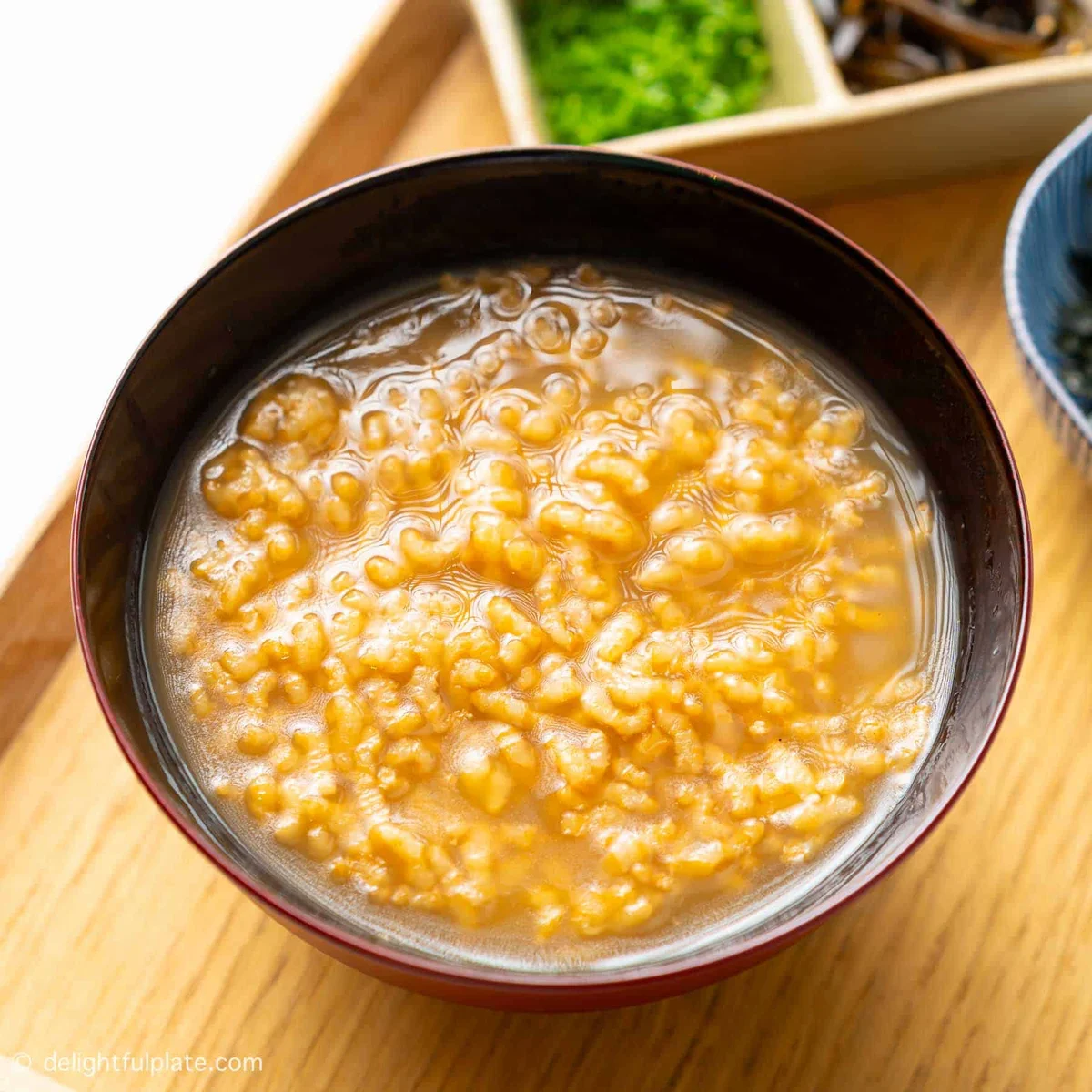
This Japanese rice porridge is gently simmered in hojicha, giving it a mellow, roasted aroma and soft, comforting texture. Serve it hot with pickles, nori or salted grilled fish for a simple breakfast or light meal.
Ingredients
- 100 g (3.5 oz; scant ½ cup)uncooked Japanese short-grain white rice
- 1.2–1.44 litres (5–6 cups)water
- 12 g (6 tablespoons)hojicha tea leaves
- Optional, to tastesalt
Instructions
- 1
Rinse the rice
Rinse the rice under running water until the water is almost clear. Drain it and leave it to stand for 10–15 minutes.
- 2
Steep the hojicha
Put the water in a pot over medium heat. When it is just about to bubble rapidly, turn off the heat, add the hojicha leaves and steep for 2–3 minutes.
- 3
Strain and boil
Strain the tea and discard the leaves. Return the tea to the pot over medium heat and bring it back to a boil, then add the rinsed rice.
- 4
Simmer the porridge
Simmer for about 40 minutes, leaving the lid slightly askew, until the rice is soft and porridge-like. Adjust the amount of liquid to suit your preferred consistency.
- 5
Avoid stirring
Do not stir the rice as it cooks, so the grains stay intact. If there does not seem to be enough liquid and the bottom may burn, stir only then and add a little water.
- 6
Serve it hot
Serve hot with umeboshi, nori, assorted Japanese vegetable pickles and salted grilled fish.
What is Japanese roasted tea porridge?
This is a gentle rice porridge flavoured with hojicha, a Japanese roasted green tea. Its toasted, nutty aroma gives the rice a distinctive savoury character without making the dish heavily seasoned.
This version builds its flavour by steeping the tea leaves in hot water before adding the rice. Traditional-style accompaniments such as umeboshi, pickles, nori and grilled fish bring contrast to the mild porridge.
Nutrition and macros by portion
The nutrition label shows one serving as written: 182 calories, 4g protein, 40g carbs, 0g fat.
| Portion | Adjustment | kcal | Protein | Carbs | Fat |
|---|---|---|---|---|---|
| Lighter | Smaller rice portion | 127 kcal | 3g | 28g | 0g |
| This serving | As written | 182 kcal | 4g | 40g | 0g |
| Hungry | Larger rice portion | 273 kcal | 6g | 60g | 0g |
The rice provides most of the carbohydrates, while the recipe contains very little fat and only a modest amount of protein. Add salted grilled fish for protein, and serve pickles or vegetables alongside for freshness and contrast.
Choosing the rice and tea
Short-grain rice: Japanese short-grain white rice softens as it simmers and gives the porridge its characteristic tender, cohesive texture. Rinsing removes excess surface starch before cooking.
Hojicha: Use loose hojicha leaves and steep them briefly in water that is hot but no longer at a rapid boil. Straining before adding the rice keeps the finished porridge smooth and free of tea leaves.
Keep the simmer gentle
Steady heat: Once the rice is added, maintain a gentle simmer rather than a vigorous boil. Leave the lid slightly askew, as directed, and allow about 40 minutes for the grains to become soft.
Liquid level: The recipe allows 1.2–1.44 litres of water, so the result can be adjusted to your preferred thickness. Add a little water if the pot looks at risk of drying out.
Protect the rice grains
Hands off: Avoid stirring during most of the cooking time so the grains do not break apart. Stir only if there is too little liquid and the rice may catch on the bottom of the pot.
Doneness: The porridge is ready when the rice is soft and the mixture looks porridge-like. If it still seems too firm, continue simmering gently until it reaches that texture.
Season and serve
Salt: Salt is optional, so taste the porridge before adding any. The suggested accompaniments may already provide a salty or tangy counterpoint.
On the side: Umeboshi and Japanese vegetable pickles add sharp, briny notes, while nori brings a savoury sea flavour. Salted grilled fish makes the meal more substantial.
Plan the cooking time
Soaking pause: After rinsing, the rice rests for 10–15 minutes before it goes into the tea. This is part of the stated method, so allow time for it as well as the roughly 40-minute simmer.
Serve promptly: The porridge is best served hot, when its soft texture and roasted-tea aroma are at their most noticeable.
Recipe notes & tips
- Rinse the rice until the water is almost clear, then drain it well.
- Turn off the heat before adding the hojicha leaves for steeping.
- Strain the tea thoroughly before adding the rice.
- Keep the lid slightly askew during the simmer.
- Avoid stirring unless the pot looks too dry and the rice may stick.
- Add water gradually if you prefer a looser porridge.
Variations
- Add umeboshi: Serve each bowl with a Japanese pickled plum for a sharp, salty contrast.
- Include nori: Offer sheets or strips of nori alongside for a savoury sea flavour.
- Serve with fish: Add salted grilled fish to make the meal more substantial.
- Use vegetable pickles: Choose assorted Japanese pickles for a crisp, tangy accompaniment.
Common mistakes to avoid
- Boiling the tea leaves: Add them only after turning off the heat, then steep for 2–3 minutes.
- Skipping the rinse: Rinse until the water is almost clear to remove excess surface starch.
- Stirring repeatedly: Leave the rice undisturbed so the grains do not break.
- Letting the pot dry out: If the liquid gets low and the rice may catch, stir and add a little water.
- Cooking at a rolling boil: Keep the porridge at a gentle simmer so it cooks steadily.
How to store
Cool leftovers promptly, refrigerate in a covered container and use within 3–4 days. Reheat gently in a saucepan with a splash of water, stirring as needed, until piping hot; the porridge will thicken as it stands.
Frequently asked questions
Can I make the porridge thicker or thinner?
Yes. The recipe gives a range of 1.2–1.44 litres of water, and you can adjust the liquid during cooking to reach your preferred consistency.
Do I need to stir the rice while it cooks?
No, not as a rule; stirring can break the grains. Stir only if there seems to be too little liquid and the rice may burn on the bottom.
Can I use hojicha tea bags?
The recipe calls for 12 g of hojicha leaves. If using tea bags, steep them in the hot water and remove them before adding the rice.
Is the salt essential?
No, it is optional and can be added to taste. Consider how salty your chosen accompaniments are before seasoning.
What should I serve with roasted tea porridge?
The suggested sides are umeboshi, nori, assorted Japanese vegetable pickles and salted grilled fish. Choose one or combine several.
Can I reheat leftover porridge?
Yes. Warm it gently in a saucepan with a splash of water, as it thickens during storage, and heat it until piping hot.
Cook it from the original
This recipe comes from delightfulplate.com. Their page has the author’s own photos, notes and tips — the best place to cook it from.
Open the recipe on delightfulplate.com