
BACHALI AAKU SALLA SAMBAR
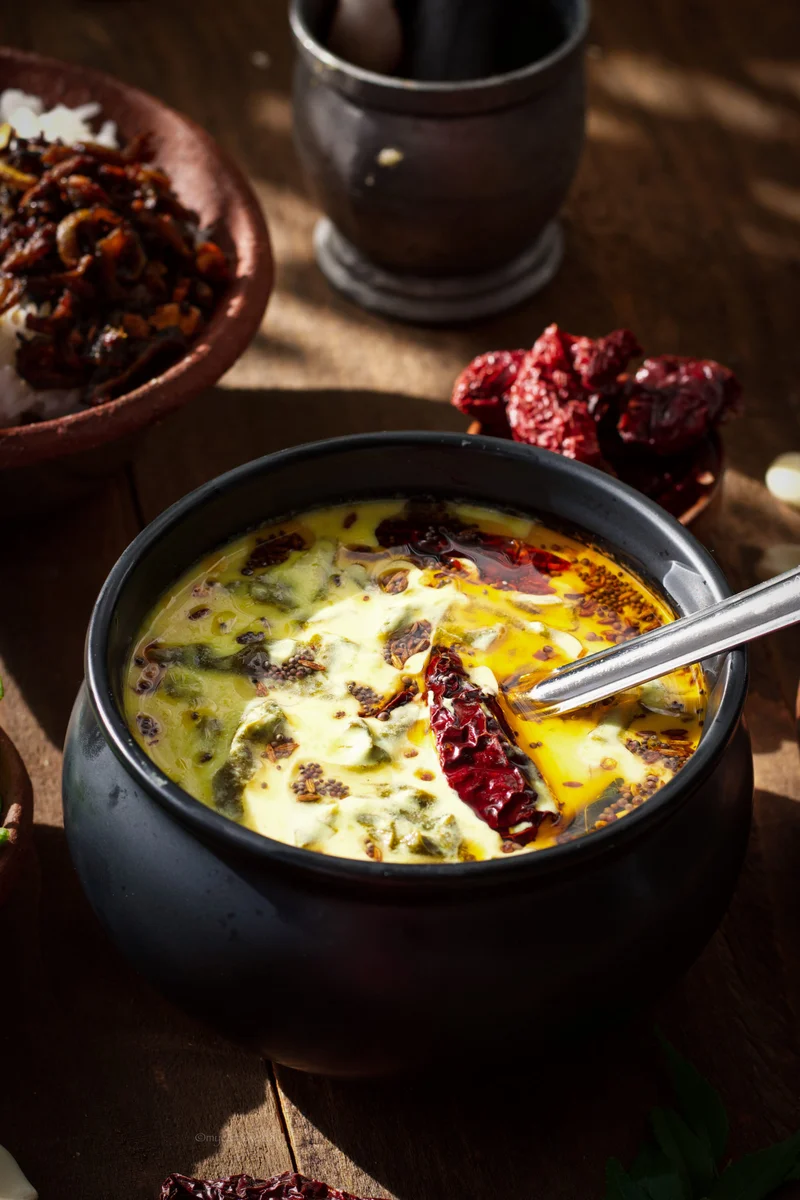
Bachali aaku salla sambar is a tangy Telangana-style yoghurt and chickpea-flour kadhi with Malabar spinach and a fragrant spice tempering. It makes a warming, gently spiced meal with rice or millet flatbreads.
Ingredients
- 360 ml (1 1/2 cups)curd or yoghurt
- 60 g (1/2 cup)chickpea flour (besan)
- 30 g (1 cup)Malabar spinach leaves
- 1/2onion, thinly sliced
- 1 tbspgreen chilli paste
- 3 clovesgarlic
- 1 tspcumin seeds
- to tastesalt
- 1 tspturmeric powder
- 480 ml (2 cups)water
- 3 tbspoil
- 1 tspmustard seeds
- 1 tspcumin seeds
- 3whole dried red chillies
- 1 tsp (optional)chilli seeds
- 1 sprigcurry leaves
- 2 clovesgarlic
Instructions
- 1
Pound garlic
Pound some of the garlic cloves with the cumin seeds using a mortar and pestle.
- 2
Mix the base
In a mixing bowl, combine the yoghurt, green chilli paste, pounded garlic and cumin, chopped Malabar spinach, turmeric, salt, sliced onion and chickpea flour. Mix until smooth and lump-free.
- 3
Add water
Gradually pour in the water, mixing until it is fully incorporated.
- 4
Choose a method
Continue with either the Instant Pot method or the hob method.
- 5
Start tempering
For the Instant Pot method, select sauté, add the oil, mustard seeds, cumin seeds and curry leaves, and let them splutter.
- 6
Add the mixture
Pour the whisked yoghurt and chickpea-flour mixture into the tempering and mix well.
- 7
Pressure cook
Close the Instant Pot with the pressure valve set to sealing. Cook on soup mode for 5 minutes, then allow a 10-minute natural pressure release.
- 8
Adjust consistency
Add more water if you prefer a thinner kadhi, then use sauté mode to bring it to a full boil.
- 9
Release pressure
Take care when releasing pressure before the 10-minute natural release is complete, as the kadhi may spit from the valve. If an earlier release is needed, use slow, short bursts of quick release.
- 10
Use the hob
For the hob method, pour the whisked yoghurt mixture directly into a saucepan. Bring it to a boil over a medium heat, stirring intermittently, until it thickens completely.
- 11
Adjust seasoning
Taste the kadhi and adjust the salt to your preference.
- 12
Make tempering
Heat a small pan with the oil. Add the mustard seeds, cumin seeds, optional chilli seeds, torn dried red chillies and curry leaves, and let them splutter.
- 13
Fry garlic
Add the pounded garlic and cumin mixture to the tempering and fry until golden brown.
- 14
Finish the kadhi
Pour the tempering over the cooked salla sambar or kadhi.
- 15
Serve hot
Serve the Bachali aaku salla sambar hot with rice or millet flatbreads.
What is Bachali aaku salla sambar?
This is a Telangana-style kadhi: a tangy, yoghurt-based dish thickened with chickpea flour and seasoned with spices. Bachali aaku means Malabar spinach, which gives this version its leafy character.
The recipe pairs a smooth, gently sour yoghurt base with greens and a finishing tempering of seeds, chillies, curry leaves and garlic. It is designed to be eaten with rice or flatbreads.
Nutrition and macros by portion
The nutrition label shows one serving as written: 270 calories, 9g protein, 22g carbs, 17g fat.
| Portion | Adjustment | kcal | Protein | Carbs | Fat |
|---|---|---|---|---|---|
| Lighter | Use less tempering oil | 189 kcal | 6g | 15g | 12g |
| This serving | As written | 270 kcal | 9g | 22g | 17g |
| Hungry | Serve with extra rice | 405 kcal | 14g | 33g | 26g |
The chickpea flour and rice or flatbread served alongside provide most of the carbohydrates; the oil and yoghurt contribute much of the fat, while yoghurt and chickpea flour supply some protein. Pair a serving with extra greens or another vegetable side to round out the plate.
Build a smooth yoghurt base
Flour first: mix the chickpea flour thoroughly with the yoghurt and flavourings before adding water. This helps prevent lumps in the kadhi.
Add water gradually: whisk as you pour so the mixture stays evenly blended and ready to cook.
Cook gently and thoroughly
Instant Pot: use the specified 5 minutes on soup mode, followed by a 10-minute natural release. Be cautious if releasing pressure sooner, since the mixture can come through the valve.
Hob: bring the mixture to a boil over a medium heat, stirring intermittently until it thickens. Keep stirring often enough to stop the yoghurt and flour settling on the bottom.
Finish with the tempering
Whole spices: let the mustard and cumin seeds splutter in the hot oil to release their aroma, then fry the garlic mixture until golden brown.
Chillies and leaves: dried red chillies, optional chilli seeds and curry leaves bring warmth and fragrance. Pour the hot tempering over the cooked kadhi for a distinct finishing layer.
Check the texture and seasoning
Thickness: the cooked kadhi should be thickened, but you can stir in more water and bring it back to a full boil if you prefer it looser.
Balance: taste after cooking and adjust the salt. The yoghurt supplies the tang, while the chillies provide the heat, so keep the seasoning in proportion to your preference.
Serve it with a simple side
Rice: warm rice makes a straightforward base for the tangy sauce and spinach. Spoon the kadhi over the rice while hot.
Flatbreads: millet flatbreads are another suggested pairing, offering a sturdy accompaniment for scooping up the kadhi.
Recipe notes & tips
- Chop the Malabar spinach before mixing it into the yoghurt base so it is evenly distributed.
- Whisk the chickpea flour into the yoghurt before adding water to help avoid lumps.
- Add the water gradually rather than all at once, mixing as you go.
- Keep an eye on the tempering: the seeds should splutter and the garlic should turn golden, not burn.
- If you use the Instant Pot, allow the full 10-minute natural release where possible.
- Taste and adjust the salt before serving.
Variations
- Milder heat: omit the optional chilli seeds for a less fiery tempering.
- More greens: increase the Malabar spinach for a leafier kadhi.
- Tangier base: use a more tangy curd or yoghurt for a sharper flavour.
- Rice pairing: serve over warm rice for the suggested classic accompaniment.
- Millet pairing: serve with millet flatbreads instead of rice.
Common mistakes to avoid
- Lumpy base: whisk the chickpea flour thoroughly into the yoghurt before adding water.
- Adding water too quickly: pour it in gradually while mixing to keep the base smooth.
- Skipping the stir: stir intermittently on the hob so the mixture thickens evenly.
- Burnt garlic: fry the pounded mixture only until golden brown, then add it to the kadhi.
- Early pressure release: use the 10-minute natural release where possible; if releasing sooner, use slow, short bursts.
- Too thick: add water to your preferred consistency and bring the kadhi back to a full boil.
How to store
Cool leftovers and refrigerate them in a covered container for up to 3 days. Reheat gently in a saucepan, stirring often; add a splash of water if the kadhi has thickened in the fridge.
Frequently asked questions
Can I make this without an Instant Pot?
Yes. Use the hob method: bring the whisked yoghurt mixture to a boil over a medium heat, stirring intermittently until it thickens.
How do I prevent lumps?
Mix the chickpea flour well into the yoghurt and other ingredients first. Add the water gradually while stirring until the mixture is smooth.
Can I adjust how thick the kadhi is?
Yes. Add more water to the cooked kadhi to make it thinner, then bring it to a full boil again.
How spicy is this recipe?
The green chilli paste and dried red chillies give it heat, with optional chilli seeds adding more. Omit the seeds or use fewer chillies for a milder result.
What should I serve with it?
Serve it hot with rice or millet flatbreads, as suggested in the recipe.
Why does the recipe mention two temperings?
The Instant Pot method begins with oil, mustard seeds, cumin and curry leaves before the yoghurt mixture is added. A later tempering is made separately and poured over the cooked kadhi.
Cook it from the original
This recipe comes from mycurryveda.com. Their page has the author’s own photos, notes and tips — the best place to cook it from.
Open the recipe on mycurryveda.com