
Phở Xào Thịt Bò (Vietnamese Stir-Fried Rice Noodles with Beef)
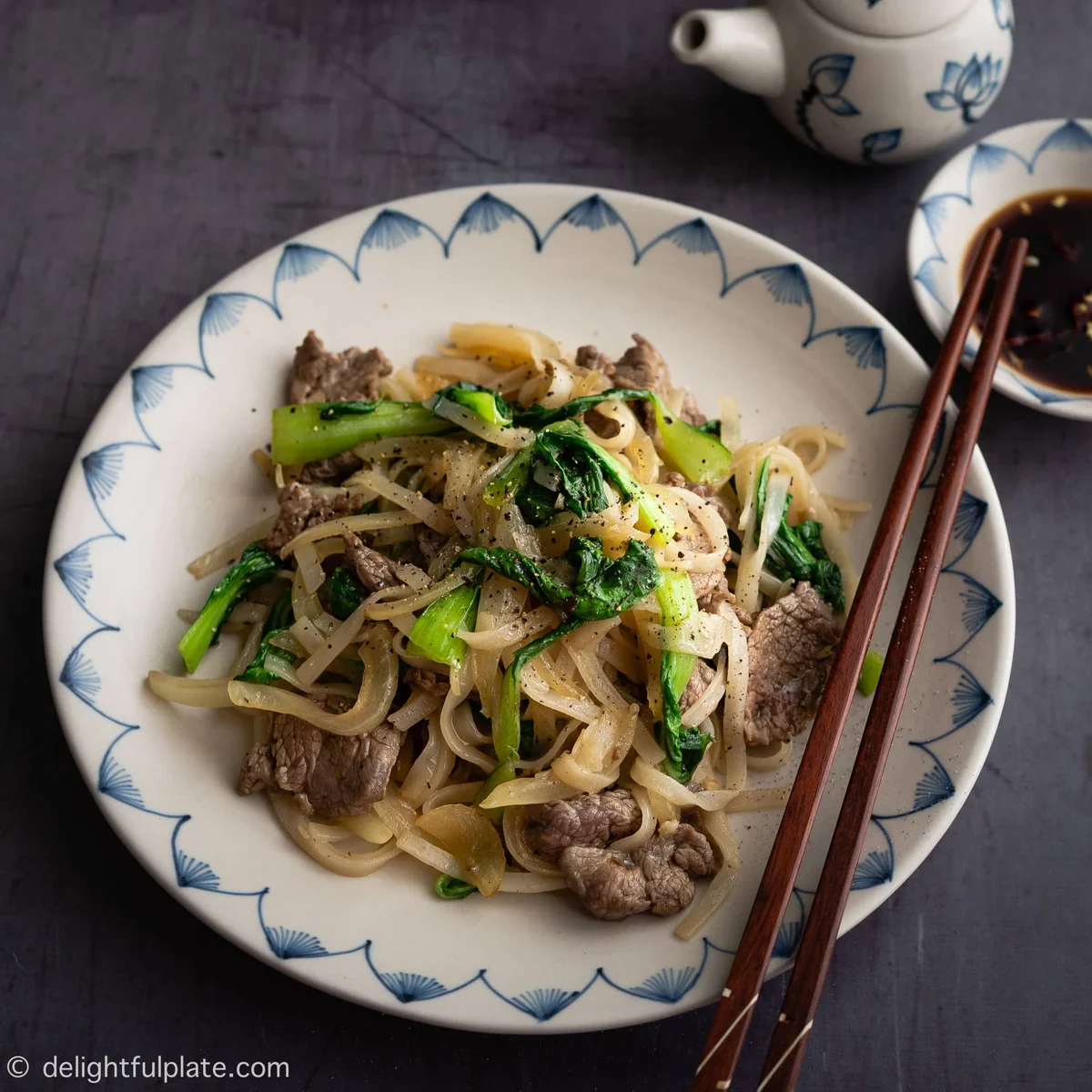
Phở xào thịt bò is a Vietnamese stir-fry of rice noodles, beef and vegetables, brought together with a savoury fish sauce and soy sauce mixture. It makes a quick, satisfying meal, with tender beef and noodles that finish cooking in the pan.
Ingredients
- 227 gbeef, such as flank steak
- 1.25 mlsalt
- 15 mlminced garlic
- 5 mloyster sauce
- to tasteblack pepper
- 1 small or mediumyellow onion
- 227 gbaby bok choy
- 10 mlfish sauce
- 10 mlsoy sauce
- 80 mlwater or beef stock
- 3.75 mlcornstarch
- 2 servingsdried Vietnamese phở noodles
- as neededolive oil
Instructions
- 1
Marinate the beef
Slice the beef thinly against the grain. Toss it with the salt, garlic, oyster sauce and freshly cracked black pepper.
- 2
Prepare the vegetables
Trim the ends from the onion, peel it, halve it and slice it thinly. Cut the baby bok choy into shorter pieces, halving any large stems lengthways.
- 3
Mix the sauce
Stir together the fish sauce, soy sauce, water or beef stock, and cornstarch. Set the sauce aside.
- 4
Cook the noodles
Cook the dried phở noodles according to the packet instructions, taking them out 1 minute before the recommended time. Rinse them thoroughly under cold water and set aside.
- 5
Stir-fry the beef
Heat a pan over medium-high heat. When hot, add some oil and the beef; leave it undisturbed for about 30 seconds, then stir-fry. Once it is about 80% cooked, transfer it to a plate.
- 6
Cook the vegetables
Add a little more oil to the pan, followed by the onion and baby bok choy. Stir-fry briefly until they begin to soften.
- 7
Finish the stir-fry
Return the noodles and beef to the pan and add the sauce. Stir-fry until everything is fully cooked and well mixed. Adjust the seasoning to taste, add more black pepper if you like, and serve immediately on clean plates.
What is phở xào thịt bò?
Phở xào thịt bò means stir-fried phở noodles with beef. It is a Vietnamese noodle dish that uses the familiar flat rice noodles of phở in a quick, pan-cooked preparation rather than a broth.
This version pairs thinly sliced beef with onion and baby bok choy. A simple fish sauce, soy sauce and oyster sauce seasoning gives the noodles savoury depth while letting the beef and vegetables remain distinct.
Nutrition and macros by portion
The nutrition label shows one serving as written: 341 calories, 22g protein, 10g carbs, 23g fat.
| Portion | Adjustment | kcal | Protein | Carbs | Fat |
|---|---|---|---|---|---|
| Lighter | Use less olive oil | 239 kcal | 15g | 7g | 16g |
| This serving | As written | 341 kcal | 22g | 10g | 23g |
| Hungry | Add another noodle serving | 512 kcal | 33g | 15g | 35g |
The rice noodles provide most of the carbohydrates, while the beef supplies much of the protein. Olive oil and the sauces contribute fat, and the beef is also a source of fat. For a more balanced plate, serve the noodles with extra vegetables on the side.
Choose the beef and noodles
Beef: Flank steak is suggested because it can be sliced thinly, but the recipe allows other cuts. Cutting across the grain helps keep the cooked strips tender.
Noodles: Use dried Vietnamese phở noodles and cook them just short of the packet’s suggested time. They will have another chance to cook when tossed in the pan.
Build flavour before stir-frying
Marinade: Salt, garlic, oyster sauce and black pepper season the beef before it meets the hot pan. Slice the meat first so the seasoning coats the pieces evenly.
Sauce: Mix the fish sauce, soy sauce, water or stock and cornstarch before cooking. Stir it again as you add it, since the cornstarch can settle.
Keep the vegetables ready
Onion: Thin slices cook quickly and mingle easily with the noodles. Prepare it before heating the pan so it can go in as soon as the beef is removed.
Bok choy: Cut the leaves and stems into manageable pieces, splitting thick stems lengthways. This helps the larger pieces soften during the brief stir-fry.
Manage the pan and texture
Beef: Give the beef about 30 seconds undisturbed before stirring, then remove it when it is roughly 80% cooked. It returns to the pan later, where it finishes cooking with the noodles and sauce.
Noodles: Rinse the cooked noodles thoroughly in cold water as directed, then drain them well. This stops the initial cooking and helps them stay separate as they go back into the pan.
Finish and serve promptly
Final toss: Once the beef, vegetables and noodles are in the pan together, stir-fry until everything is fully cooked and coated. Taste and adjust the seasoning before serving.
Serving: Take the stir-fry straight to the table while hot. It can be served on its own or alongside a light vegetable dish.
Recipe notes & tips
- Slice the beef thinly across the grain for a more tender result.
- Have the sauce and vegetables ready before you start cooking.
- Undercook the noodles slightly, since they cook again in the pan.
- Drain the rinsed noodles well so excess water does not thin the sauce.
- Taste before adding extra salt, as the sauces are already savoury.
- Serve the stir-fry as soon as it is fully cooked.
Variations
- Use another beef cut: Choose a cut you enjoy and slice it thinly against the grain.
- Swap the greens: Use another quick-cooking leafy vegetable in place of the baby bok choy.
- Add more vegetables: Include extra onion or bok choy for a vegetable-forward stir-fry.
- Use stock: Replace the water in the sauce with beef stock, as suggested in the recipe.
- Adjust the pepper: Add more freshly cracked black pepper at the end for a more peppery finish.
Common mistakes to avoid
- Cutting with the grain: The beef can seem tougher; slice across the fibres instead.
- Cooking the noodles fully at first: They can become too soft in the pan; take them out 1 minute early.
- Skipping the cold rinse: The noodles continue cooking; rinse them thoroughly after draining.
- Adding the beef too early: It may overcook while the vegetables soften; remove it at about 80% cooked and return it for the final toss.
- Leaving thick bok choy stems whole: They may soften unevenly; halve large stems lengthways.
- Forgetting to mix the sauce: Cornstarch can settle; stir the sauce again as you pour it into the pan.
How to store
Refrigerate leftovers in a covered container and eat within 2 days. Reheat in a pan over medium heat, stirring until hot throughout; add a small splash of water if the noodles seem dry.
Frequently asked questions
Can I use fresh phở noodles?
The recipe specifies dried Vietnamese phở noodles and gives cooking directions for those. Fresh noodles may need different handling, so follow their packet instructions and avoid overcooking them in the final stir-fry.
Why cook the noodles for one minute less?
They finish cooking in the pan with the beef and sauce. Removing them early helps prevent them from becoming too soft.
Can I use a different cut of beef?
Yes. The recipe allows other cuts; slice whichever one you use thinly against the grain.
Can I use stock instead of water?
Yes. The sauce can be made with water or beef stock.
How do I know when the beef is ready to come out of the pan?
Transfer it to a plate when it is about 80% cooked. It will go back into the pan to finish cooking with the other ingredients.
Can I prepare any parts ahead?
You can slice the beef and vegetables and mix the sauce ahead of time. Cook and rinse the noodles shortly before stir-frying for the best texture.
Cook it from the original
This recipe comes from delightfulplate.com. Their page has the author’s own photos, notes and tips — the best place to cook it from.
Open the recipe on delightfulplate.com