
Coconut Mint Based Vegetable Biryani
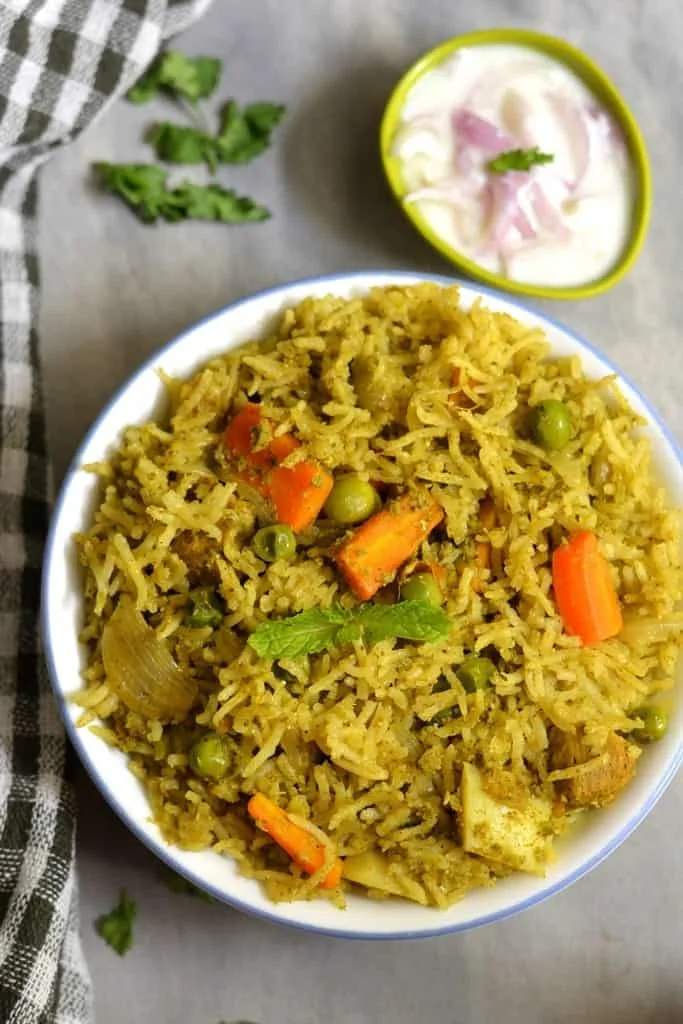
This South Indian-style vegetable biryani cooks basmati rice with vegetables, warming spices and a fresh coconut, mint and coriander paste. It makes a fragrant one-pot meal for two, with soya chunks optional for extra substance.
Ingredients
- 190 g (1 cup)basmati rice
- 1 largeonion, thinly sliced
- 1 largetomato, finely chopped
- 150 g (1 cup)mixed vegetables, chopped (carrot, green beans, potato and green peas)
- 10–15cooked soya chunks (optional)
- 1 tspginger-garlic paste
- ½ tspturmeric powder
- 1 tbspoil
- 1dried bay leaf
- 1 piece, 5 cm (2 inches)cinnamon
- 2cloves
- 1green cardamom pod
- 80 g (½ cup)fresh coconut, chopped
- 15 g (½ cup, tightly packed)fresh mint leaves
- 10 g (¼ cup, tightly packed)coriander leaves
- 1 tsppoppy seeds (optional)
- 1–2green chillies, adjusted to taste
- ½ tspred chilli powder
- ½ tspgaram masala powder
- 480 ml (2 cups)water
Instructions
- 1
Blend the paste
Blend the coconut, mint, coriander, poppy seeds and green chillies with a little water until smooth. Set aside.
- 2
Soak the rice
Rinse the basmati rice and leave it to soak for 20 minutes.
- 3
Cook the spices
Heat the oil in a pressure cooker. Add the bay leaf, cloves, cardamom and cinnamon; after 30 seconds, add the sliced onion. For a spicier biryani, add one or two slit green chillies with the onion.
- 4
Soften the tomatoes
Once the onions are translucent, stir in the ginger-garlic paste and chopped tomatoes. Cook for 5 minutes, until the tomatoes are soft and mushy.
- 5
Add vegetables
Add the chopped vegetables and soya chunks, if using, and cook for 2–3 minutes. Stir in the coconut paste and cook for 4–5 minutes. Add the required salt, turmeric, red chilli powder and garam masala.
- 6
Bring to boil
Pour in the water and bring it to a boil. The recipe uses 480 ml water for 190 g rice, particularly because the vegetables also need to cook; adjust by about 60 ml if needed.
- 7
Pressure cook
When the water is boiling, add the rice and cover the cooker. Cook over a medium flame; after 5 minutes, lower the heat and cook for another 10 minutes. Alternatively, cook for two whistles, then wait 15 minutes before opening the lid.
- 8
Mix and serve
Mix the biryani well and serve hot with onion raita.
What is vegetable biryani?
Biryani is a spiced rice dish with many regional forms across the Indian subcontinent. This version takes a South Indian-inspired route, building its flavour around coconut, mint and coriander.
One-pot cooking lets the rice absorb the spiced vegetable mixture as it cooks. The fresh herb paste brings a bright, fragrant note alongside the warming whole spices.
Nutrition and macros by portion
The nutrition label shows one serving as written: 480 calories, 0g protein, 0g carbs, 0g fat.
| Portion | Adjustment | kcal | Protein | Carbs | Fat |
|---|---|---|---|---|---|
| Lighter | Use less oil and coconut | 336 kcal | 0g | 0g | 0g |
| This serving | As written | 480 kcal | 0g | 0g | 0g |
| Hungry | Serve a larger portion | 720 kcal | 0g | 0g | 0g |
The rice and vegetables provide most of the carbohydrates, while oil and fresh coconut contribute much of the fat. Soya chunks, if included, add protein; pair a serving with raita for a cooling accompaniment and additional protein.
The coconut and herb paste
Fresh coconut: blend it with the mint, coriander, poppy seeds and green chillies until smooth. Add only a little water at first so the paste stays thick enough to coat the vegetables.
Chillies: use one for gentler heat or two for more. The method also allows slit chillies to go in with the onions for a spicier result.
Build flavour in stages
Whole spices: give the bay leaf, cinnamon, cloves and cardamom 30 seconds in the hot oil before adding the onion. This brief start perfumes the cooking fat.
Tomatoes: cook them with the ginger-garlic paste until mushy before adding the vegetables. That gives the base time to soften and meld.
Get the rice texture right
Soaking: rinse and soak the rice for 20 minutes, then drain it before adding it to the cooker. This step helps the grains cook more evenly.
Water: the recipe uses 480 ml for 190 g of rice, with vegetables in the pot as well. The source suggests adjusting by about 60 ml if needed, so consider how much moisture your vegetables release.
Pressure cooker timing
Stovetop route: keep the cooker at medium heat for 5 minutes, then reduce the flame and cook for a further 10 minutes. The recipe also gives an alternative of two whistles.
Resting: after the whistle method, wait 15 minutes before opening the lid. This resting time is part of the recipe's method and helps the cooking finish before you mix the rice.
Vegetables and serving
Vegetable mix: carrot, green beans, potato and peas are suggested, chopped or cut into juliennes. Keep the pieces fairly similar in size so they cook at a similar pace.
To serve: mix the biryani gently and serve it hot with onion raita, as suggested in the method. The cool, creamy accompaniment contrasts with the spiced rice.
Recipe notes & tips
- Drain the soaked rice well so extra soaking water does not alter the recipe's liquid balance.
- Cut the vegetables into similar-sized pieces to encourage even cooking.
- Keep the herb paste smooth and add water gradually while blending.
- Use the slit-chilli option if you want more heat without changing the blended paste.
- Let the pressure cooker rest for 15 minutes after the two-whistle method before opening it.
Variations
- Skip the soya: leave out the optional chunks for a vegetable-only biryani.
- Adjust the heat: use one green chilli for a milder paste or two for more bite.
- Change the vegetables: use a different mix while keeping the pieces a similar size.
- Leave out the poppy seeds: omit them if you do not have any to hand.
- Serve with raita: pair the hot biryani with onion raita as suggested in the recipe.
Common mistakes to avoid
- Adding rice before the water boils: wait for a boil before stirring in the drained rice.
- Opening the cooker too soon: after the whistle method, allow the full 15-minute rest first.
- Using too much blending water: add just a little at a time to keep the coconut paste thick.
- Cooking the tomatoes briefly: give them the full 5 minutes to become soft and mushy.
- Cutting vegetables unevenly: make the pieces similar in size so they cook more evenly.
How to store
Cool leftovers promptly and refrigerate them in a covered container for up to 3 days. Reheat until piping hot throughout, adding a small splash of water if the rice has dried out.
Frequently asked questions
Can I make this without a pressure cooker?
The supplied method is written for a pressure cooker and does not give a separate stovetop-pot timing. Use a suitable covered pot only if you can judge when the rice and vegetables are cooked through.
Do I need to soak the rice?
The recipe calls for soaking the rinsed basmati rice for 20 minutes. Drain it before adding it to the boiling mixture.
Can I leave out the soya chunks?
Yes. They are marked optional in the ingredient list, so you can make the biryani with vegetables alone.
How spicy is this biryani?
The heat comes from the green chillies and red chilli powder. Adjust the number of green chillies to taste, and omit the extra slit chillies suggested with the onions if you prefer less heat.
How much water should I use?
The recipe specifies 480 ml for 190 g of rice, with an adjustment of about 60 ml if needed. It notes that vegetables also need to cook in the liquid.
What should I serve alongside it?
Onion raita is the suggested accompaniment. Serve it with the biryani while both are fresh.
Cook it from the original
This recipe comes from cookingfromheart.com. Their page has the author’s own photos, notes and tips — the best place to cook it from.
Open the recipe on cookingfromheart.com