
Vegetable Spring Rolls | Veg Spring Rolls
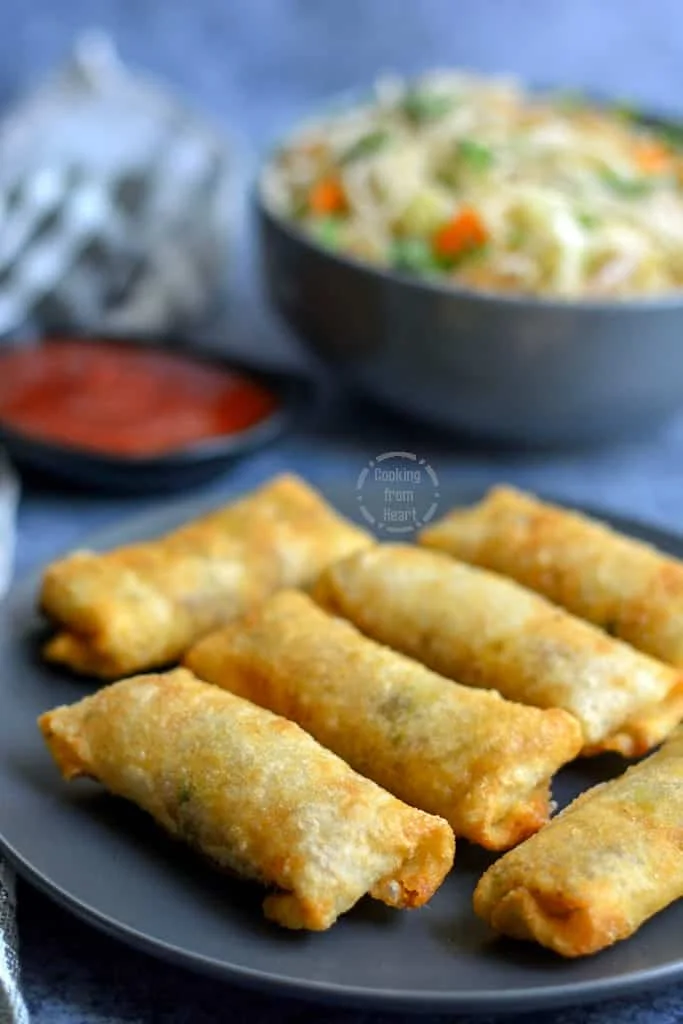
These crisp vegetable spring rolls wrap a lightly seasoned mix of julienned vegetables in homemade sheets, then fry until golden. Make them as a hot appetiser or serve alongside an Indo-Chinese meal.
Ingredients
- 1 mediumonion, finely chopped
- 3–4 podsgarlic, finely chopped
- 2 cupsmixed vegetables, cut into julienne strips (carrots, cabbage, French beans and mushrooms)
- 1 tspblack pepper powder
- 1 tspsoy sauce
- 2–3 tbspfresh coriander leaves or spring onions, finely chopped
- as neededsalt
- 2 tspoil
- 15spring roll sheets (recipe in notes below)
- 1/4 cupplain flour
- 2–3 tbsp, or as neededwater
- for deep fryingoil
Instructions
- 1
Fry the garlic
Heat a heavy-based pan and add the oil. Add the finely chopped garlic and fry for a few seconds.
- 2
Soften the onion
Add the finely chopped onion and fry until translucent.
- 3
Stir-fry vegetables
Add the julienned vegetables and stir-fry for 3–4 minutes.
- 4
Season the filling
Add the black pepper, salt and soy sauce, then mix well.
- 5
Cool the filling
Cook for another 3–4 minutes over a medium heat. Once the mixture looks dry, sprinkle in the chopped coriander or spring onions, remove the pan from the heat and leave the filling to cool completely.
- 6
Mix sealing paste
Stir the plain flour and water together to make a thick paste for sealing the rolls.
- 7
Prepare a sheet
Lay a spring roll sheet with its smooth side facing down. Spread the paste along all the edges.
- 8
Add the filling
Place 1–2 tablespoons of the vegetable filling at one end of the sheet.
- 9
Start rolling
Begin rolling the sheet from the end holding the filling, enclosing the vegetables as you go.
- 10
Paste the ends
Apply some paste to both ends of the roll.
- 11
Fold the sides
Fold the sides of the sheet over the filling and use paste to secure them firmly.
- 12
Seal each roll
Continue rolling and sealing with paste, checking that there are no open edges or gaps. Repeat with the remaining spring roll sheets.
- 13
Heat the frying oil
Meanwhile, heat the oil for deep frying. Once hot, reduce the heat to medium.
- 14
Fry the rolls
Carefully lower the prepared rolls into the oil, one or two at a time. Fry until golden brown on all sides.
- 15
Drain the rolls
Lift the rolls from the oil and set them on kitchen paper.
- 16
Serve while hot
Serve hot as a side with an Indo-Chinese main dish or as an appetiser with tomato ketchup.
What are vegetable spring rolls?
Spring rolls are filled wrappers rolled into compact parcels and cooked until crisp. This version pairs a mix of vegetables with garlic, pepper and soy sauce, then serves the rolls hot as a snack or appetiser.
The recipe is presented as an Indo-Chinese take on a Chinese-style dish. Homemade sheets and a vegetable filling make it a practical way to prepare a batch for sharing.
Nutrition and macros by portion
The nutrition label shows one serving as written: 80 calories, 0g protein, 0g carbs, 0g fat.
| Portion | Adjustment | kcal | Protein | Carbs | Fat |
|---|---|---|---|---|---|
| Lighter | Use less frying oil | 56 kcal | 0g | 0g | 0g |
| This serving | As written | 80 kcal | 0g | 0g | 0g |
| Hungry | Serve a larger portion | 120 kcal | 0g | 0g | 0g |
The vegetables contribute most of the filling's carbohydrate, while the frying oil and oil used for the filling contribute fat; the recipe has no substantial protein-rich ingredient. Serve the rolls with a protein-rich main dish and additional vegetables to make a more balanced plate.
Build a dry, flavourful filling
Vegetables: Carrots, cabbage, French beans and mushrooms bring a mix of colours and textures. Cut them into similar julienne strips so they cook evenly.
Seasoning: Garlic and onion form the savoury base, while black pepper and soy sauce season the vegetables. Add salt as needed, bearing in mind that soy sauce is already salty.
Cool before wrapping
Dry filling: Stir-fry the vegetables for the stated 3–4 minutes, then cook for another 3–4 minutes after seasoning. The mixture should look dry before you take it off the heat.
Cool completely: Let the filling cool before adding it to the sheets. A hot filling can make the wrappers harder to handle while you roll and seal them.
Seal the wrappers securely
Flour paste: Mix the plain flour with water until thick enough to spread along the edges. The paste is used to hold the folds and final seam closed.
Rolling: Place 1–2 tablespoons of filling at one end, roll it up, fold in the sides and seal all the edges. Check for gaps before frying so the filling stays inside.
Fry until golden
Oil temperature: Heat the deep-frying oil, then reduce the heat to medium once it is hot, as directed. Fry only one or two rolls at a time.
Doneness: Look for golden-brown colour on all sides, then transfer the rolls to kitchen paper. The recipe does not specify an exact frying time, so use colour as the cue.
Serve and share
These rolls are best served hot, when their wrappers are crisp. Offer tomato ketchup as a dip, or serve them alongside an Indo-Chinese main dish.
For a batch, fry the rolls in small rounds and drain them on kitchen paper as they come out of the pan.
Recipe notes & tips
- Cut the vegetables into similarly sized julienne strips for more even cooking.
- Cook the filling until it looks dry before adding the coriander or spring onions.
- Let the filling cool completely before assembling the rolls.
- Keep the flour paste thick enough to coat the wrapper edges.
- Seal the sides and final seam carefully, checking for openings before frying.
- Fry only one or two rolls at a time and drain them on kitchen paper.
Variations
- Change the herbs: Use either fresh coriander leaves or spring onions, as listed.
- Adjust the pepper: Use less or more black pepper to suit your preference.
- Vary the vegetables: Use different proportions of the listed carrots, cabbage, French beans and mushrooms.
- Serve with ketchup: Offer tomato ketchup alongside the hot rolls.
- Make smaller rolls: Use less filling in each sheet, keeping the listed 1–2 tablespoon guidance as your reference.
Common mistakes to avoid
- Filling still hot: It is harder to handle; cool it completely before wrapping.
- Wet filling: Excess moisture can make sealing difficult; cook until the mixture looks dry.
- Thin sealing paste: It may not hold the folds; mix the flour and water into a thick paste.
- Loose edges: Open seams can let filling escape; paste and press the ends and sides closed.
- Overfilling: Too much filling makes rolling and sealing awkward; use 1–2 tablespoons per sheet.
- Crowding the oil: Too many rolls at once can make them harder to fry evenly; cook one or two at a time.
How to store
For the best crisp texture, serve the rolls straight after frying. Refrigerate leftovers in a covered container and reheat in an oven until hot and crisp; the recipe does not specify a storage duration.
Frequently asked questions
Can I prepare the filling ahead?
Yes. Cook it as directed, let it cool completely and keep it covered in the refrigerator until you are ready to assemble the rolls.
How much filling goes in each wrapper?
The method calls for 1–2 tablespoons of filling per spring roll sheet.
How do I know when the rolls are cooked?
Fry them until they are golden brown on all sides, then drain them on kitchen paper.
Can I use spring onions instead of coriander?
Yes. The ingredient list gives fresh coriander leaves or spring onions as alternatives.
What can I serve with vegetable spring rolls?
Serve them hot with tomato ketchup as an appetiser, or alongside an Indo-Chinese main dish.
Can I make these without deep frying?
The supplied method uses deep frying and does not give instructions for another cooking method.
Cook it from the original
This recipe comes from cookingfromheart.com. Their page has the author’s own photos, notes and tips — the best place to cook it from.
Open the recipe on cookingfromheart.com