
Peach Cobbler with Canned Peaches
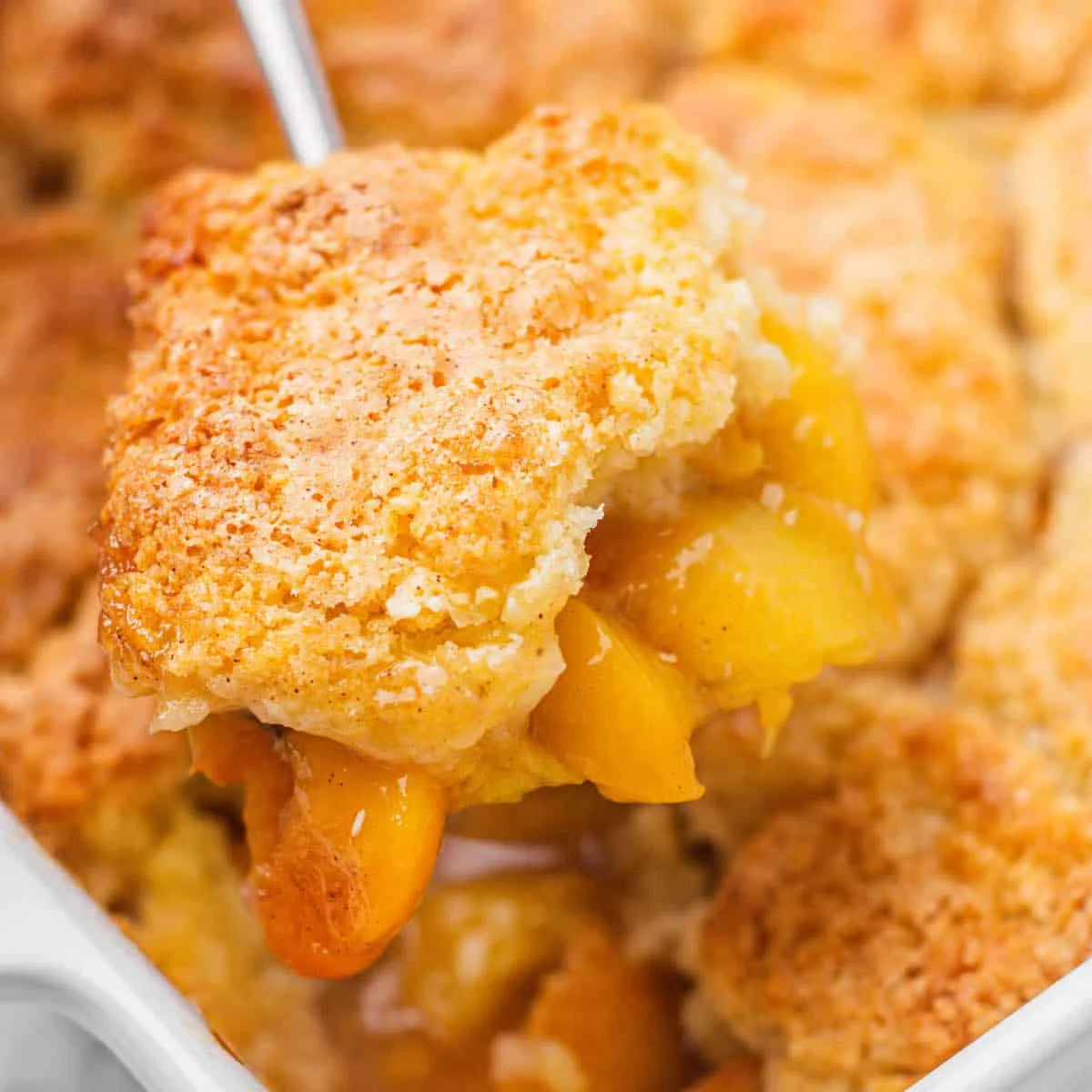
This easy peach cobbler pairs juicy canned peaches with a golden topping of tender, biscuit-style dough. It is a convenient warm dessert when you want the flavour of baked peaches without peeling or preparing fresh fruit.
Ingredients
- 3 × 425 g canspeaches in juice, not syrup
- 50 gbrown sugar
- 1 tbspcornflour
- ½ tbsplemon juice
- 1 tspvanilla paste
- ½ tspcinnamon
- ¼ tspsalt
- 190 gplain flour
- 65 ggranulated sugar
- 2 tspbaking powder
- ½ tspsalt
- 113 gunsalted butter, cold and cubed
- 120 g, plus extra for brushingbuttermilk, cold
- 1½ tbspgranulated sugar
- ½ tspcinnamon
Instructions
- 1
Heat the oven
Preheat the oven to 180°C.
- 2
Drain the peaches
Tip the peaches into a colander and leave them to drain for at least 10 minutes to remove excess juice.
- 3
Season the fruit
Put the drained peaches in a 25 cm baking dish. Add the brown sugar, cornflour, lemon juice, vanilla paste, ½ tsp cinnamon and ¼ tsp salt, then toss until the fruit is coated.
- 4
Mix dry ingredients
In a mixing bowl, whisk together the flour, 65 g granulated sugar, baking powder and ½ tsp salt.
- 5
Cut in butter
Add the cold cubed butter. Use a pastry cutter or your fingertips to work it into the flour until the mixture resembles coarse crumbs, with some pea-sized pieces remaining.
- 6
Make the dough
Gradually stir in the cold buttermilk until a thick, slightly sticky dough forms. Take care not to overmix.
- 7
Top the peaches
Mix the remaining 1½ tbsp sugar with ½ tsp cinnamon. Flatten pieces of dough roughly in your palm and arrange them over the peach filling, leaving gaps. Brush the tops with a little buttermilk and scatter over the cinnamon sugar.
- 8
Bake until golden
Bake for 40–45 minutes, until the biscuits are deep golden brown and the filling is bubbling. Check a biscuit in the centre with a skewer; it should come out clean.
- 9
Cool and serve
Leave the cobbler to cool for 10 minutes before serving warm with vanilla ice cream or whipped cream.
What is peach cobbler?
Peach cobbler is a baked fruit dessert with a soft, biscuit-like topping rather than a pastry crust. It is a familiar style of home baking in the United States, where fruit is covered with dough and baked until bubbling.
Canned peaches make this version straightforward and available year-round. The biscuit topping stays tender, while the gaps let the fruit show and its filling bubble up around the dough.
Nutrition and macros by portion
The nutrition label shows one serving as written: 479 calories, 5g protein, 81g carbs, 16g fat.
| Portion | Adjustment | kcal | Protein | Carbs | Fat |
|---|---|---|---|---|---|
| Lighter | Smaller biscuit topping | 335 kcal | 4g | 57g | 11g |
| This serving | As written | 479 kcal | 5g | 81g | 16g |
| Hungry | Larger warm portion | 719 kcal | 8g | 122g | 24g |
The peaches and sugars provide most of the carbohydrates, while the butter contributes much of the fat and the flour and buttermilk provide some protein. For a more balanced plate, serve a modest portion alongside yoghurt or enjoy it after a meal that includes a savoury protein source.
Why drain the peaches?
Drain well: Leaving the peaches in a colander for at least 10 minutes helps keep excess juice out of the dish. That gives the cornflour a better chance to thicken the filling as it bakes.
Choose juice: Peaches packed in juice, rather than syrup, keep the fruit flavour from becoming overly sweet. The brown sugar and lemon juice season the drained fruit before baking.
Getting the biscuit dough right
Keep it cold: Cold butter and buttermilk help the topping stay tender. Work the butter into the flour only until you have coarse crumbs with a few pea-sized pieces left.
Mix gently: Stir in the buttermilk gradually and stop once a thick, slightly sticky dough forms. Overworking can make the biscuits less tender.
Placing the topping
Leave gaps: Flatten rough pieces of dough and arrange them across the peaches without covering every bit of fruit. The open spaces allow the filling to bubble through as the cobbler bakes.
Finish the tops: A light brush of buttermilk helps the cinnamon sugar cling and encourages colour. Sprinkle it on evenly for a sweet, spiced finish.
How to tell when it is done
Look for colour: The biscuit tops should be deep golden brown, and the fruit filling should be bubbling. These are the recipe’s main visual cues for doneness.
Check the centre: Insert a skewer into a biscuit in the middle of the dish; it should come out clean. Rest the cobbler for 10 minutes before serving so it is easier to portion.
Serving and timing
Serve warm: Vanilla ice cream or whipped cream complements the warm fruit and cinnamon-sugar topping. Add it just before serving.
Plan ahead: The recipe takes about 65 minutes in total, including 40–45 minutes in the oven and the 10-minute rest. Drain the peaches while you gather and prepare the other ingredients.
Recipe notes & tips
- Measure the peaches after draining only as supplied in their cans; the recipe specifies three 425 g cans.
- Use cold butter and cold buttermilk for the biscuit dough.
- Leave visible gaps between the dough pieces so the fruit can bubble through.
- Check a biscuit in the centre of the dish, not just one at the edge.
- Allow the cobbler to rest for 10 minutes before scooping.
Variations
- Add nutmeg: Replace some of the cinnamon with a pinch of nutmeg for a warmer spice note.
- Use fresh peaches: Substitute peeled, sliced peaches and check the filling as it bakes, since their juiciness can differ.
- Try another fruit: Replace some of the peaches with drained canned apricots for a mixed-fruit cobbler.
- Change the topping: Serve with plain yoghurt instead of ice cream or whipped cream.
- Add citrus zest: Mix a little finely grated lemon zest into the peach filling for a brighter aroma.
Common mistakes to avoid
- Skipping the drain: Excess juice can leave the filling runny; drain the peaches for at least 10 minutes.
- Using syrup-packed fruit: It can make the dessert too sweet; choose peaches in juice.
- Overworking the dough: This can make the biscuits tough; stop mixing as soon as the buttermilk is incorporated.
- Covering all the fruit: A continuous layer can prevent bubbling through; leave gaps between the dough pieces.
- Serving immediately: The filling will be very loose straight from the oven; let the cobbler stand for 10 minutes.
How to store
Cover and refrigerate leftovers once cool, and use within 3 days. Reheat portions in the oven until warmed through, or use a microwave for a quicker serving.
Frequently asked questions
Can I use peaches packed in syrup?
The recipe is designed for peaches packed in juice, not syrup. Syrup-packed fruit may make the filling much sweeter, so juice-packed peaches are the better choice.
Can I prepare the cobbler ahead?
You can drain the peaches and measure the ingredients ahead, then assemble and bake when ready. For the best texture, make the biscuit dough shortly before baking.
Why is my peach filling runny?
The peaches may not have drained for long enough, leaving extra liquid in the dish. Drain them for at least 10 minutes as directed and allow the baked cobbler to rest before serving.
How do I know the biscuits are cooked through?
They should be deep golden brown, and a skewer inserted into a biscuit in the centre should come out clean. The fruit filling should also be bubbling.
Can I use whole milk instead of buttermilk?
The recipe notes that whole milk can be used as a substitute, though the dough may differ slightly in texture. Add it gradually and stop when the dough is thick and slightly sticky.
Cook it from the original
This recipe comes from bakingwithbutter.com. Their page has the author’s own photos, notes and tips — the best place to cook it from.
Open the recipe on bakingwithbutter.com