
American-style Omelet Recipe
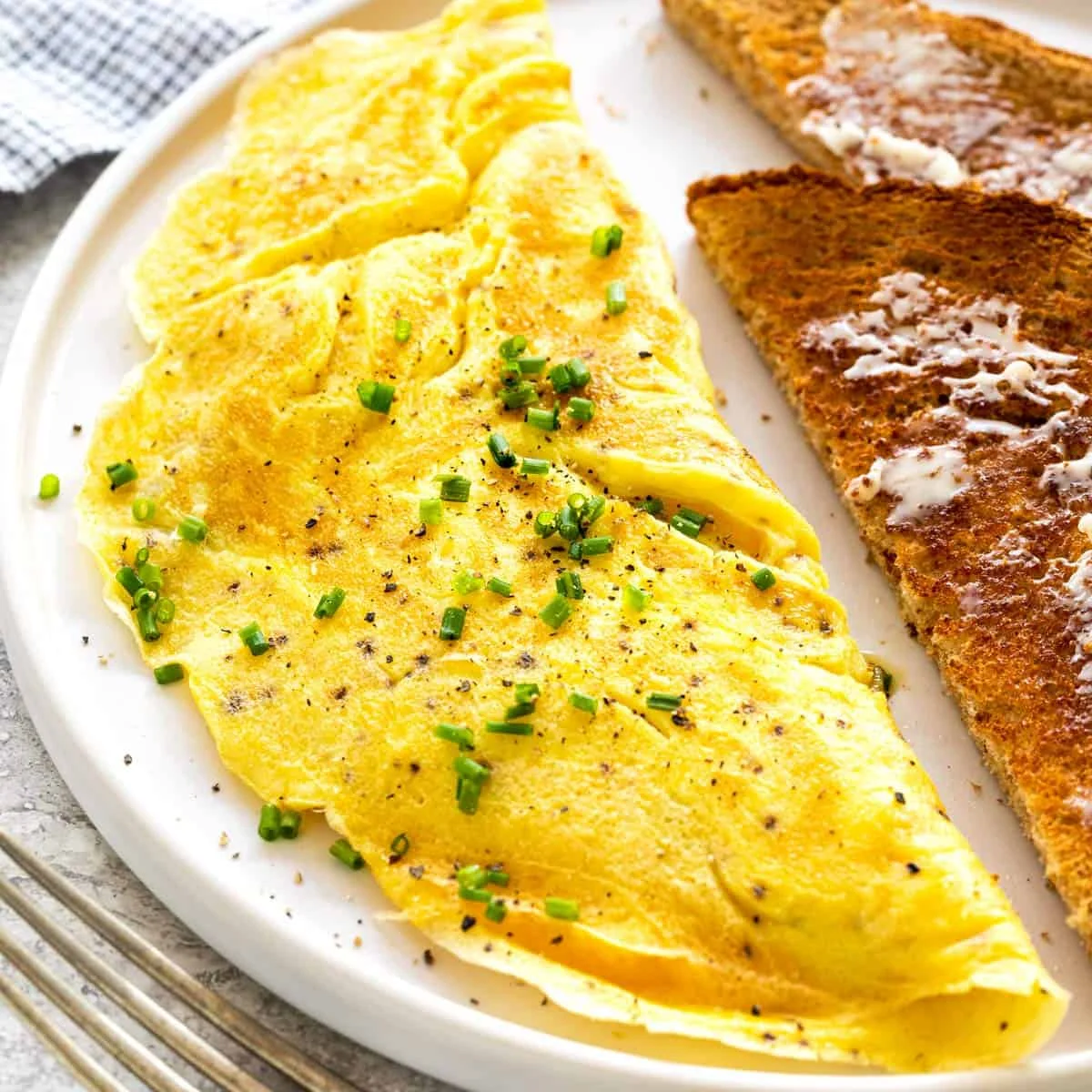
This American-style omelet is a quick, gently cooked egg dish filled with cheddar and finished with chives. It makes an elegant breakfast from a short list of everyday ingredients in about 10 minutes.
Ingredients
- 2 largeeggs
- 10 ml (2 teaspoons)milk, cream or water (optional)
- 0.6 ml (1/8 teaspoon)kosher salt
- 0.6 ml (1/8 teaspoon)black pepper
- 5 ml (1 teaspoon)unsalted butter
- 30 ml (2 tablespoons)grated cheddar cheese
- 5 ml (1 teaspoon)chopped chives (optional)
Instructions
- 1
Whisk the eggs
In a medium bowl, whisk the eggs with the milk, if using, and salt. Use a side-to-side motion until the mixture looks uniform, taking care not to overmix.
- 2
Heat the butter
Melt the butter in an 20 cm (8-inch) non-stick frying pan over medium-low heat. Wait until it bubbles and foams, but do not let it brown.
- 3
Form the curds
Pour in the eggs and immediately draw the cooked edges towards the centre with a spatula, tilting the pan so uncooked egg flows underneath. Starting at the top, work around the omelet to form curds; this should take about 1 to 1½ minutes.
- 4
Fill and fold
When the eggs are mostly cooked, like soft scrambled eggs with a glossy, slightly wet surface, turn the heat to low. Sprinkle the cheese over one half, then use a spatula to fold the other half over it. The outside should be golden brown.
- 5
Slide and serve
Slide the omelet onto a plate. Finish with freshly cracked black pepper and the chopped chives.
What is an American-style omelet?
An omelet is a dish of beaten eggs cooked in a pan, often folded around a filling. This American-style version uses a soft, gently stirred centre and a folded shape, with cheddar tucked inside.
The approach works because the eggs are moved as they set rather than left to cook as one flat layer. A little butter, mild seasoning and a quick finish keep the simple filling in focus.
Nutrition and macros by portion
The nutrition label shows one serving as written: 255 calories, 17g protein, 2g carbs, 20g fat.
| Portion | Adjustment | kcal | Protein | Carbs | Fat |
|---|---|---|---|---|---|
| Lighter | Use less butter and cheddar | 179 kcal | 12g | 1g | 14g |
| This serving | As written | 255 kcal | 17g | 2g | 20g |
| Hungry | Add toast or another egg | 383 kcal | 26g | 3g | 30g |
The eggs contribute most of the protein and some of the fat, while butter and cheddar add much of the remaining fat. The small amount of milk and the other ingredients provide very little carbohydrate. Serve it with wholemeal toast or fruit for a more rounded plate.
Choosing the ingredients
Eggs: Large eggs provide the structure and most of the protein. Whisk only until the whites and yolks are combined for a tender result.
Dairy or water: The small splash of milk is optional; cream or water can be used instead, or left out. Cheddar brings savoury flavour and melts inside the folded eggs.
Chives: These add a fresh, mild onion note at the end. They are optional, so the omelet still works without them.
Getting the curds right
Gentle heat: Medium-low heat gives you time to move the setting edges before the bottom browns too much. The butter should foam but not take on colour.
Keep moving: Pull cooked egg from the edges towards the centre, then tilt the pan to let liquid egg run into the open spaces. Work around the pan for about 1 to 1½ minutes.
When the eggs are ready
Look for curds that are mostly set but still glossy, with a slightly wet surface. They will continue cooking as you add the cheese and fold the omelet.
A golden surface is the target in the method, but avoid waiting until the eggs look dry before folding. Lower the heat before adding the filling.
Folding and serving
Cheese placement: Sprinkle the cheddar over only one half of the omelet, which makes the other half easier to fold over with a spatula. Give it a moment on low heat for the cheese to soften.
At the table: Slide the omelet onto a plate and add black pepper and chives. Toast or a simple side of fruit can round out breakfast.
Timing and pan choice
The recipe takes about 10 minutes in total, so prepare the cheese and chives before the eggs go into the pan. Once cooking starts, the curds form quickly.
An 20 cm (8-inch) non-stick frying pan gives the eggs room to move while keeping the omelet manageable to fold. Use a heatproof spatula that can reach around the edges.
Recipe notes & tips
- Grate the cheddar finely so it softens quickly inside the folded omelet.
- Use a side-to-side whisking motion and stop once the egg mixture looks uniform.
- Keep the heat low enough that the butter foams without browning.
- Tilt the pan as you pull the curds inward so the uncooked egg reaches the base.
- Have the plate ready before folding, as the eggs continue cooking in the hot pan.
Variations
- Extra herbs: Add a little chopped parsley with the chives for a fresh finish.
- Different cheese: Swap the cheddar for another grated cheese that melts well.
- More pepper: Add extra freshly cracked black pepper at the table.
- No dairy splash: Leave out the milk, cream or water and whisk the eggs with the salt alone.
- Vegetable side: Serve with cooked mushrooms or tomatoes alongside rather than adding them to the filling.
Common mistakes to avoid
- Overwhisking: Stop once the eggs look uniform to avoid beating in more air than needed.
- Browning the butter: Keep the pan over medium-low heat and add the eggs as soon as the butter foams.
- Leaving the edges untouched: Pull cooked egg towards the centre so liquid egg can flow underneath.
- Cooking until dry: Fold while the surface is still glossy and slightly wet, as the eggs keep setting.
- Filling both halves: Keep the cheese on one side so the omelet folds neatly.
How to store
This omelet is best eaten straight after cooking. If needed, refrigerate it in a covered container and eat within 1 day; reheat gently in a pan over low heat until warmed through.
Frequently asked questions
Can I leave out the milk?
Yes. The milk is optional, and the recipe works with eggs whisked with the salt alone. Cream or water can also be used in its place.
How do I know when to add the cheese?
Add it when the eggs are mostly set but still have a glossy, slightly wet surface. Turn the heat down to low first.
Why are my eggs browning too quickly?
The pan may be too hot. Use medium-low heat and wait for the butter to foam without browning before adding the eggs.
Can I use a larger pan?
The method specifies an 20 cm (8-inch) non-stick frying pan. A larger pan makes a thinner omelet and may make it harder to fold neatly.
Can I make the omelet ahead?
It is best cooked and served straight away, when the eggs are still soft. You can grate the cheese and chop the chives ahead of time.
Cook it from the original
This recipe comes from jessicagavin.com. Their page has the author’s own photos, notes and tips — the best place to cook it from.
Open the recipe on jessicagavin.com