
French Toast
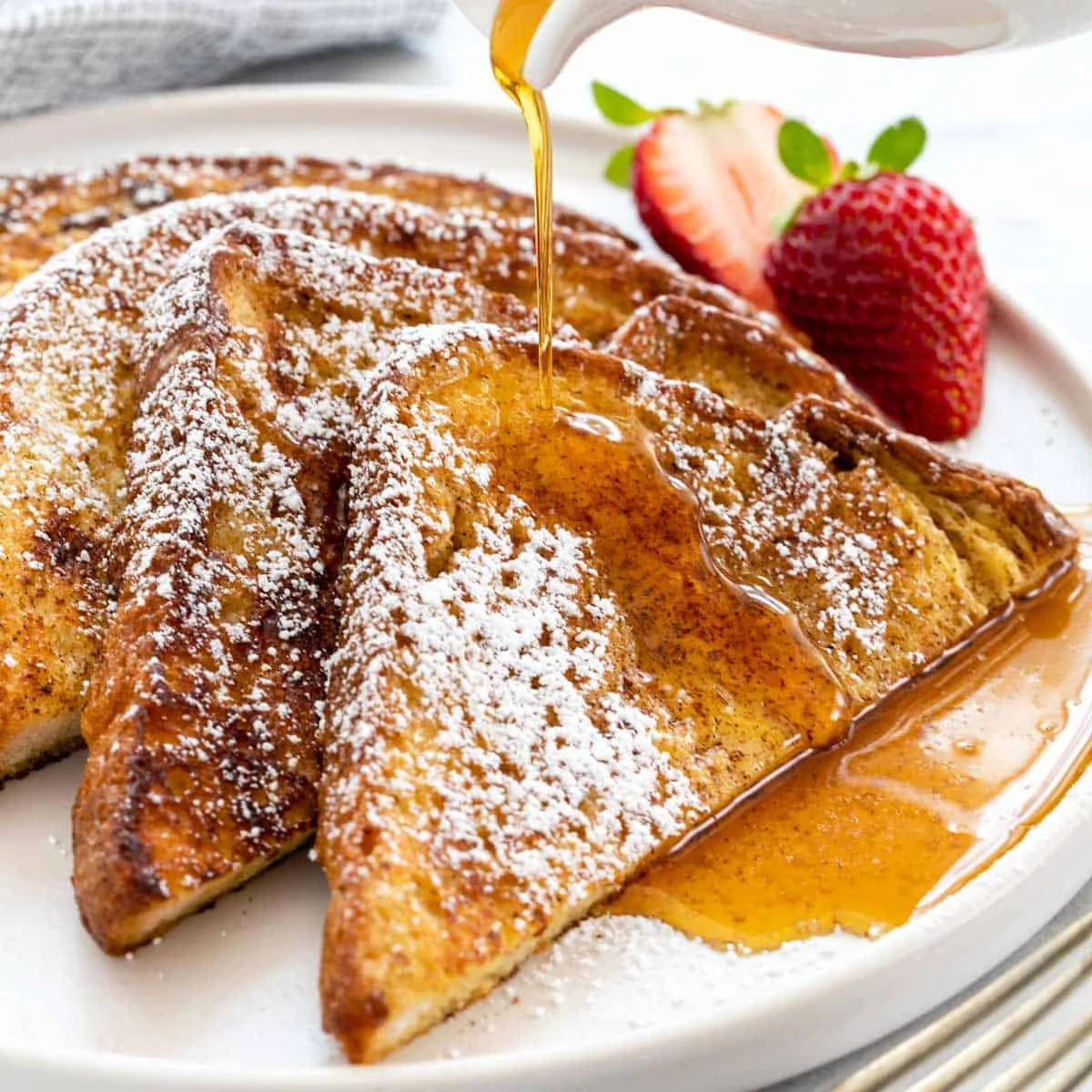
French toast turns thick slices of bread into a comforting breakfast with a soft, custardy centre and golden, lightly crisp outside. A spiced egg-and-milk soak and a gentle pan-fry make it feel special while keeping the method straightforward.
Ingredients
- 8 slices, 1.7–1.9 cm thickwhite bread
- 240 mlmilk
- 2 largeeggs
- 2egg yolks
- 1 tablespoon (15 ml)brown sugar or granulated sugar
- 1 teaspoon (5 ml)pure vanilla extract
- ¾ teaspoon (3.75 ml)cinnamon
- ⅛ teaspoon (0.625 ml)nutmeg
- ¼ teaspoon (1.25 ml)kosher salt
- 2 tablespoons (28 g)unsalted butter
- ¼ cup (30 g)icing sugar
- 1 cup (240 ml)pure maple syrup
Instructions
- 1
Dry the bread
If the bread is soft and fresh, put a rack in the middle of the oven and heat it to 149°C. Arrange the slices on a wire rack set over a baking tray and warm for 10–14 minutes, turning them halfway, until dry to the touch but not browned. For a small batch, use a toaster on its lowest setting instead; the bread will also dry further as it cools at room temperature.
- 2
Mix the custard
In a large, shallow bowl, whisk together the milk, eggs, egg yolks, sugar, vanilla, cinnamon, nutmeg and salt.
- 3
Soak the bread
Dip each slice for 15–20 seconds per side, then transfer it with a spatula to a separate baking tray. Whisk the custard between batches as needed to keep it evenly mixed. Add a little more cinnamon on top if desired.
- 4
Fry the slices
Set a 30 cm non-stick frying pan or cast-iron skillet over medium-low heat. Melt ½ tablespoon of butter until bubbling, then cook two slices at a time for about 3–5 minutes, until the first side is golden and lightly crisp. Turn and cook the other side for about 3–4 minutes, until golden. Wipe out the pan, add fresh butter and cook the remaining soaked bread.
- 5
Serve warm
Just before serving, dust the French toast with icing sugar. Serve with maple syrup or toppings of your choice.
What is French toast?
French toast is bread dipped in an egg-and-milk mixture, then cooked until browned. Known by different names and variations in many places, it is a practical way to turn basic bread and pantry ingredients into a warm, filling dish.
This version gets its soft centre from a custard enriched with extra yolks, while cinnamon, nutmeg and vanilla add warmth. A final dusting of icing sugar and maple syrup gives it a simple, classic finish.
Nutrition and macros by portion
The nutrition label shows one serving as written: 138 calories, 6g protein, 16g carbs, 6g fat.
| Portion | Adjustment | kcal | Protein | Carbs | Fat |
|---|---|---|---|---|---|
| Lighter | Use less syrup | 97 kcal | 4g | 11g | 4g |
| This serving | As written | 138 kcal | 6g | 16g | 6g |
| Hungry | Add another slice | 207 kcal | 9g | 24g | 9g |
The bread and sugar provide most of the carbohydrates, while the butter and egg yolks contribute much of the fat. Eggs, yolks and milk supply the protein. To balance the plate, serve a portion with fresh fruit and yoghurt rather than relying only on syrup for a topping.
Choosing the bread
Bread thickness: Slices around 1.7–1.9 cm thick hold their shape while absorbing the custard. Very thin slices can become fragile once soaked.
Bread dryness: Fresh, soft bread benefits from a brief spell in the oven or toaster first. Drier bread takes in the custard without falling apart as readily.
Getting the custard right
Even mixing: Whisk the eggs, yolks, milk, sugar and seasonings thoroughly before dipping. Stir or whisk again between batches so the spices and egg stay distributed.
Measured soaking: Dip each side for 15–20 seconds, as directed, then lift the bread out with a spatula. The aim is to moisten the slices without leaving them too sodden to handle.
Frying for a golden finish
Steady heat: Medium-low heat gives the middle time to cook before the outside darkens too much. Let the butter bubble before adding two slices, and avoid crowding the pan.
Fresh butter: Wiping the pan and adding fresh butter between batches helps keep the remaining slices from picking up burnt residue. Cook each side until golden, using the stated times as a guide.
Timing and doneness
Oven drying: The optional drying step takes about 10–14 minutes and is intended for soft, fresh bread. Let slices cool at room temperature if needed; they become drier as they cool.
Pan cooking: Each batch takes about 6–9 minutes in total, depending on the pan and the bread. Look for a golden, lightly crisp surface rather than relying on colour alone to judge the centre.
Serving ideas
Sweet finish: Add the icing sugar just before serving, then offer maple syrup at the table so it can be poured to taste. Fresh fruit can also work as an extra topping.
Balanced plate: Pair a serving with fruit and, if you want a more substantial meal, a source of protein such as yoghurt. The toast is also easy to serve as part of a weekend brunch.
Recipe notes & tips
- Use a shallow bowl wide enough to dip the bread without bending it.
- Keep the soaked slices in a single layer on the tray while working in batches.
- Whisk the custard again whenever the cinnamon or other ingredients begin to settle.
- Cook only two slices at a time so there is room to turn them cleanly.
- Dust with icing sugar just before serving to keep the finish neat.
Variations
- Fruit topping: Serve with sliced berries or banana alongside the maple syrup.
- Extra cinnamon: Sprinkle a little more cinnamon over the soaked slices if you like a stronger spice flavour.
- Citrus note: Add a little finely grated orange zest to the custard for a brighter aroma.
- Different bread: Use another sturdy, thick-sliced loaf, drying it first if it is very soft.
- Savoury plate: Skip the icing sugar and syrup, and serve the toast with savoury sides instead.
Common mistakes to avoid
- Using very fresh bread: Dry soft slices in the oven or toaster first so they are easier to soak and handle.
- Soaking for too long: Stick to 15–20 seconds per side to reduce the chance of the bread becoming difficult to lift.
- Uneven custard: Whisk between batches so the spices and egg do not settle at the bottom.
- Pan too hot: Keep the heat at medium-low so the outside does not brown before the centre cooks.
- Crowding the pan: Fry two slices at a time to leave space for turning and even browning.
- Old butter residue: Wipe the pan and use fresh butter for the remaining batches.
How to store
Refrigerate leftover French toast in an airtight container for up to 3 days. Reheat in a frying pan over low heat or in a toaster oven until warmed through; keep syrup and icing sugar separate until serving.
Frequently asked questions
Can I use fresh bread?
Yes. If it is soft and fresh, dry it in a 149°C oven for 10–14 minutes, turning halfway, or toast it on the lowest setting.
How long should I soak each slice?
Soak each side for 15–20 seconds, then transfer the bread with a spatula. Very soft bread may need careful handling.
Can I make the custard ahead?
You can whisk the custard shortly before cooking and keep it covered in the fridge. Whisk it again before dipping and between batches.
How do I know when the toast is cooked?
The outside should be golden and lightly crisp on both sides. The recipe gives about 3–5 minutes for the first side and 3–4 minutes for the second over medium-low heat.
Can I freeze leftovers?
Yes. Cool the slices, freeze them in a single layer, then transfer to a freezer-safe container. Reheat from frozen in a toaster oven until hot.
Cook it from the original
This recipe comes from jessicagavin.com. Their page has the author’s own photos, notes and tips — the best place to cook it from.
Open the recipe on jessicagavin.com