
Baked French Toast Casserole
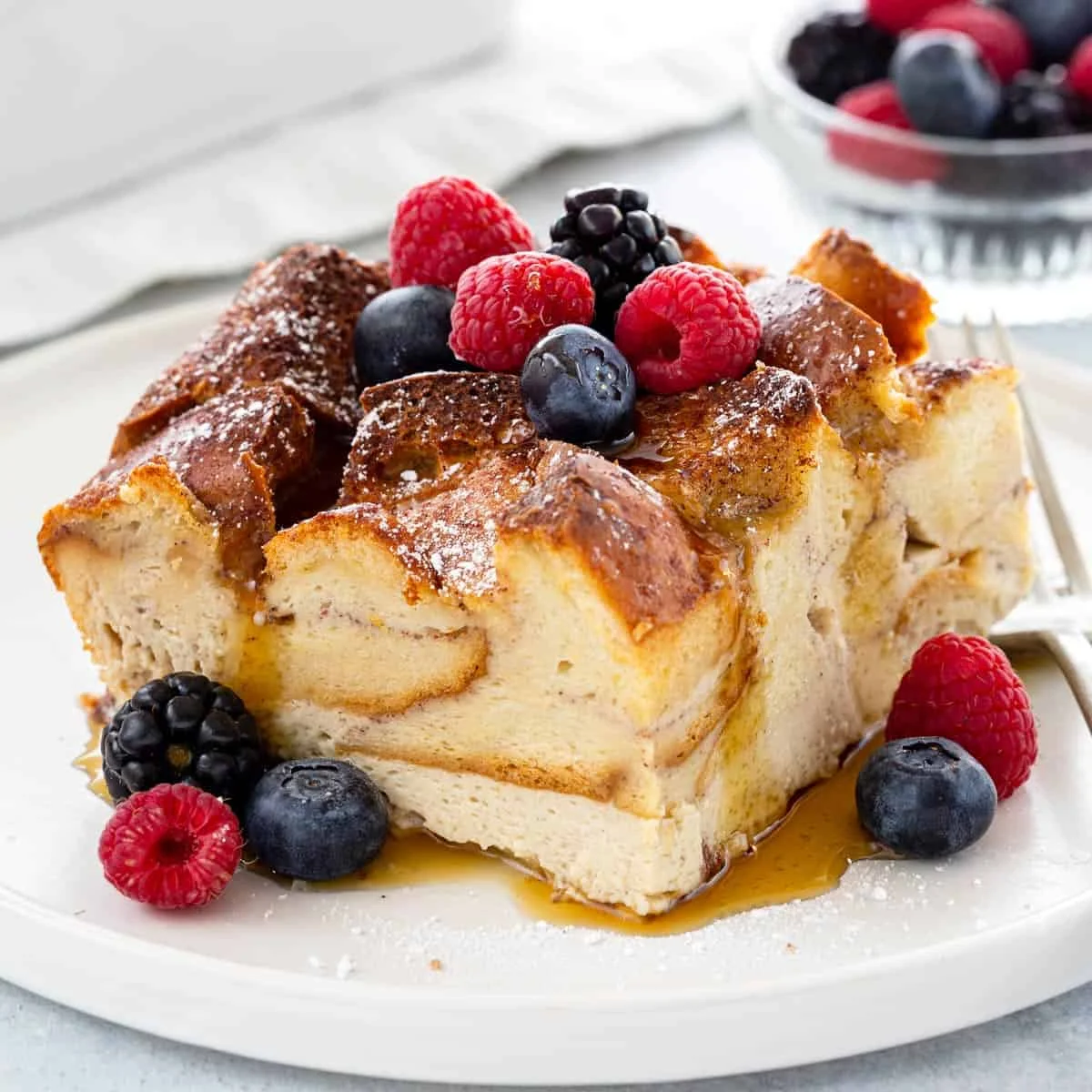
This American baked French toast casserole pairs a soft, custardy centre with a crisp cinnamon-sugar top. It takes some planning for the bread to soak, but most of that time is hands-off, making it a handy breakfast or brunch for a crowd.
Ingredients
- 454 g (16 oz)challah loaf (or brioche, French bread or sourdough)
- 14 g (1 tablespoon)unsalted butter, softened
- 8 largeeggs
- 50 g (¼ cup), dividedbrown sugar
- 2 teaspoonspure vanilla extract
- 2½ teaspoons, dividedground cinnamon
- ¼ teaspoonground nutmeg
- ¼ teaspoonkosher salt
- 532 ml (2¼ cups)whole milk
- 414 ml (1¾ cups)double cream
- To tasteicing sugar, for sprinkling
Instructions
- 1
Toast the bread
Set a rack in the centre of the oven and preheat it to 149°C (300°F). Cut the bread into 2 cm (¾-inch) cubes and spread them over one large or two smaller baking trays. Bake for 25 minutes, stirring halfway through, until lightly golden, dry and crisp. Leave to cool on the tray for 10 minutes.
- 2
Prepare the dish
Grease the inside of a 33 x 23 cm (13 x 9-inch) casserole dish with the softened butter. Add the toasted bread and arrange it in an even layer.
- 3
Whisk the custard
In a medium bowl, whisk the eggs with 3 tablespoons of the brown sugar, the vanilla, 2 teaspoons of the cinnamon, the nutmeg and salt until combined. Whisk in the milk and double cream.
- 4
Soak the bread
Pour the custard evenly over the bread and press the pieces down into the liquid. Leave to soak for at least 4 hours or up to 24 hours. Some liquid will remain around the edges, while the bread should feel slightly mushy.
- 5
Mix the topping
Combine the remaining 1 tablespoon of brown sugar and ½ teaspoon of cinnamon in a small bowl. Set aside until you are ready to bake.
- 6
Bake the casserole
Set a rack in the centre of the oven and heat it to 177°C (350°F). Place the casserole dish on a large baking tray, then sprinkle over the cinnamon-sugar topping. Bake for about 50–60 minutes, until the custard is set and puffed and an instant-read thermometer inserted into the centre reads 79–88°C (175–190°F). If the bread begins to brown too quickly, loosely cover the top with foil after about 45 minutes.
- 7
Cool before serving
Leave the casserole to cool for 30 minutes before serving. It will sink slightly as it cools.
- 8
Finish and serve
Sprinkle with icing sugar just before serving and add any toppings you like.
What is baked French toast casserole?
French toast is a familiar breakfast of bread soaked in an egg-and-milk mixture, then cooked until golden. This casserole takes the same idea into the oven, where the bread and custard bake together in one dish.
It is an American-style brunch bake, and this version uses challah, a rich, soft loaf that soaks up the custard while keeping its shape. Toasting the bread first helps give the centre structure and the top a pleasing contrast.
Nutrition and macros by portion
The nutrition label shows one serving as written: 491 calories, 14g protein, 40g carbs, 31g fat.
| Portion | Adjustment | kcal | Protein | Carbs | Fat |
|---|---|---|---|---|---|
| Lighter | Smaller slice, add fruit | 344 kcal | 10g | 28g | 22g |
| This serving | As written | 491 kcal | 14g | 40g | 31g |
| Hungry | Larger slice | 737 kcal | 21g | 60g | 47g |
The bread provides most of the carbohydrates, while the eggs contribute protein. The butter, whole milk and double cream supply much of the fat; pair a serving with fresh fruit for a lighter contrast.
Choosing the bread
Challah: Its tender crumb and mild richness make it a natural fit for the custard. Brioche, French bread or sourdough are also listed alternatives.
Dryness: The short, low-temperature toast dries the cubes without heavily browning them. This helps them absorb the custard rather than turning instantly soggy.
Getting the soak right
Submerge: Press the bread into the custard so the cubes make good contact with the liquid. A little custard left around the edges is expected.
Timing: The casserole needs at least 4 hours in the fridge and can soak for up to 24 hours. That long rest is useful for brunch prep, but remember to allow time for baking and cooling too.
How to tell when it is baked
Centre: The custard should look set rather than liquid, and the casserole should be puffed. For a clear check, measure the centre with an instant-read thermometer and look for 79–88°C (175–190°F).
Top: The cinnamon-sugar layer should colour without becoming too dark. If the bread starts browning quickly, loosely cover the dish with foil after about 45 minutes.
The cinnamon-sugar finish
Topping: The reserved brown sugar and cinnamon are sprinkled over the casserole before baking, giving the surface a sweet, spiced finish. Keep the icing sugar for after baking so it stays visible on top.
Cooling: Rest the dish for 30 minutes before cutting. It will lose a little height as it cools, which is normal for a puffed custard bake.
Serving it for brunch
Fresh fruit: Berries or sliced fruit add a fresh contrast to the rich, creamy casserole. Serve them alongside rather than baking them into the custard.
Table toppings: Offer extra icing sugar, fruit or a spoonful of yoghurt at the table. Since the dish is rich, a lighter side can round out the plate.
Recipe notes & tips
- Cut the bread into evenly sized cubes so they toast and soak at a similar rate.
- Stir the cubes halfway through toasting for more even drying.
- Press the bread down after adding the custard, especially around the edges.
- Set the casserole dish on a baking tray to make it easier to move in and out of the oven.
- Use an instant-read thermometer in the centre to check the custard is set.
- Let the casserole cool for the full 30 minutes so it is easier to serve.
Variations
- Use brioche: Swap it in for the challah while keeping the method the same.
- Try sourdough: Use sourdough for a less sweet, tangier bread base.
- Add berries: Serve fresh berries alongside each portion for a fruity contrast.
- Change the spice: Replace some of the cinnamon with a little extra nutmeg for a warmer flavour.
- Offer toppings: Put yoghurt or sliced fruit on the table for guests to add as they like.
Common mistakes to avoid
- Skipping the toast: The bread may turn overly soft; bake the cubes until dry and crisp before assembling.
- Uneven soaking: Dry pockets can remain; press the bread into the custard across the whole dish.
- Baking too soon: The bread needs at least 4 hours to absorb the custard; plan the chill time before brunch.
- Over-browning the top: The bread can darken before the centre sets; loosely cover it with foil after about 45 minutes if needed.
- Cutting too early: The casserole may be harder to portion while piping hot; rest it for 30 minutes first.
How to store
Refrigerate leftovers in a covered container and eat within 3 days. Reheat portions in the oven until hot throughout, or use a microwave for a quicker serving.
Frequently asked questions
Can I prepare the casserole the night before?
Yes. Let the bread soak in the custard for up to 24 hours, then add the cinnamon-sugar topping just before baking.
Can I use a different type of bread?
Yes. Brioche, French bread and sourdough are listed alternatives to challah. Cut the loaf into cubes and follow the same toasting and soaking steps.
Why toast the bread before adding the custard?
Toasting dries the cubes, helping them absorb the custard without immediately becoming sodden. It also gives the finished casserole more textural contrast.
How do I know when the casserole is done?
The custard should be set and puffed. For a temperature check, the centre should reach 79–88°C (175–190°F).
Can I freeze leftovers?
The supplied method gives refrigeration guidance but does not specify freezing. For the best texture, store leftovers in the fridge and reheat them within 3 days.
Why does the casserole sink after baking?
A slight decrease in volume as it cools is expected. The bake puffs in the oven, then settles during its 30-minute rest.
Cook it from the original
This recipe comes from jessicagavin.com. Their page has the author’s own photos, notes and tips — the best place to cook it from.
Open the recipe on jessicagavin.com