
French Omelette
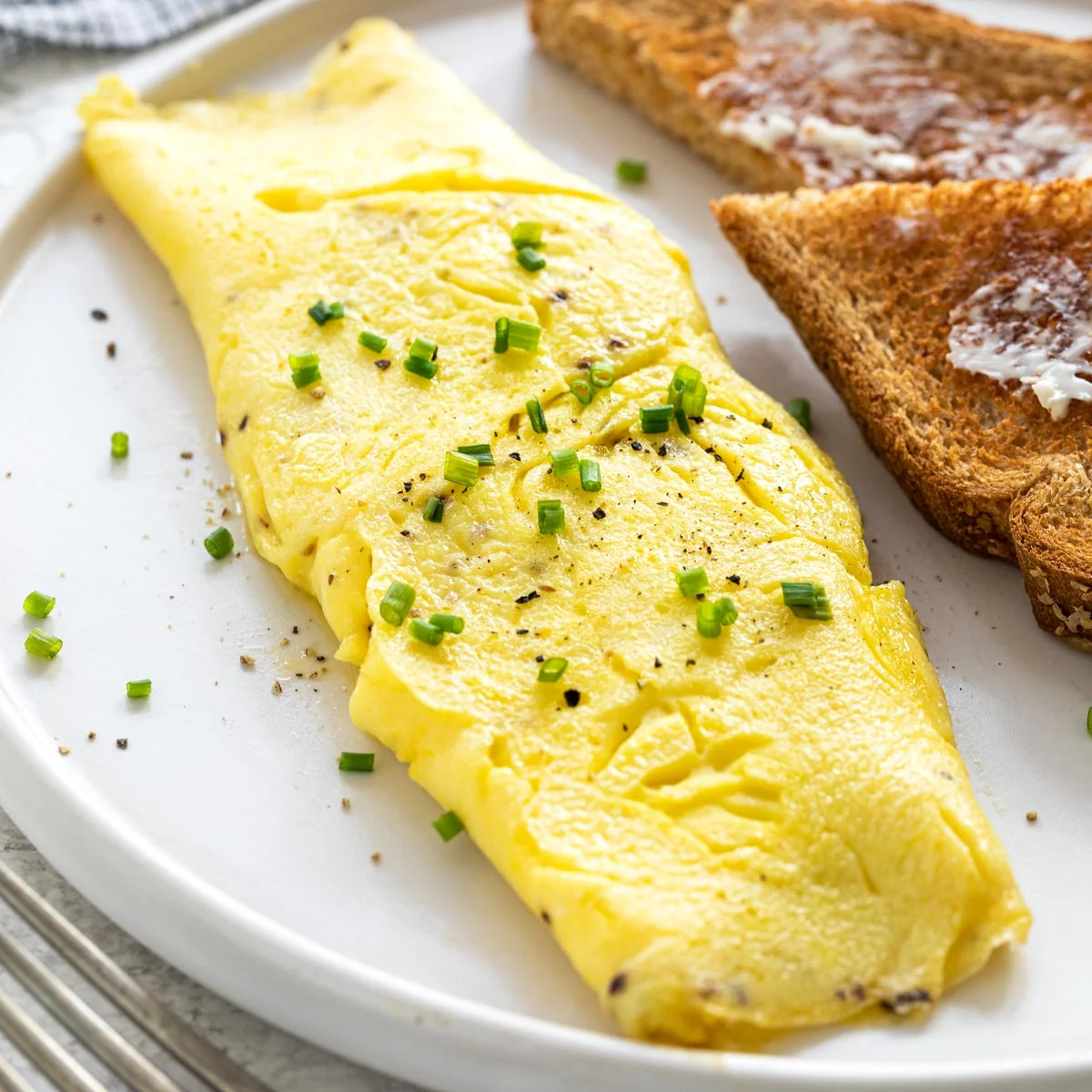
A classic French omelette turns eggs, a little butter and simple seasoning into a soft, tender dish in about 10 minutes. It is best served straight from the pan, while the centre is still glossy.
Ingredients
- 2large eggs
- 10 ml (2 teaspoons)milk, cream or water (optional)
- 0.6 ml (1/8 teaspoon)kosher salt
- 0.6 ml (1/8 teaspoon)black pepper
- 5 ml (1 teaspoon)unsalted butter
- 5 ml (1 teaspoon)chopped chives (optional)
Instructions
- 1
Whisk the eggs
In a medium bowl, whisk the eggs with the milk, if using, and the salt. Use a side-to-side motion until the mixture looks uniform, without whisking it excessively.
- 2
Heat the butter
Melt the butter in an 8-inch non-stick frying pan over medium-low heat. Wait until it bubbles and foams, but do not let it brown.
- 3
Form the curds
Pour in the eggs and leave them undisturbed for about 10 seconds, until the edges just start to set. Gently draw the cooked egg from the edges towards the centre with a spatula, tilting the pan so uncooked egg runs underneath. Repeat around the pan to make soft curds, cooking for about 2 to 2½ minutes, until the eggs are mostly set but still glossy. Turn off the heat when the omelette is nearly cooked through and remains pale, with no browning.
- 4
Fold and shape
With a spatula, fold one side towards the centre, then fold the other side over it to form a tight, rolled cigar shape.
- 5
Serve the omelette
Invert the omelette onto a plate, seam-side down. Finish with freshly cracked black pepper and chopped chives.
What is a French omelette?
The French omelette is a simple egg dish associated with French cooking, shaped into a neat roll rather than browned and folded around a filling. Its defining qualities are a tender exterior and a soft, creamy interior.
This version keeps the ingredients spare and relies on gentle heat and steady movement to make small, soft curds. Folding it while it is still glossy helps preserve its delicate texture.
Nutrition and macros by portion
The nutrition label shows one serving as written: 186 calories, 13g protein, 1g carbs, 14g fat.
| Portion | Adjustment | kcal | Protein | Carbs | Fat |
|---|---|---|---|---|---|
| Lighter | Use less butter | 130 kcal | 9g | 1g | 10g |
| This serving | As written | 186 kcal | 13g | 1g | 14g |
| Hungry | Add another egg | 279 kcal | 20g | 2g | 21g |
The eggs provide most of the protein and some of the fat, while butter contributes additional fat. The carbohydrate content is very small; serve with toast or potatoes if you want a more substantial meal, or add salad leaves for a fresh side.
Choose your additions
Eggs: Use fresh eggs and whisk just until the whites and yolks are blended. Overwhisking is unnecessary for this method.
Milk, cream or water: The small amount is optional, so you can leave it out or use one of the listed alternatives. Chives are also optional and provide a fresh finish.
Keep the heat gentle
Butter: Medium-low heat gives you time to guide the egg before it sets too firmly. The butter should foam without taking on colour.
Pan: An 8-inch non-stick frying pan gives the eggs a compact surface to cook on and makes the final roll easier to shape.
Make soft curds
Start: Let the egg sit for about 10 seconds so the edges begin to set before moving it. Pull the cooked portions gently towards the centre while tilting the pan to let runny egg flow underneath.
Finish: The curds should be mostly set but still glossy after about 2 to 2½ minutes. Turn off the heat while the omelette is pale and nearly cooked through; it will continue cooking briefly as you fold it.
Fold while it is tender
Shape: Fold each side towards the centre in turn, making a compact roll. Work gently so the soft curds stay together rather than being pressed flat.
Plate: Turn the omelette out seam-side down to help it hold its shape. Add freshly cracked pepper and chives just before serving.
Serve it simply
A French omelette is often served on its own as a quick breakfast, lunch or light supper. For a fuller plate, pair it with dressed salad leaves or toast.
If serving toast alongside, add it at the table rather than placing it under the omelette, so the outside stays delicate.
Recipe notes & tips
- Have the spatula, plate and garnish ready before the eggs go into the pan.
- Use a non-stick pan so the soft egg releases easily when you fold it.
- Keep the butter pale; browned butter will change the omelette's flavour and colour.
- Tilt the pan as you move the curds so uncooked egg can flow into the gaps.
- Serve straight away for the softest, glossiest centre.
Variations
- Use cream: Replace the milk with the listed amount of cream for a richer taste.
- Skip the dairy: Use water instead of milk, or leave the optional liquid out.
- Add chives: Fold the optional chopped chives into the eggs before cooking for an even distribution.
- Finish with pepper: Add freshly cracked black pepper at the table for a more pronounced peppery finish.
Common mistakes to avoid
- Overwhisking the eggs: Stop once the mixture looks uniform, as the method calls for a light whisk.
- Browning the butter: Keep the heat at medium-low and add the eggs as soon as the butter foams.
- Moving the eggs too soon: Leave them for about 10 seconds so the edges begin to set first.
- Cooking until dry: Turn off the heat when the eggs are mostly set but still glossy.
- Pressing the roll flat: Fold gently with the spatula to keep the curds soft.
How to store
This omelette is best eaten straight away. If you have leftovers, refrigerate them in a covered container and use within 1–2 days; reheat gently until hot, though the texture will be firmer.
Frequently asked questions
Why is my French omelette browned?
The pan may be too hot, or the butter may have browned before the eggs went in. Keep the heat at medium-low and turn it off while the omelette is still pale.
Do I have to add milk?
No. The recipe makes the liquid optional; you can use milk, cream or water, or leave it out.
How do I know when the eggs are ready to fold?
They should be mostly set but still glossy, after about 2 to 2½ minutes of cooking. Turn off the heat while the omelette is still pale and nearly cooked through.
Can I make this without a non-stick pan?
The method is designed for an 8-inch non-stick frying pan, which helps the eggs release cleanly. A different pan may make folding more difficult.
What can I serve with a French omelette?
Serve it with salad leaves for a light meal or with toast for something more filling.
Cook it from the original
This recipe comes from jessicagavin.com. Their page has the author’s own photos, notes and tips — the best place to cook it from.
Open the recipe on jessicagavin.com