
Parotta Recipe | How to make Soft Layered Parotta
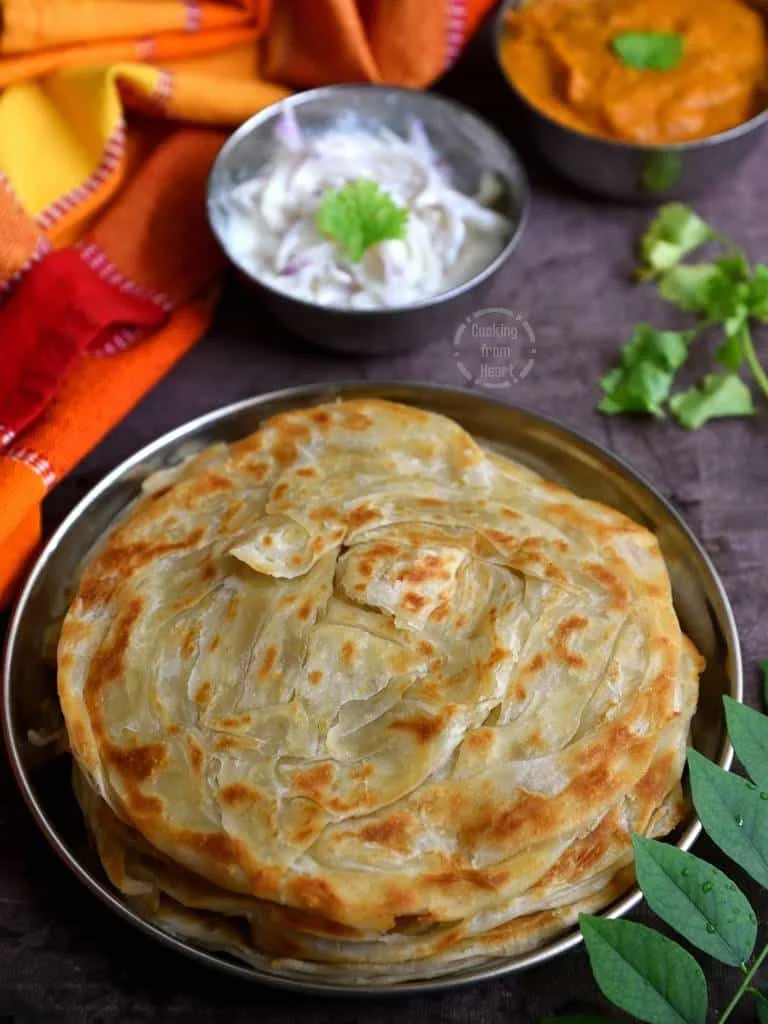
Tamil Nadu-style parotta is a soft, pan-cooked flatbread made by stretching and coiling dough to create delicate layers. A long rest and gentle handling help make the dough pliable enough to form its characteristic flaky texture.
Ingredients
- 250 g (2 cups)plain flour (maida)
- 60 ml (¼ cup)milk, at room temperature
- 5 ml (1 tsp)sugar
- to tastesalt
- as neededwater
- as neededoil
Instructions
- 1
Mix the flour
Put the flour, sugar and salt in a large plate or mixing bowl. Mix roughly, then make a well in the centre.
- 2
Add liquids
Pour the room-temperature milk into the well and add water as needed.
- 3
Knead the dough
Knead until you have a soft, pliable dough. Pour 1 tablespoon of oil over the top.
- 4
Work the dough
Use your thumb to push into the dough repeatedly, following the kneading technique described, until the dough is soft and smooth.
- 5
Rest the dough
Add 2 tablespoons of oil over the kneaded dough. Cover it with a damp kitchen towel and leave it to rest for at least 2 hours.
- 6
Knead again
After resting, knead the dough again until it feels very smooth and soft.
- 7
Make dough balls
To make the beeda, push portions of dough between your thumb and index finger until they emerge as smooth balls, then twist each one off.
- 8
Rest the balls
Repeat until all the dough is divided into smooth balls, kneading again if needed to smooth it. Put 1 teaspoon of oil on each ball and leave them to rest for 15–20 minutes.
- 9
Roll each ball
Cup each dough ball in your palm and roll it into a soft ball without creases. Repeat with all the balls.
- 10
Oil the surface
Take one ball and begin spreading it on a greased surface. The recipe uses a clean kitchen worktop coated with oil.
- 11
Stretch the dough
Spread the dough as thinly as possible; the shape and any small holes do not matter. If needed, lightly oil your fingers.
- 12
Lift the sheet
Carefully lift the stretched dough from one of its shorter ends, taking care not to tear it.
- 13
Gather into a ribbon
Gently gather the dough into a long ribbon, then coil it into a spiral without pressing it. Let the dough fall naturally as you shape it.
- 14
Rest the spirals
Set the spiral on the greased worktop and shape the remaining dough balls in the same way.
- 15
Flatten each spiral
Add a few drops of oil to a spiral and press it gently into a parotta that is not too thin. The dough contracts quickly, so avoid spreading it too thick.
- 16
Heat the pan
Heat a pan over a medium flame, then turn the heat to low once it is hot. Add a parotta and drizzle 1 teaspoon of oil around its edges.
- 17
Flip the parotta
When the underside is cooked and has golden-brown streaks, flip the parotta gently. Drizzle another teaspoon of oil around the sides and over the top.
- 18
Cook until golden
Cook until both sides are done and marked with golden-brown spots, then remove the parotta from the pan. Shape the next one while the current parotta cooks.
- 19
Bring out layers
When all the parottas are cooked, stack them on the worktop and press them from both sides to separate the layers. Do this while they are still hot or warm.
- 20
Serve the parotta
Serve hot with salna or kurma and thayir pachadi or onion raita. If not serving straight away, keep the parottas in a hotbox to retain softness; cooked parottas can also be frozen in zip-lock bags for up to a few weeks.
What is Tamil Nadu parotta?
Parotta is a layered flatbread popular in Tamil Nadu, made from a soft wheat-flour dough that is stretched, gathered and coiled before cooking on a pan. Its loose, flaky layers distinguish it from a simple rolled flatbread.
This version relies on milk in the dough, a generous rest and an oiled stretching surface. Those choices help make the dough easier to work into a thin sheet and shape into spirals.
Nutrition and macros by portion
The nutrition label shows one serving as written: 140 calories, 0g protein, 0g carbs, 0g fat.
| Portion | Adjustment | kcal | Protein | Carbs | Fat |
|---|---|---|---|---|---|
| Lighter | Use less oil | 98 kcal | 0g | 0g | 0g |
| This serving | As written | 140 kcal | 0g | 0g | 0g |
| Hungry | Serve an extra parotta | 210 kcal | 0g | 0g | 0g |
The flour provides most of the carbohydrates, while the milk and oil contribute some fat; the recipe contains no substantial protein source. Serve a parotta with a protein-rich curry and vegetables or raita to make a more balanced plate.
The flour and dough
Plain flour: the recipe uses maida, the refined flour traditionally used for this style. Add water gradually, as the amount needed is left to the cook, and aim for a soft, pliable dough.
Milk and sugar: room-temperature milk goes into the flour with the sugar and salt. The method does not specify a precise amount of water, so use enough to bring the mixture together into dough.
Why the resting time matters
First rest: after kneading and adding oil, cover the dough with a damp towel and leave it for at least 2 hours. This gives the dough time to relax before it is divided and stretched.
Second rest: the individual dough balls rest for 15–20 minutes after being oiled. This pause helps make them easier to spread without forcing or tearing the dough.
Stretching and coiling
Thin sheet: spread each ball as thinly as possible on an oiled worktop, using lightly oiled fingers if needed. The recipe says not to worry about the shape or small holes.
Loose spiral: gather the sheet into a ribbon and coil it without pressing. Keep the motion gentle so the dough can fall into the spiral rather than being compressed.
Cooking and checking for doneness
Pan heat: heat the pan over a medium flame, then lower it once hot. A gentler heat gives the parotta time to cook while developing golden marks.
Doneness: look for golden-brown streaks on the first side before flipping, then golden spots on both sides. The method gives visual cues rather than a fixed cooking time.
Serving the layers
Layering: stack the cooked parottas and press them from both sides while they are hot or warm. This helps loosen the layers formed by stretching and coiling.
Accompaniments: serve with salna or kurma and a side of thayir pachadi or onion raita. Keep any parottas that are waiting to be served in a hotbox to help retain their softness.
Recipe notes & tips
- Use a clean, well-oiled worktop to make stretching the dough easier.
- Keep the dough covered with a damp towel during its long rest.
- Oil your fingers lightly if the sheet sticks as you stretch it.
- Lift the dough carefully from its shorter end to avoid tearing it.
- Keep the spiral loose and avoid pressing it as you shape it.
- Press the cooked stack while it is still warm to help separate the layers.
Variations
- Serve with salna: pair the hot parotta with salna as suggested in the recipe.
- Serve with kurma: choose kurma for the accompanying curry.
- Add onion raita: serve it alongside the parottas as a cool accompaniment.
- Add thayir pachadi: include this yoghurt-based side as suggested in the recipe.
Common mistakes to avoid
- Stiff dough: add water as needed while mixing so the dough becomes soft and pliable.
- Short resting: leave the covered dough for at least 2 hours before shaping.
- Tearing the sheet: stretch it on an oiled surface and lift it gently from the shorter end.
- Tight spiral: gather and coil the ribbon without pressing it.
- Parotta too thick: press the spiral gently, keeping in mind that the dough contracts quickly.
- Layers not separating: press the stack from both sides while the parottas are hot or warm.
How to store
Keep cooked parottas in a hotbox if serving them soon, so they retain their softness. For longer storage, freeze them in zip-lock bags for up to a few weeks; reheat until hot before serving.
Frequently asked questions
How long should the dough rest?
Leave the covered dough for at least 2 hours. Once divided and oiled, rest the balls for another 15–20 minutes.
How thin should I stretch the dough?
Spread it as thinly as possible on an oiled surface. Small holes or an uneven outline are not a problem.
What if the dough keeps contracting?
The method notes that dough made with maida contracts quickly. Press the spiral gently and avoid spreading the shaped parotta too thick.
How do I know when a parotta is cooked?
Flip it when the underside has cooked and developed golden-brown streaks. It is ready when both sides are cooked and have golden-brown spots.
How do I bring out the layers?
Stack the cooked parottas and press the stack from both sides while it is still hot or warm.
Can I freeze cooked parottas?
Yes. The recipe suggests freezing them in zip-lock bags for up to a few weeks.
Cook it from the original
This recipe comes from cookingfromheart.com. Their page has the author’s own photos, notes and tips — the best place to cook it from.
Open the recipe on cookingfromheart.com