
Caramel Apple Pie
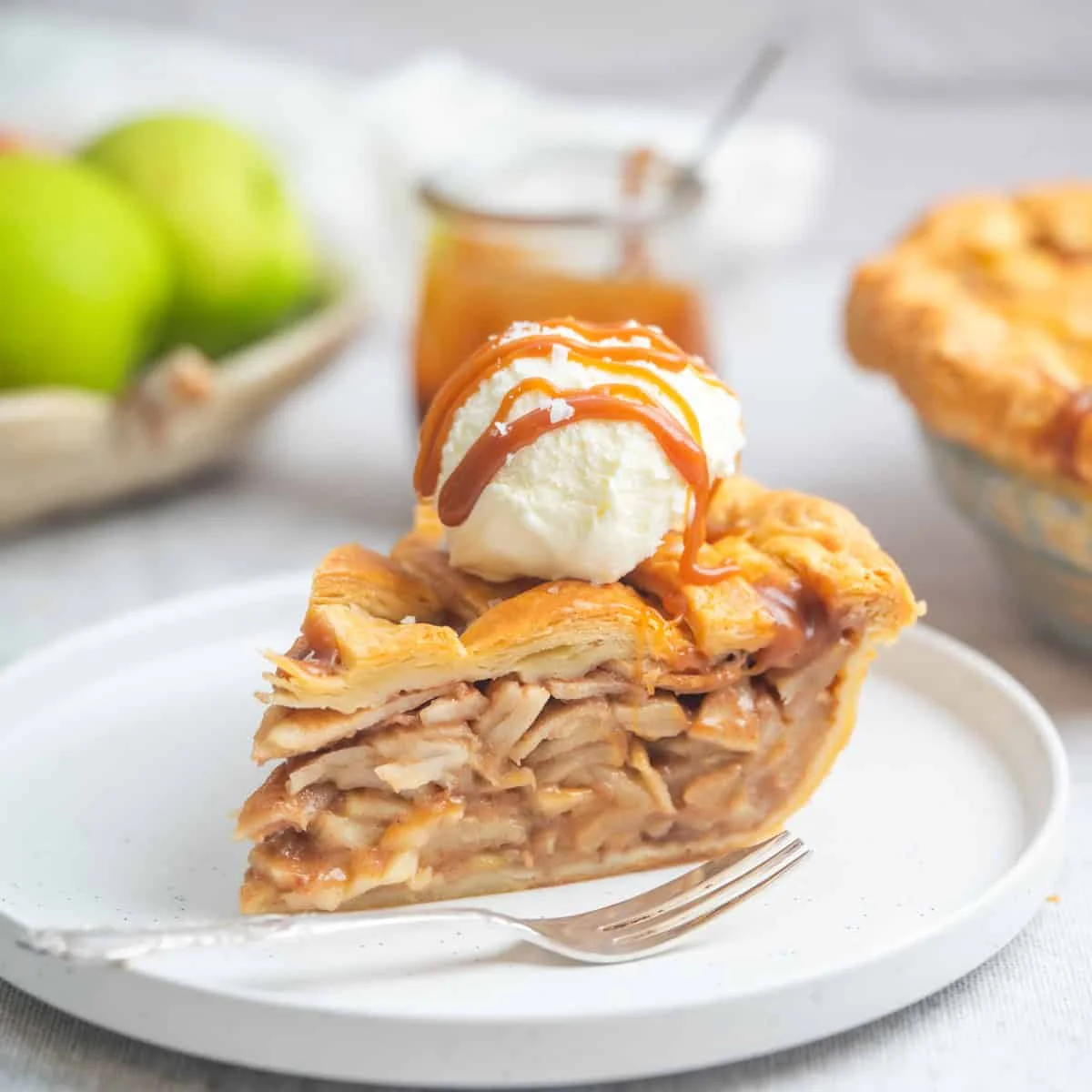
Caramel apple pie pairs tender, cinnamon-spiced apples with a rich caramel sauce inside a crisp pastry crust. It is a comforting American-style dessert for sharing, especially when served with vanilla ice cream.
Ingredients
- 1double unbaked pie crust
- 1.4 kg (around 8–9 apples)apples
- 100 ggranulated sugar
- 1/2 tablespoonlemon juice
- 100 gcaramel sauce
- 20 gplain flour
- 1 teaspoonvanilla paste or extract
- 1 1/2 teaspoonsground cinnamon
- 1/4 teaspoonground nutmeg
- 1/4 teaspoonground ginger
- 1 egg + 1 tablespoon wateregg and water, for egg wash
- to taste (optional)flaky salt
- to tastecaramel sauce, for serving
Instructions
- 1
Prepare the apples
Peel and core the apples, then use a sharp knife to cut them into even slices about 3–4 mm thick.
- 2
Macerate the fruit
Put the apple slices in a large bowl with the lemon juice and sugar. Toss to coat and leave at room temperature for 1 hour.
- 3
Preheat the oven
Heat the oven to 220°C.
- 4
Line the pie dish
On a lightly floured surface, roll out one portion of the pastry into a 30 cm circle. Drape it over a 23 cm pie dish, leaving an overhang, and refrigerate while you prepare the apples.
- 5
Drain the apples
Set a fine-mesh sieve over a bowl and drain the apples, catching all the juice. Return the apples to their bowl.
- 6
Reduce the juices
Pour the collected juice into a small saucepan and simmer over medium heat until reduced by about half and slightly syrupy but still pourable. Stir in 100 g caramel sauce until combined.
- 7
Season the filling
Add the flour, vanilla, cinnamon, nutmeg and ginger to the apples. Pour over the apple-caramel mixture and toss to coat.
- 8
Fill the pastry
Arrange the apples in the prepared pie dish, mounding them slightly in the middle if needed to fit.
- 9
Add the top crust
Roll out the second pastry disc on a lightly floured surface into a 30 cm circle. Lay it over the pie or make a lattice. If using a full top crust, cut 2–3 slits to let steam escape.
- 10
Seal the edges
Trim uneven excess pastry, leaving enough to fold and pinch the top and bottom crusts together. Flute the edge with your fingers.
- 11
Make the egg wash
Whisk the egg with 1 tablespoon water.
- 12
Brush the pastry
Use a pastry brush to coat the top of the pie with the egg wash.
- 13
Bake the pie
Bake at 220°C for 15 minutes, then reduce the oven to 180°C and bake for a further 55–65 minutes, until the apples are soft and the filling is bubbling.
- 14
Shield the crust
If the pastry is browning too much towards the end of baking, cover it loosely with aluminium foil.
- 15
Cool and finish
Leave the pie to cool for at least 4 hours before slicing. Once cool, pipe a little extra caramel into the lattice gaps, if using, and sprinkle with flaky salt.
- 16
Serve the pie
Serve with extra caramel sauce and vanilla ice cream.
What is caramel apple pie?
Apple pie is a well-known American dessert, with roots in the broader tradition of fruit pies brought to the country by European settlers. This version adds caramel to the spiced apple filling for a sweet, buttery note alongside the fruit.
Macerating the apples draws out their juice, which is then reduced and mixed with caramel. That concentrates the flavour and helps the filling coat the apples rather than leaving the pie watery.
Nutrition and macros by portion
The nutrition label shows one serving as written: 318 calories, 5g protein, 66g carbs, 5g fat.
| Portion | Adjustment | kcal | Protein | Carbs | Fat |
|---|---|---|---|---|---|
| Lighter | Smaller slice, less caramel | 223 kcal | 4g | 46g | 4g |
| This serving | As written | 318 kcal | 5g | 66g | 5g |
| Hungry | Larger slice with ice cream | 477 kcal | 8g | 99g | 8g |
The apples and sugar provide most of the carbohydrates, while the pastry and caramel contribute much of the fat and energy; the egg and pastry provide some protein. Serve a slice with a modest scoop of vanilla ice cream, or add plain yoghurt and fresh fruit for a lighter accompaniment.
Choosing the apples
Firm apples: choose fruit that holds its shape when baked, so the filling stays distinct rather than turning to purée. A mix of sweet and tart apples can give the pie a more balanced flavour.
Even slices: aim for slices about 3–4 mm thick. Similar-sized pieces soften at roughly the same rate during the long bake.
Reducing the apple juice
Collect every drop: drain the fruit over a bowl after its hour of macerating, rather than tipping away the liquid. It carries apple flavour and sugar from the fruit.
Watch the texture: simmer the juice until it has reduced by about half and looks just slightly syrupy, while still pourable. Stir in the caramel off the heat or once the reduction is ready, until smooth.
Building the filling
Flour and spices: toss the apples with the flour, vanilla, cinnamon, nutmeg and ginger before adding the caramel mixture. The flour helps thicken the juices as the pie bakes.
Room to mound: arrange the apples with a gentle mound in the centre if they seem too tall for the dish. They settle as they cook, so avoid pressing them down firmly.
Top crust and doneness
Vent the pie: cut 2–3 slits in a full pastry lid, or leave spaces in a lattice, so steam can escape. Pinch the pastry edges together to help keep the filling enclosed.
Look for bubbling: the filling should bubble and the apples should be soft after the two-stage bake. If the pastry is getting too dark before then, cover it loosely with foil.
Cooling and serving
Let it set: cooling for at least 4 hours gives the filling time to settle, making cleaner slices and reducing the chance of a runny centre.
Serve simply: extra caramel and vanilla ice cream complement the warm spices. For a contrast, serve with unsweetened cream instead of ice cream.
Recipe notes & tips
- Use a ruler or visual guide to keep the apple slices close to 3–4 mm thick.
- Refrigerate the lined pie dish while the apples macerate to keep the pastry firm.
- Place the pie dish on a baking tray to make it easier to handle in and out of the oven.
- If making a lattice, keep the pastry strips cool while you arrange them.
- Check the apples with a small knife near the end of baking; they should feel soft without turning mushy.
- Wait the full 4 hours before slicing so the filling has time to set.
Variations
- Apple mix: combine sweet and tart firm apples for a more complex filling.
- Lattice top: weave pastry strips across the apples instead of using a full lid.
- Extra spice: adjust the cinnamon, nutmeg or ginger to suit your preferred balance.
- Salted caramel: use salted caramel sauce and omit the optional flaky salt.
- Vanilla finish: serve with vanilla ice cream as suggested, or use lightly whipped cream.
Common mistakes to avoid
- Skipping the maceration: the apples need the full hour to release their juices; collect and reduce that liquid for the filling.
- Discarding the juice: drain the apples over a bowl and use the collected liquid in the caramel sauce.
- Over-reducing the syrup: stop when it is slightly syrupy but still pourable, as it will thicken further in the pie.
- Filling without vents: cut 2–3 slits in a full pastry lid so steam can escape.
- Slicing too soon: cool the pie for at least 4 hours before cutting so the filling can settle.
- Over-browning the pastry: cover the pie loosely with foil if the crust darkens too quickly towards the end.
How to store
Cover and refrigerate leftover pie for up to 4 days. Reheat individual slices in a 160°C oven until warmed through, or serve them chilled; add any extra caramel just before serving.
Frequently asked questions
Which apples work best?
Choose firm apples that hold their shape during baking. A sweet-tart mix works well if you want more contrast in the filling.
Can I make the pie ahead?
Yes. Bake it and allow it to cool fully, then cover and refrigerate. Bring slices to room temperature or warm them gently before serving.
Why do I need to drain the apples?
Draining lets you reduce the collected juices separately, concentrating their flavour before they are mixed with caramel. This also helps avoid an overly wet filling.
How can I tell when the pie is done?
The filling should be bubbling and the apples should feel soft when tested with a small knife. If the crust is browning too quickly, cover it loosely with foil while the filling finishes baking.
Why does the pie need to cool for so long?
The filling is very hot and loose when it first comes out of the oven. A cooling time of at least 4 hours helps it settle for neater slices.
Can I use a lattice top?
Yes. Roll out the second pastry portion and arrange it as a lattice; the gaps provide places for steam to escape. Add caramel to the gaps after the pie has cooled if you like.
Cook it from the original
This recipe comes from bakingwithbutter.com. Their page has the author’s own photos, notes and tips — the best place to cook it from.
Open the recipe on bakingwithbutter.com