
Peach Cobbler With Pie Crust
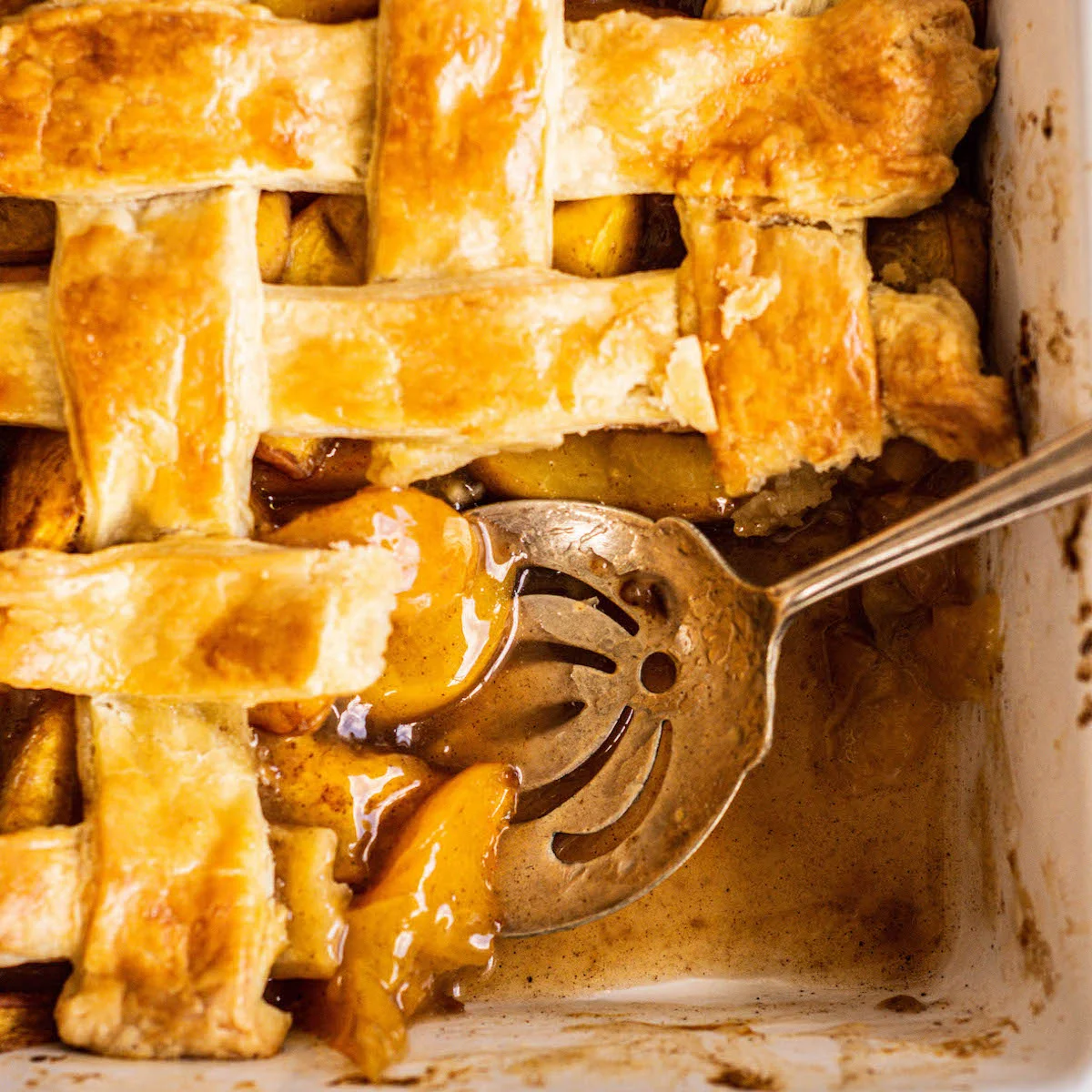
This peach cobbler pairs juicy, lightly spiced peaches with a buttery pie-crust lattice. It has the feel of peach pie, but the fruit filling and woven top make it a simpler bake to serve by the spoonful.
Ingredients
- 1.2 kgfresh peaches
- 2 Tbspgranulated sugar
- 1 Tbspbutter
- 50 gsoft brown sugar
- 2 Tbspall-purpose flour
- 1 Tbsplemon juice
- 2 teaspoonslemon zest
- 1 teaspoonvanilla paste or extract
- 1/2 teaspoonground cinnamon
- 1/4 teaspoonsalt
- 1unbaked pie crust
- 1 egg + 1 Tablespoon wateregg wash
Instructions
- 1
Slice the peaches
Cut the peaches into slices about 1.3 cm thick and put them in a large bowl. Keeping them fairly thick helps them retain their shape as they bake.
- 2
Sugar the fruit
Add the granulated sugar and toss to coat the peach slices. Leave them at room temperature for 20–30 minutes.
- 3
Reduce the juice
Drain the peaches, reserving their juice. Put the juice and butter in a small saucepan over medium heat. Bring to a simmer, stirring regularly, and cook until reduced by half and slightly thickened. Leave to cool briefly.
- 4
Mix the filling
Pour the reduced juice over the peaches. Add the brown sugar, flour, cinnamon, lemon juice, lemon zest, salt and vanilla, then stir to combine. Transfer the filling to a 9 × 9-inch baking dish.
- 5
Cut the pastry
On a lightly floured surface, roll the pastry into a large rectangle. Cut it into 10–12 strips, depending on your preferred width, and lay 5–6 strips vertically over the peach filling.
- 6
Weave the lattice
Fold every second vertical strip back halfway. Lay one of the remaining strips horizontally across the middle, over the strips left in place, then unfold the folded strips over it. Repeat with the other vertical strips, adding the remaining horizontal strips until the dish is covered.
- 7
Brush the pastry
Tuck in the ends of the pastry strips. Mix the egg with the water and brush the egg wash over the crust.
- 8
Bake the cobbler
Bake at 220°C for 15 minutes. Reduce the oven temperature to 180°C and bake for another 40–45 minutes, until the peaches are soft and the filling is bubbling.
- 9
Shield the crust
If the crust is browning too much towards the end of baking, cover it loosely with aluminium foil.
What is peach cobbler with pie crust?
Cobbler is a fruit dessert baked beneath or beneath and within a pastry or dough topping. This version takes a pie-like approach, using a woven pie-crust top over a sweet peach filling.
The peach-and-pastry combination is familiar in American home baking. Here, briefly draining and reducing the peaches’ juice helps make a flavourful filling without leaving the lattice sitting in a pool of liquid.
Nutrition and macros by portion
The nutrition label shows one serving as written: 236 calories, 3g protein, 39g carbs, 8g fat.
| Portion | Adjustment | kcal | Protein | Carbs | Fat |
|---|---|---|---|---|---|
| Lighter | Smaller cobbler portion | 165 kcal | 2g | 27g | 6g |
| This serving | As written | 236 kcal | 3g | 39g | 8g |
| Hungry | Larger cobbler portion | 354 kcal | 5g | 59g | 12g |
The peaches and sugars provide most of the carbohydrates, while butter, pie crust and egg contribute fat; the egg and pastry also provide some protein. Serve a portion with plain yoghurt for a more balanced plate, or add fruit if you want to keep the accompaniment lighter.
Why macerate the peaches?
Thick slices: Cutting the fruit about 1.3 cm thick gives it a better chance of staying in pieces as it bakes.
Resting time: The granulated sugar draws juice from the peaches during the 20–30-minute rest. Keep that liquid; it carries peach flavour into the filling.
Build flavour into the filling
Reduced juice: Simmer the reserved liquid with butter until it has reduced by half and thickened slightly. Let it cool briefly before mixing it back with the fruit.
Seasoning: Brown sugar, cinnamon, lemon and vanilla bring sweetness, warmth and a little brightness. Flour helps thicken the juices as the cobbler bakes.
Weaving the pastry
Even strips: Roll the pastry into a rectangle and cut 10–12 strips, choosing a width that is manageable to lift and fold.
Alternating rows: Lay down 5–6 vertical strips, fold back every second one, then place a horizontal strip across them. Unfold the strips and repeat with the alternating set to form the lattice.
How to tell when it is done
Look for soft peaches and filling bubbling beneath the pastry; these are the recipe’s cues that the fruit has cooked through.
The bake starts at 220°C for 15 minutes, then continues at 180°C for 40–45 minutes. If the top is becoming too dark towards the end, loosely cover it with foil.
Serving the cobbler
Let the cobbler settle briefly after baking so the hot filling is easier to serve. Spoon portions onto plates, keeping some pastry with each serving.
For a simple accompaniment, serve with plain yoghurt or a scoop of vanilla ice cream. Both complement the fruit without making the pastry work any harder.
Recipe notes & tips
- Keep the peach slices fairly thick so they are less likely to break down completely.
- Stir the juice regularly as it simmers to help it reduce evenly.
- Allow the reduced peach juice to cool briefly before adding it to the fruit.
- Cut all the pastry strips before starting the lattice so they are ready to hand.
- Use foil loosely if the crust is browning too quickly near the end of baking.
Variations
- Riper peaches: Use ripe but still firm fruit so the slices hold together in the filling.
- Vanilla choice: Use vanilla extract in place of the vanilla paste.
- Spice change: Adjust the cinnamon to suit your preference while keeping the peach filling as the focus.
- Pastry pattern: Cut wider or narrower strips to change the look of the lattice.
- Simple topping: Serve with plain yoghurt or vanilla ice cream.
Common mistakes to avoid
- Thin peach slices: They can lose their shape; cut them about 1.3 cm thick.
- Skipping the resting time: The peaches need 20–30 minutes with sugar to release their juice.
- Discarding the juice: Reserve it and reduce it with butter for the filling.
- Adding the liquid too hot: Let the reduced juice cool slightly before mixing it with the peaches.
- Over-browning the pastry: Cover the top loosely with foil if it darkens too much towards the end.
How to store
Cover and refrigerate leftovers once cool; use within 3–4 days. Reheat portions in the oven until warmed through, or use a microwave for a softer crust.
Frequently asked questions
Can I use frozen peaches?
The recipe is written for fresh peaches. If using frozen fruit, thaw and drain it first, then reserve and reduce the juice as directed.
Can I use shop-bought pie crust?
Yes. Use one unbaked pie crust and roll it into a rectangle before cutting the lattice strips.
Why do the peaches need to sit with sugar?
The resting time draws out their juice, which is reduced with butter and returned to the filling for flavour.
How do I know the cobbler is ready?
The peaches should be soft and the filling bubbling. The total bake is 55–60 minutes, with the oven temperature reduced after the first 15 minutes.
What should I do if the crust browns too fast?
Loosely cover it with aluminium foil towards the end of baking, as directed.
Can I make the lattice with fewer strips?
The recipe uses 10–12 strips, with 5–6 laid vertically. Fewer or wider strips will give a more open pattern, but make sure the filling is still partly covered.
Cook it from the original
This recipe comes from bakingwithbutter.com. Their page has the author’s own photos, notes and tips — the best place to cook it from.
Open the recipe on bakingwithbutter.com