
Cream Puffs
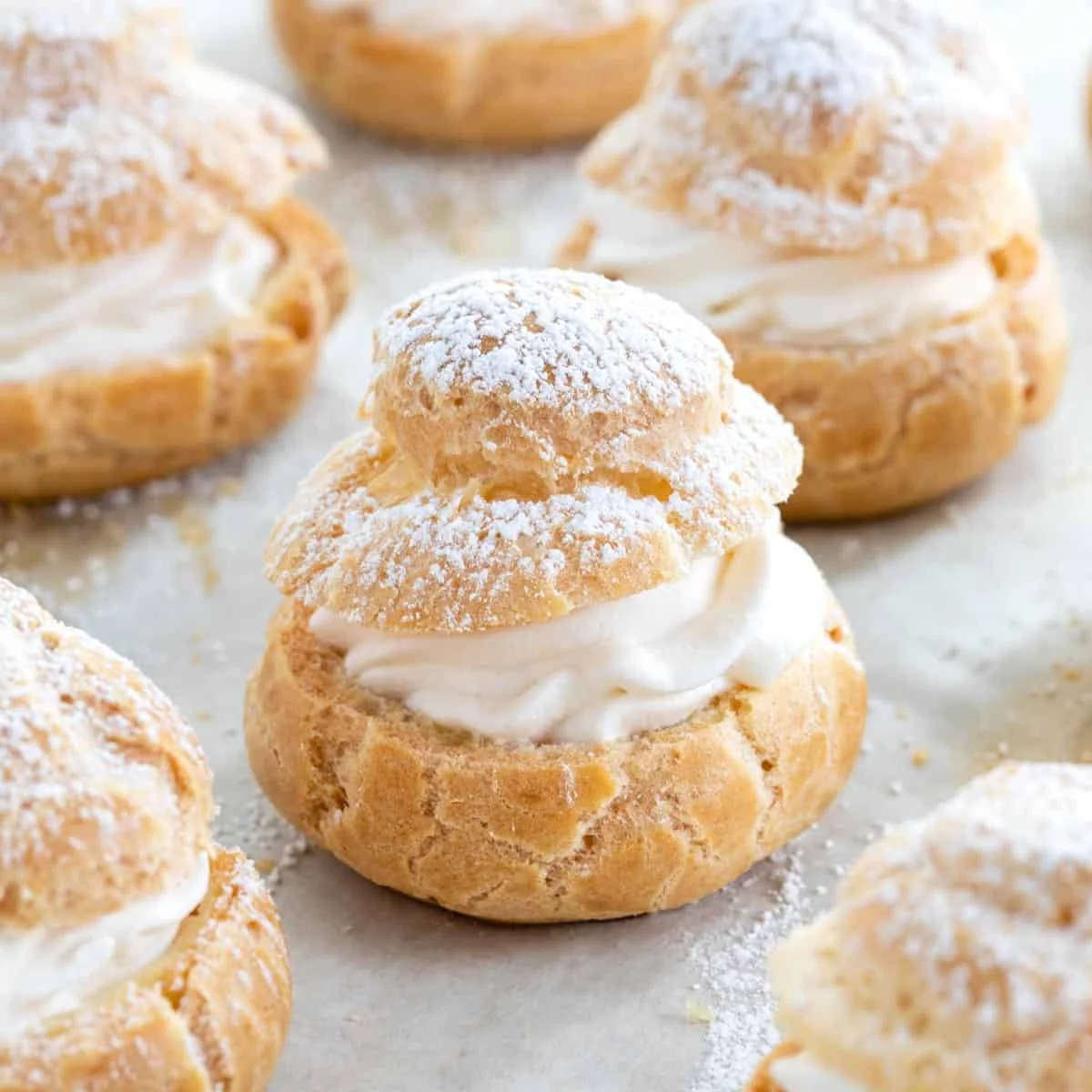
Cream puffs are crisp, hollow choux pastry shells filled with softly whipped cream and finished with a dusting of icing sugar. They make an elegant French dessert, and the shells can be baked ahead before filling just before serving.
Ingredients
- 296 ml (1¼ cups), dividedwater
- 1 teaspoongranulated sugar
- ½ teaspoonkosher salt
- 113 g (½ cup), cut into 8 slicesunsalted butter
- 120 g (1 cup), spooned and levelledplain flour
- 4 largeeggs
- 30 g (¼ cup)icing sugar, for dusting
- 1 largeegg
- 1 tablespoonwater or milk
- 473 ml (2 cups)double cream or whipping cream
- 60 g (½ cup)icing sugar or granulated sugar
- 1 teaspoonpure vanilla extract
Instructions
- 1
Preheat the oven
Set the oven racks in the upper-middle and lower-middle positions and heat the oven to 218°C (425°F). Line two baking trays with baking parchment and set them aside.
- 2
Make the dough
Put 237 ml (1 cup) of the water, the granulated sugar, salt and butter in a large, heavy-based saucepan. Bring to the boil over medium-high heat, stirring until the butter has melted, about 2 minutes. Turn off the heat, add the flour straight away and stir vigorously with a large non-metal spoon until combined. Set the heat to medium and stir constantly for 4–5 minutes, until the dough clumps together, looks fairly dry and begins to leave a film on the pan.
- 3
Cool the dough
Transfer the dough to the bowl of a stand mixer fitted with a paddle attachment. Mix slowly on setting 2 until it cools to 54°C (130°F) or just below, about 2–3 minutes, so the eggs do not curdle when added.
- 4
Add the eggs
Add the eggs one at a time, mixing on medium-low, setting 4, for 30–45 seconds after each addition until incorporated. After 3 eggs, check whether the dough pulls away from the sides of the bowl in thick, shiny threads; it should remain firm rather than runny and will not clear the bowl. If it is still too thick, add the fourth egg and mix for 45 seconds.
- 5
Pipe the dough
Fit a piping bag with a large plain nozzle, such as Ateco 806; lightly greasing the inside with cooking spray is optional. Fill the bag and pipe 5 cm (2-inch) rounds onto the trays, spacing them at least 5 cm (2 inches) apart; they will expand to about 7.5 cm (3 inches). Put 60 ml (¼ cup) of the remaining water in a small bowl, dip a finger into it and flatten any peaks on the piped rounds.
- 6
Brush with egg
Whisk the remaining egg with 1 tablespoon of water or milk in a small bowl. Brush the tops and sides of each dough round with the egg wash.
- 7
Bake the shells
Place the trays on the upper-middle and lower-middle racks. Bake for 10 minutes at each temperature in this order: 218°C (425°F), 191°C (375°F), 163°C (325°F), 135°C (275°F), 107°C (225°F) and 93°C (200°F). Do not open the oven door; the total baking time is about 60–70 minutes. Check a shell by breaking it open: it should feel light and be dry inside. If necessary, continue baking at 93°C (200°F). Transfer the shells to a cooling rack and leave them to cool completely.
- 8
Whip the cream
Put the cream, 60 g (½ cup) icing sugar and vanilla in the bowl of a stand mixer fitted with a whisk attachment. Whisk on medium-low, setting 4, until frothy, about 1 minute. Increase to medium-high, setting 8, and whisk until smooth, stiff peaks form, about 2 minutes, adding further 5-second bursts if needed. Stop before the cream becomes curdled.
- 9
Fill the shells
Fit a piping bag with a large star nozzle, such as Ateco 824, and fill it with the whipped cream in batches. Use a serrated knife to cut each cooled shell in half. Pipe the cream evenly onto the bottoms, then gently replace the tops.
- 10
Dust and serve
Dust the cream puffs with icing sugar. Serve immediately, or refrigerate them uncovered if they will not be eaten within one hour.
What are cream puffs?
Cream puffs, known in France as choux à la crème, are made from choux pastry: a cooked dough that puffs in the oven to form a hollow shell. This version pairs crisp, dried-out shells with vanilla-scented whipped cream and a simple icing sugar finish.
The method relies on carefully drying the dough before adding eggs, then baking the shells through a series of gradually lower temperatures. That gives the pastry time to rise and the inside time to dry.
Nutrition and macros by portion
The nutrition label shows one serving as written: 116 calories, 3g protein, 10g carbs, 7g fat.
| Portion | Adjustment | kcal | Protein | Carbs | Fat |
|---|---|---|---|---|---|
| Lighter | Smaller cream puffs | 81 kcal | 2g | 7g | 5g |
| This serving | As written | 116 kcal | 3g | 10g | 7g |
| Hungry | Larger portion | 174 kcal | 5g | 15g | 11g |
The flour and sugar provide most of the carbohydrate, while butter and cream contribute most of the fat; the eggs and cream supply some protein. Serve a cream puff alongside fresh fruit, or have it after a meal with vegetables and a protein-rich main.
Why the dough is cooked twice
Pan-dried dough: after the flour is stirred into the boiling butter mixture, keep stirring over medium heat for 4–5 minutes. It should gather into a ball and leave a light film on the pan rather than look wet.
Cooled dough: let the mixer bring the dough to 54°C or below before adding the eggs. A cooler base helps prevent the eggs from curdling.
Getting the egg mixture right
Eggs in stages: add them individually and let each one blend in before adding the next. The dough should look glossy and form thick threads, but stay firm enough to pipe into neat rounds.
Final egg: check the consistency after three eggs, as the amount the dough can take may vary. Add the fourth only if the mixture is still too thick, as runny dough is harder to pipe and hold its shape.
Pipe evenly for even baking
Round portions: pipe 5 cm rounds with at least 5 cm between them so they have room to expand. Keep the bag steady and lift straight up at the end of each portion.
Smooth peaks: dampen a fingertip with the reserved water and gently flatten any tails. This helps the tops bake more evenly and avoids pointed tips.
How to tell the shells are done
Gradual heat: follow the listed temperature sequence, allowing 10 minutes at each setting. Keep the oven door shut during baking so the shells are not disturbed as they rise.
Dry and light: break open one shell to check the centre. It should feel light and dry, not damp or doughy; if needed, leave the shells in the oven longer at 93°C.
Whip and fill with care
Stiff peaks: whip the cream until it holds its shape but still looks smooth. If you keep beating, it can turn grainy and curdled.
Fill when cool: let the shells cool completely before adding cream, or the filling may soften. Pipe the cream into the bottom halves, then set the lids on gently.
Serving cream puffs
Serve the filled puffs soon after assembling for the best contrast between crisp pastry and soft cream. They work well as a dessert after a light meal, or alongside coffee or tea.
Keep the icing sugar for just before serving if you want the dusting to stay visible. If the puffs need to wait, refrigerate them uncovered as directed.
Recipe notes & tips
- Weigh the flour or spoon it gently into the measuring cup and level it without packing.
- Use a heavy-based saucepan to help the dough cook evenly as it dries.
- Let the dough cool before adding the eggs so they do not curdle.
- Pipe the rounds to a consistent size to help them bake evenly.
- Check the inside of a shell for dryness before taking the trays out.
- Whip the cream in short bursts near the end and stop as soon as stiff peaks form.
Variations
- Chocolate topping: drizzle the finished puffs with melted chocolate.
- Citrus cream: add finely grated lemon or orange zest to the cream before whipping.
- Coffee cream: dissolve a little instant coffee in the vanilla before mixing it into the cream.
- Berry filling: add sliced fresh berries to the piped cream before replacing the lids.
- Flavoured sugar: replace the granulated sugar in the cream with icing sugar for a smoother finish.
Common mistakes to avoid
- Adding eggs to hot dough: cool the mixture to 54°C or below first to prevent the eggs curdling.
- Dough too wet: check after three eggs and add the fourth only if the dough remains too thick.
- Uneven portions: pipe rounds of similar size and leave at least 5 cm between them.
- Opening the oven: keep the door shut during baking so the shells can rise undisturbed.
- Shells still damp inside: continue baking at 93°C until a test shell feels dry and light.
- Overwhipping the cream: stop at smooth, stiff peaks before it turns grainy or curdled.
How to store
Unfilled shells can be kept in an airtight container at room temperature for up to 2 days; refresh them briefly in a low oven if they have softened, then cool before filling. Store filled cream puffs in the refrigerator and eat within 1 day, as the pastry softens over time.
Frequently asked questions
Can I make the shells ahead?
Yes. Cool them completely and store them unfilled in an airtight container for up to 2 days. Fill them closer to serving so the shells stay crisp.
Why did my cream puffs collapse?
They may not have baked long enough to dry inside, or the oven door may have been opened during baking. Check a shell for a dry, light centre before removing the trays.
Can I use whipping cream instead of double cream?
Yes. The recipe allows either heavy whipping cream or heavy cream; use a cream that whips to smooth, stiff peaks.
Do I have to use a piping bag?
A piping bag makes it easier to form even rounds and fill the shells neatly. Use a large plain nozzle for the dough and a large star nozzle for the cream.
When should I fill the shells?
Wait until the shells are completely cool, then pipe in the cream. For the crispest result, fill them shortly before serving.
Can I use granulated sugar in the cream?
Yes, the recipe lists granulated sugar as an alternative. Icing sugar dissolves more readily, so mix well and check that the cream remains smooth.
Cook it from the original
This recipe comes from jessicagavin.com. Their page has the author’s own photos, notes and tips — the best place to cook it from.
Open the recipe on jessicagavin.com