
Jangiri | Homemade Jangiri
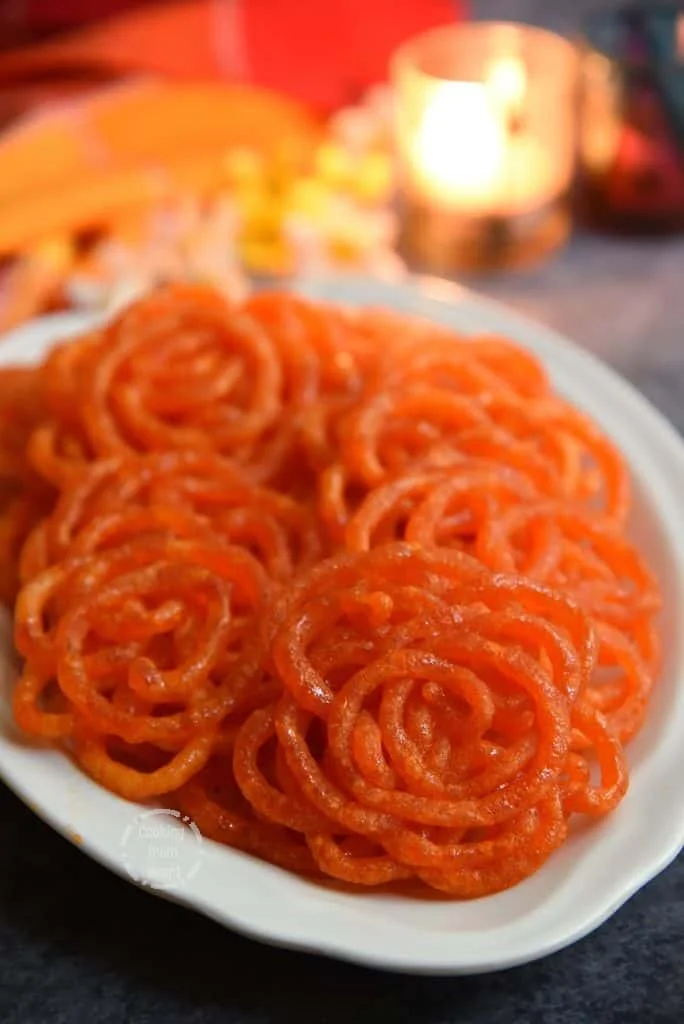
Jangiri is a South Indian sweet made from fluffy urad dal batter, piped into spirals, fried and soaked in cardamom sugar syrup. It is a festive Deepavali treat, and careful low-temperature frying helps the delicate shapes cook through while staying crisp enough to absorb the syrup.
Ingredients
- 100 g (½ cup)whole urad dal
- 5 g (1 tsp), optional; only if the batter is runnyrice flour
- 1 pinchsalt
- 1 pinchred-orange food colouring
- 200 g (1 cup)sugar
- 120 ml (½ cup)water
- ¼ tspcardamom powder
- 1 pinchred-orange food colouring
Instructions
- 1
Soak the dal
Soak 100 g (½ cup) whole urad dal in plenty of water for at least 1 hour and no more than 2 hours.
- 2
Grind the batter
Drain the dal and grind it in a blender or wet grinder with as little water as possible, about 3 tbsp, until fluffy. If using a blender, pulse a few times rather than running it continuously at high speed. Transfer to a bowl.
- 3
Add the colouring
Mix a pinch of salt and two pinches of red-orange food colouring, dissolved in a little water, into the batter.
- 4
Beat the batter
Mix continuously with your palm in a clockwise direction for 5–7 minutes. Scrape down the sides of the bowl a few times, keeping the same mixing direction.
- 5
Check the texture
Drop a little batter into a bowl of water. It should float, which indicates that the batter is fluffy.
- 6
Set the batter aside
Gather the batter together and leave it aside while you prepare the sugar syrup and oil.
- 7
Prepare a piping bag
Heat a small nail and use it to make a small hole in the centre of a zip-lock bag.
- 8
Cook the syrup
Put ¾ cup sugar and ½ cup water in a pan. Stir and cook until the sugar dissolves.
- 9
Check the syrup
When bubbles rise from the bottom of the pan, check that the syrup has reached one-string consistency.
- 10
Flavour the syrup
Stir in two pinches of red-orange food colouring and ¼ tsp cardamom powder. Remove the pan from the heat.
- 11
Heat the frying oil
Pour oil to a depth of about 1 inch in a flat pan and heat it over a low flame. Test it with a tiny bit of batter: if it does not rise immediately, the oil is ready.
- 12
Fill the bag
Spoon the batter into the prepared zip-lock bag and twist the top closed.
- 13
Pipe the spirals
Pipe a circle first, then add small swirls around it in a circular motion to form each jangiri.
- 14
Fry the jangiri
Carefully pipe jangiri into the hot oil, making 3–4 at a time depending on the pan size. Keep the oil at a low temperature; after a batch, you can turn off the heat while piping the next ones.
- 15
Turn and cook
Once the first side is cooked, gently flip each jangiri with a thin rod or paniyaram turner and cook the other side. Keep the oil temperature low throughout.
- 16
Warm the syrup
Make sure the sugar syrup is warm. If it has cooled, reheat it with 1 tsp water.
- 17
Check for crispness
When the jangiri are cooked on both sides and crisp, lift them out of the oil.
- 18
Soak in syrup
Transfer the hot jangiri straight from the oil into the warm syrup. Leave them for 2–3 minutes, until they absorb syrup and darken in colour.
- 19
Cool the sweets
Lift the jangiri out of the syrup and arrange them on a plate to cool.
- 20
Store airtight
Once they reach room temperature, keep the jangiri in an airtight container for up to a week.
What is jangiri?
Jangiri is a South Indian festive sweet, especially associated with Deepavali. It is made by piping urad dal batter into a flower-like spiral, frying it and soaking it in sugar syrup.
Urad dal gives this version its characteristic light, airy batter, while cardamom perfumes the syrup. The contrast between a crisp fried surface and a syrup-softened centre is part of its appeal.
Nutrition and macros by portion
The nutrition label shows one serving as written: 105 calories, 1g protein, 18g carbs, 3g fat.
| Portion | Adjustment | kcal | Protein | Carbs | Fat |
|---|---|---|---|---|---|
| Lighter | Smaller jangiri, less syrup | 74 kcal | 1g | 13g | 2g |
| This serving | As written | 105 kcal | 1g | 18g | 3g |
| Hungry | Larger serving | 158 kcal | 2g | 27g | 5g |
Sugar in the syrup is the main source of carbohydrate, while urad dal contributes some protein and carbohydrate. The frying oil adds most of the fat; serve a jangiri alongside fruit or a meal with vegetables and a savoury protein for a more balanced plate.
Getting the batter right
Urad dal: Drain it thoroughly before grinding, and add only a little water as needed. A thick batter is easier to pipe and holds its shape in the oil.
Mixing: Beat the batter in one direction for the full 5–7 minutes. The water test provides a useful cue: a small drop should float.
Piping the spirals
Bag opening: Make a small hole in the zip-lock bag so you can control the flow. A narrow opening makes it easier to pipe fine swirls.
Shape: Pipe a circle, then continue with small swirls around it. Work carefully over the pan so the batter lands in the oil without splashing.
Managing the oil
Low heat: The method relies on gentle frying rather than a very hot pan. If the oil is too hot, the outside can colour before the jangiri has cooked through.
Small batches: Fry 3–4 at a time, depending on the pan. Leave enough space to turn each one gently with a thin rod or paniyaram turner.
Syrup and doneness cues
Syrup stage: Cook the sugar and water until dissolved, then check for one-string consistency as bubbles rise from the bottom. Keep the prepared syrup warm so it is ready when the jangiri come out of the oil.
Frying: Cook both sides until crisp, then transfer the jangiri straight into the warm syrup. A 2–3 minute soak lets them take up syrup before they are lifted out to cool.
Serving and timing
The recipe takes about 165 minutes in total, including soaking, grinding, mixing, frying and cooling. Allow time to pipe and fry in batches rather than rushing the low-temperature cooking.
Serve the jangiri as a sweet with tea or as part of a festive dessert spread. A small portion pairs well with a less-sweet drink or fresh fruit.
Recipe notes & tips
- Measure the water used for grinding carefully so the batter stays thick enough to pipe.
- Use the floating-batter test as a cue before filling the piping bag.
- Keep the oil shallow and at a low temperature, checking it with a small drop of batter.
- Pipe only a few jangiri at a time so you have room to turn them gently.
- Keep the syrup warm and the draining-to-soaking transition quick.
- Let the sweets cool fully before closing them in a storage container.
Variations
- Use a piping bottle: A clean squeeze bottle with a small nozzle can make the batter easier to control.
- Adjust the colour: Use less food colouring for a paler finish, or omit it if you prefer.
- Change the aroma: Add a little extra cardamom to the syrup for a more pronounced spice note.
- Make smaller spirals: Pipe bite-sized shapes and keep a close eye on their frying time.
- Add a garnish: Sprinkle chopped nuts over the jangiri after the syrup soak, before they cool.
Common mistakes to avoid
- Runny batter: Grind with minimal water and add the optional rice flour only if the batter still needs thickening.
- Overmixing in different directions: Keep to a clockwise motion throughout the 5–7 minute mixing period.
- Oil too hot: Maintain low heat so the jangiri can cook through without browning too quickly.
- Crowded pan: Fry 3–4 at a time, or fewer if the pan is small, to leave room for turning.
- Cool syrup: Warm it with 1 tsp water before soaking so the jangiri can absorb it.
- Long soak: Lift the jangiri out after 2–3 minutes so they do not remain in the syrup longer than the method calls for.
How to store
Once fully cooled, store the jangiri in an airtight container at room temperature for up to a week. They are best served at room temperature; if you prefer them warm, reheat briefly and gently so the syrup does not scorch.
Frequently asked questions
How long should I soak the urad dal?
Soak it for at least 1 hour and no more than 2 hours, as specified in the method.
How can I tell if the batter is fluffy enough?
Drop a little batter into water; it should float. The batter should also be thick enough to pipe rather than run.
What can I use if I do not have a zip-lock bag?
A clean piping bag or squeeze bottle with a small opening can work. Use a nozzle that lets you pipe thin, controlled lines.
Why do the jangiri need to fry over low heat?
Gentle heat gives the spirals time to cook on both sides without the outside colouring too quickly. Keep the temperature low and turn them carefully.
How long should I leave them in the syrup?
The method gives 2–3 minutes, by which time the jangiri should absorb syrup and darken in colour.
Can I make jangiri ahead?
Yes. Cool them to room temperature, then store them in an airtight container for up to a week.
Cook it from the original
This recipe comes from cookingfromheart.com. Their page has the author’s own photos, notes and tips — the best place to cook it from.
Open the recipe on cookingfromheart.com