
Raspberry Compote
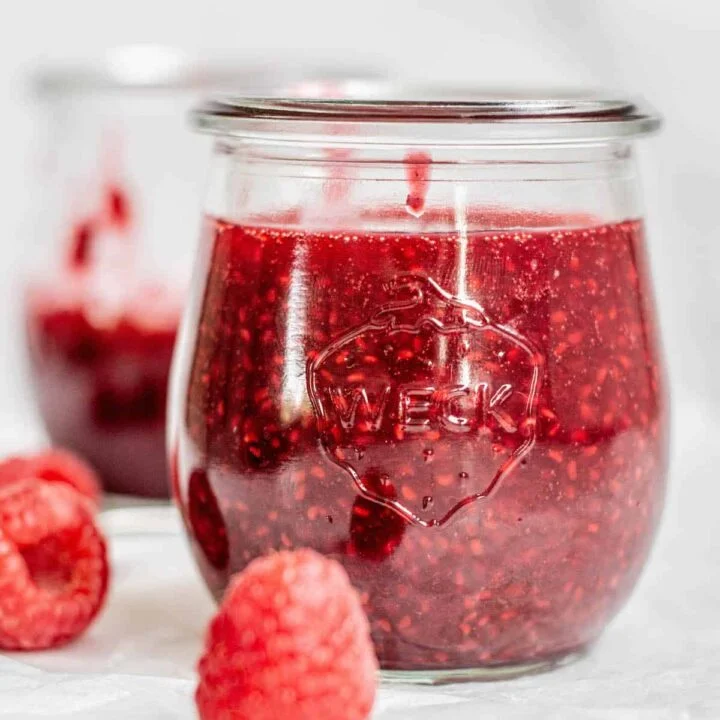
This raspberry compote gently cooks raspberries with sugar, lemon juice and salt into a soft, spoonable fruit sauce. Make it to brighten yoghurt, pancakes, cheesecake or ice cream, or swirl it through chocolate mousse.
Ingredients
- 370 g (3 cups)raspberries, fresh or frozen
- 65 g (1/3 cup)granulated sugar
- 7.5 ml (1/2 tablespoon)lemon juice
- 0.75 g (1/8 teaspoon)salt
Instructions
- 1
Combine ingredients
Put the raspberries, sugar, lemon juice and salt in a medium saucepan over low-medium heat.
- 2
Release the juices
Cook over low-medium heat, stirring at regular intervals as the raspberries release their juices and the mixture comes to a simmer.
- 3
Simmer the fruit
Once simmering, cook for around 10–15 minutes, stirring regularly with a wooden spoon until the sauce thickens.
- 4
Check the consistency
Dip a spoon into the compote and draw a finger across its back; the line should remain visible. Frozen raspberries may need a little longer because they contain extra moisture.
- 5
Remove from heat
Take the pan off the heat. The compote will thicken further as it cools.
- 6
Cool and store
Let the compote cool to room temperature, then transfer it to a clean glass jar and refrigerate until needed.
What is raspberry compote?
Compote is fruit cooked until tender in a sweetened liquid, creating a sauce that can still have plenty of texture. This version keeps the focus on raspberries, with lemon juice to sharpen their flavour and a little salt to round it out.
Its simple method makes it useful in many ways: spoon it over breakfast, add it to a dessert, or swirl it into something creamy.
Nutrition and macros by portion
The nutrition label shows one serving as written: 58 calories, 0g protein, 14g carbs, 0g fat.
| Portion | Adjustment | kcal | Protein | Carbs | Fat |
|---|---|---|---|---|---|
| Lighter | Use less sugar | 41 kcal | 0g | 10g | 0g |
| This serving | As written | 58 kcal | 0g | 14g | 0g |
| Hungry | Serve a larger spoonful | 87 kcal | 0g | 21g | 0g |
The raspberries provide most of the carbohydrate, while the granulated sugar adds more; this compote contributes very little protein or fat. Pair a spoonful with yoghurt for a more balanced snack, or use it as a fruit topping alongside your usual dessert portion.
Choosing the raspberries
Fresh fruit: Use ripe raspberries and check them for any damaged or mouldy berries before cooking. They usually release their juices readily as they warm.
Frozen fruit: Add it straight to the pan; there is no need to thaw it first. Frozen raspberries may give off more liquid, so allow extra time for the sauce to thicken.
Why lemon and salt help
Lemon juice: Its acidity balances the sweetness and helps the raspberry flavour taste bright. Measure it as listed so it complements, rather than overwhelms, the fruit.
Salt: The small amount seasons the sauce and brings the other flavours into focus. Stir it in with the fruit and sugar so it disperses evenly.
Getting the thickness right
The spoon test: Once the compote is simmering, stir regularly and check the back of a spoon. A clear track made by your finger is a useful sign that the sauce has thickened.
Cooling: Take the pan off the heat when the sauce reaches the desired consistency. It will become thicker as it cools, so avoid reducing it too far in the pan.
Keeping the texture
Gentle cooking softens the berries while leaving the finished sauce more textured than a smooth purée. Stir often enough to prevent sticking, but avoid vigorous mashing if you want some whole pieces of fruit.
A wooden spoon works well for stirring and for judging how the sauce moves around the pan.
Ways to serve it
Breakfast: Spoon the compote over yoghurt or pancakes, adding it just before serving so its colour and fruit texture stay distinct.
Dessert: Use it as a topping for cheesecake or ice cream, or fold a little through chocolate mousse. Add it to the dessert after the compote has cooled.
Recipe notes & tips
- Use a medium saucepan so the fruit has room to simmer without spilling.
- Stir regularly as the mixture heats and thickens.
- Begin checking the consistency after 10 minutes of simmering.
- Allow for extra cooking time if you use frozen raspberries.
- Let the compote cool before transferring it to a glass jar.
Variations
- Add vanilla: Stir in a little vanilla once the pan is off the heat.
- Use orange: Swap the lemon juice for orange juice for a softer citrus note.
- Mix the berries: Replace some of the raspberries with another soft berry.
- Keep it tart: Reduce the sugar slightly and taste the compote as it cooks.
- Add warm spice: Stir in a pinch of cinnamon for a gently spiced version.
Common mistakes to avoid
- Cooking too fast: A fierce boil can make the fruit stick; keep the heat at low-medium.
- Skipping the stirring: The sauce can catch on the pan; stir at regular intervals.
- Overcooking: The compote thickens as it cools, so take it off the heat once the spoon test shows a line.
- Expecting frozen fruit to cook like fresh: It brings extra moisture; give it a little longer to thicken.
- Jarring it while hot: Let the compote cool to room temperature before transferring it to the jar.
How to store
Once cooled, keep the compote in a clean, covered jar in the refrigerator and use it within about a week. Reheat only the amount you need gently, or serve it chilled.
Frequently asked questions
Can I use frozen raspberries?
Yes. Add them directly to the saucepan; they may need a little longer to cook because they release extra moisture.
How do I know when the compote is ready?
Draw a finger across the back of a spoon dipped in the sauce. If the line stays visible, the compote has thickened; it will firm up more as it cools.
Can I make the compote less sweet?
You can reduce the sugar, though the flavour will be more tart. Taste as it cooks and adjust to suit your preference.
Do I need to mash the raspberries?
No. Regular stirring softens them, and you can leave the sauce chunky. Mash a little as you stir if you prefer fewer whole berries.
What can I serve with raspberry compote?
Try it with yoghurt, pancakes, cheesecake, ice cream or chocolate mousse.
Cook it from the original
This recipe comes from bakingwithbutter.com. Their page has the author’s own photos, notes and tips — the best place to cook it from.
Open the recipe on bakingwithbutter.com