
Lasagne
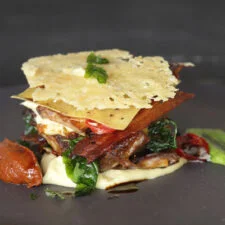
This deconstructed lasagne turns the familiar combination of rich beef ragù, creamy béchamel and pasta into an individually plated stack. Cooking the components separately lets you assemble each portion just before serving.
Ingredients
- 60 ml (¼ cup)olive oil
- 1–2 largeonions, chopped
- 100 gbacon, minced or chopped
- 2 clovesgarlic, crushed
- 2carrots, diced small or grated
- 2 stickscelery, diced small
- 2bay leaves
- 650 gbeef mince
- 150 ml (⅗ cup)dry white wine
- 250 ml (1 cup)chicken stock
- 250 ml (1 cup)milk
- 2 tins (800 g total)chopped tomatoes
- 2 tins (800 g total)fresh tomatoes, peeled and chopped
- 1 pinchgrated nutmeg
- 15 ml (1 tbsp)fresh oregano, chopped
- 30 ml (2 tbsp)fresh parsley, chopped
- 30 ml (2 tbsp)fresh basil, chopped
- to tastesalt and freshly ground black pepper
- ½ a smallonion, chopped
- 1 litremilk
- 4black peppercorns
- 2cloves
- 1bay leaf
- 70 gbutter
- 30 ml (2 tbsp)Dijon mustard
- 90 gplain flour
- to tastesea salt and freshly ground black pepper
- 150 gParmesan cheese
Instructions
- 1
Cook the ragù
Heat 30 ml of the oil in a large, heavy-based saucepan. Fry the onions and bacon until the onions soften, then add the garlic and cook for a minute. Add the carrot and celery and fry until soft. Stir in the bay leaves, transfer the vegetables to a bowl and set aside. Heat the remaining oil in the same pan and brown the mince. Return the vegetables to the pan and bring to a simmer. Pour in the wine, scraping up any browned bits from the base. Add the stock and simmer until reduced by half, then add the milk and reduce by half. Add both types of tomatoes and simmer until reduced by half. Cover and cook for 1 hour, until thick. Stir in the nutmeg and fresh herbs, then season to taste.
- 2
Infuse the milk
Warm the milk slowly in a small saucepan over medium heat with the onion, bay leaf, cloves and peppercorns. Just before it boils, turn off the heat and leave it to infuse for 5 minutes. Strain.
- 3
Make the roux
Melt the butter in a medium saucepan, add the flour and stir to combine. Cook the roux briefly, then add a ladle of infused milk while stirring continuously. Add the rest of the milk a ladle at a time, mixing well to prevent lumps. Simmer gently without letting the sauce burn. Grate in a little nutmeg, stir in the mustard and adjust the seasoning.
- 4
Finish the sauce
When the béchamel just coats the back of a spoon, stir in the Parmesan until incorporated.
- 5
Build the lasagne
For the baked version, use a shallow ovenproof dish measuring 25 × 25 cm and 10 cm deep. Add a ladle of white sauce, then lasagne sheets and ragù. Alternate the layers as many times as the dish allows, finishing with white sauce and grated Parmesan.
- 6
Bake until ready
Bake in a moderate oven for 45 minutes.
- 7
Try the modern approach
For a different version, the original method describes slow-braising brisket in a rich sauce made with the same ingredients. Once cooled, slice it into small slabs, then cook it again and caramelise it with jus. Add slow-roasted baby tomatoes, grilled porcini mushrooms and crispy streaky bacon. Replace the traditional béchamel with a thicker cheddar-rich sauce. Cook the pasta sheets and finish them in a pan with butter and parsley. Arrange the components in an abstract open-lasagne style, topped with spinach and basil purée, slow-roasted tomato purée, thick cheese sauce, crispy Parmesan pieces and deep-fried basil leaves.
- 8
Plate portions
To make the deconstructed version, cook the components separately rather than baking them together in a dish. Plate individual portions by layering meat sauce, white sauce and pasta, then repeat to make a loose stack. Finish with a Parmesan crisp and serve.
What is deconstructed lasagne?
Lasagne is an Italian baked pasta dish built from layers of pasta, meat sauce and béchamel. This recipe offers both a traditional layered bake and a more open, individually plated version.
The deconstructed approach keeps the familiar flavours but cooks the elements separately, so you can arrange them as a stack rather than baking them together.
Nutrition and macros by portion
The nutrition label shows one serving as written: 940 calories, 50g protein, 46g carbs, 60g fat.
| Portion | Adjustment | kcal | Protein | Carbs | Fat |
|---|---|---|---|---|---|
| Lighter | Smaller pasta stack | 658 kcal | 35g | 32g | 42g |
| This serving | As written | 940 kcal | 50g | 46g | 60g |
| Hungry | Extra pasta and ragù | 1410 kcal | 75g | 69g | 90g |
Beef, bacon, milk, butter and Parmesan provide much of the protein and fat, while the flour, tomatoes and vegetables contribute carbohydrates. Serve a moderate stack with a green salad or vegetables for freshness and extra variety on the plate.
Build flavour in the ragù
Vegetable base: soften the onion, bacon, garlic, carrot and celery before browning the beef. This gives the sauce a savoury foundation.
Reduce in stages: the wine, stock, milk and tomatoes are each simmered down in turn. Take the time to let the sauce thicken before adding the herbs and seasoning.
Keep the béchamel smooth
Infused milk: warming it with onion, bay, cloves and peppercorns adds flavour before it is strained into the roux.
Add gradually: whisk or stir in the milk a ladle at a time, keeping the sauce moving to avoid lumps. A gentle simmer helps it thicken without catching on the pan.
Look for the right texture
Ragù: cook it until thick rather than leaving it watery, so it can sit neatly between the pasta layers.
Béchamel: it is ready when it just coats the back of a spoon. Stir in the Parmesan at this point so it melts into the sauce.
Choose your finish
Baked version: layer the sauces and pasta in the specified dish, finishing with béchamel and Parmesan before baking for 45 minutes.
Plated version: cook the parts separately and build a loose stack for each serving. The modern approach in the recipe also describes additional components, including brisket, porcini and purées.
Serve it at the table
The rich sauces and pasta make this a substantial main course. A crisp green salad or simply dressed vegetables can bring freshness alongside it.
For the open version, assemble the stacks close to serving time so the pasta and sauces keep their distinct textures.
Recipe notes & tips
- Brown the mince in the same pan used for the vegetables to capture the browned bits.
- Scrape the base of the pan when adding the wine to lift any stuck-on flavour.
- Add the infused milk gradually to the roux and keep stirring as you pour.
- Keep the béchamel at a gentle simmer to reduce the chance of it catching.
- For the deconstructed version, cook and prepare the components separately before assembling the plates.
Variations
- Open stack: layer the cooked pasta, ragù and béchamel on individual plates instead of baking them together.
- Brisket version: use the recipe's described slow-braised brisket approach in place of the mince.
- Cheddar sauce: try the thicker cheddar-rich sauce described in the modern approach instead of the Parmesan béchamel.
- Herb finish: use the listed oregano, parsley and basil in the ragù for a fresh aromatic note.
- Extra toppings: the modern approach suggests adding porcini mushrooms, roasted tomatoes and crispy bacon.
Common mistakes to avoid
- Rushing the reductions: the sauce may stay thin; simmer each liquid stage until it has reduced as directed.
- Adding all the milk at once: the béchamel can turn lumpy; pour it in one ladle at a time while stirring.
- Letting the béchamel catch: a scorched base can affect the whole sauce; keep the heat gentle and stir regularly.
- Using watery ragù: loose sauce can make the layers slide; cook it until thick as described.
- Assembling too early: a plated stack can lose definition; cook the components separately and plate near serving time.
How to store
Refrigerate leftover cooked components or baked lasagne in covered containers for up to 3 days. Reheat until piping hot throughout; add a splash of milk to loosen the béchamel if needed.
Frequently asked questions
Can I make this as a traditional baked lasagne?
Yes. Layer the white sauce, lasagne sheets and ragù in the specified 25 × 25 cm, 10 cm-deep ovenproof dish, finish with béchamel and grated Parmesan, and bake for 45 minutes.
How thick should the ragù be?
The method says to cook it until thick. Reducing the liquids in stages helps it reach a consistency that can be layered.
How do I stop the béchamel from going lumpy?
Add the infused milk a ladle at a time, stirring continuously before adding the next ladle. Keep the sauce at a gentle simmer.
Can I assemble the deconstructed version ahead?
You can prepare the components separately in advance, then assemble the stacks close to serving so they keep their shape and texture.
What does the modern approach add?
The described version uses slow-braised brisket, roasted baby tomatoes, porcini, crispy bacon and a thicker cheddar sauce, with additional purées and crisp toppings.
Cook it from the original
This recipe comes from crushmag-online.com. Their page has the author’s own photos, notes and tips — the best place to cook it from.
Open the recipe on crushmag-online.com