
Homemade Puff Pastry | Easy Puff Pastry Recipe
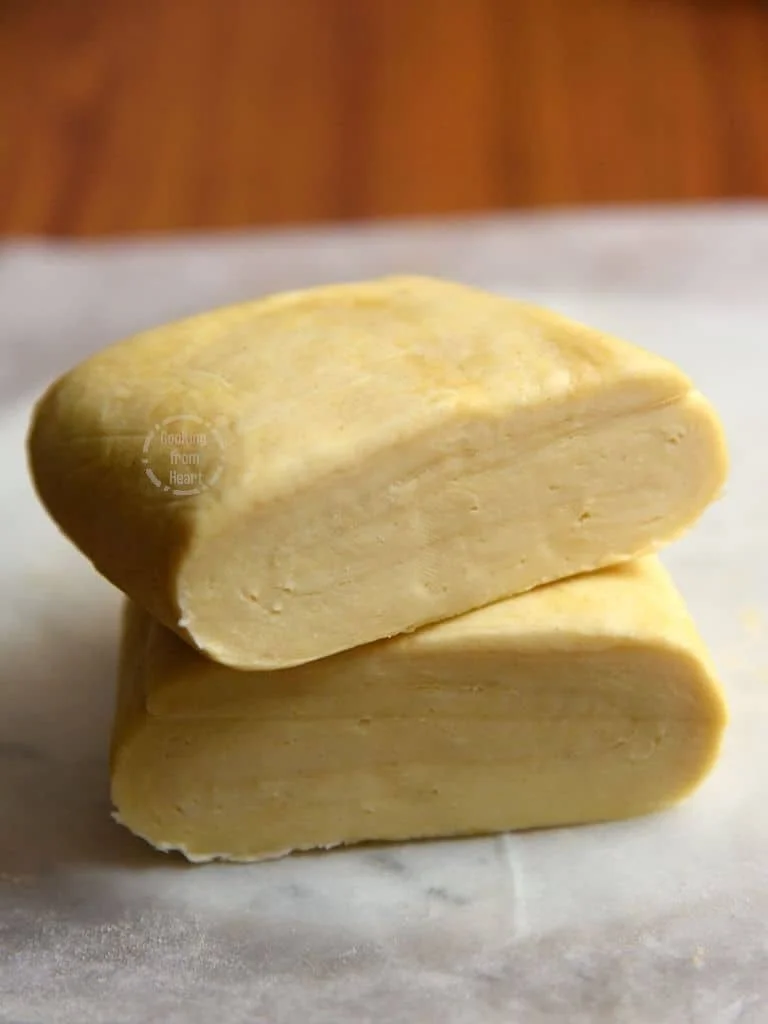
This homemade puff pastry is a simple, flaky dough made by folding cold butter through flour and water. Make a batch when you want ready-to-use pastry for savoury pies, tarts or sweet bakes.
Ingredients
- 180 g (1.5 cups)plain flour (maida)
- 113 g (1/2 cup)cold or frozen butter
- 120 ml (1/2 cup)very cold water
- 3/4 tspsalt
Instructions
- 1
Mix flour and salt
Put the flour and salt in a mixing bowl and stir until evenly combined.
- 2
Add the butter
Cut the cold butter into small pieces about 1/4 inch thick, then add them to the flour mixture.
- 3
Rub in gently
Work the butter into the flour lightly, taking care not to break it up too much or let it melt. Keep some large pieces visible.
- 4
Add cold water
Add the ice-cold water a little at a time, gently bringing the mixture together without kneading.
- 5
Stop mixing
As soon as the dough holds together, stop handling it. It need not be smooth, and cracks are fine.
- 6
Chill the dough
If the butter has begun to soften, wrap the dough in cling film and chill it in the fridge for 30–45 minutes or in the freezer for 15–20 minutes.
- 7
Roll into a circle
Dust the dough lightly with flour and roll it gently into a circle.
- 8
Mend any cracks
If the dough cracks or begins to split, press it back together and continue rolling to an even thickness.
- 9
Fold the first side
Begin an envelope fold by bringing one end of the dough towards the centre.
- 10
Fold the other side
Bring the other end towards the centre so the dough resembles an envelope.
- 11
Turn and roll
Turn the folded dough 90 degrees and roll it out again, dusting with flour if needed. Keep the thickness even as the dough becomes softer and smoother.
- 12
Repeat the folds
Fold the dough into an envelope again, turn it and roll it out once more, then repeat the envelope fold.
- 13
Chill after three folds
When the butter starts to soften after three folds, wrap the dough tightly in cling film and chill it in the fridge for 30–45 minutes or in the freezer for 15–20 minutes.
- 14
Make three more folds
Repeat the rolling and folding process another three times. The process can be repeated more often, but make at least three folds.
- 15
Check the texture
After six folds, the dough should be smooth.
- 16
Wrap and store
Fold the dough once more and wrap it in cling film. Keep it in the fridge if using within a day, or freeze it for later. Before using it in a recipe, chill it in the fridge for at least 2 hours or in the freezer for 30 minutes.
What is puff pastry?
Puff pastry is a layered dough that rises into crisp, flaky sheets as it bakes. Its technique has long roots in European pastry-making, while this American-style home recipe keeps the ingredient list short.
Butter pieces are folded through a simple flour-and-water dough rather than enclosed in a separate block. Repeated rolling and folding distributes the butter into layers, and chilling helps keep it firm.
Nutrition and macros by portion
The nutrition label shows one serving as written: 150 calories, 3g protein, 19g carbs, 11g fat.
| Portion | Adjustment | kcal | Protein | Carbs | Fat |
|---|---|---|---|---|---|
| Lighter | Use a smaller pastry piece | 105 kcal | 2g | 13g | 8g |
| This serving | As written | 150 kcal | 3g | 19g | 11g |
| Hungry | Serve a larger pastry portion | 225 kcal | 4g | 29g | 17g |
The flour supplies most of the carbohydrates, while butter contributes most of the fat and saturated fat; the dough has only a modest amount of protein. Use a measured piece of pastry and pair a savoury bake made with it with vegetables or a salad for a more balanced plate.
Keep the butter cold
Butter pieces: cut them small, but leave some sizeable pieces visible after rubbing them into the flour. They create the pockets that help give the pastry its layered texture.
Water: use very cold water and add it gradually. Stop as soon as the dough holds together so the butter does not soften from excess handling.
Handle the dough lightly
Gentle mixing: bring the ingredients together without kneading. A rough-looking dough with cracks is preferable to a smooth, overworked one at this stage.
Rolling: dust the surface only as needed and aim for even thickness. If the dough splits, press it together before continuing rather than forcing the rolling pin through it.
Make the envelope folds
First fold: bring both ends towards the centre to make an envelope shape. Turn the dough 90 degrees before rolling it out again.
Repeat: make at least six folds in total, pausing to chill after the first three if the butter starts to soften. The dough should feel smoother after the sixth fold.
Use the chilling breaks
Between folds: chill the dough for 30–45 minutes in the fridge or 15–20 minutes in the freezer when the butter softens. These are alternatives, so choose the one that fits your schedule.
Before baking: once folded and wrapped, leave the dough in the fridge for at least 2 hours or in the freezer for 30 minutes before using it in another recipe.
Choose a use for the pastry
Savoury bakes: use the pastry as a base or topping for pies and tarts, following the baking directions of the recipe you are making.
Sweet bakes: it also works for fruit tarts and other pastries. Pair it with a filling that suits the recipe, and avoid adding extra flour while shaping unless the dough is sticking.
Recipe notes & tips
- Measure the water carefully and add it in small amounts so the dough does not become wet.
- Keep visible pieces of butter in the dough rather than rubbing them all away.
- Use only enough dusting flour to prevent sticking, brushing off any excess before folding.
- Chill the dough whenever the butter begins to feel soft.
- Wrap the dough tightly before refrigerating or freezing it.
- Allow the final chilling time before rolling the pastry for another recipe.
Variations
- Herb pastry: mix finely chopped dried herbs into the flour and salt before adding the butter.
- Cheese pastry: add finely grated hard cheese to the flour mixture for a savoury variation.
- Wholemeal blend: replace part of the plain flour with wholemeal flour, keeping in mind the texture may differ.
- Sweet finish: sprinkle sugar over the pastry when using it for a sweet bake.
- Spiced pastry: add a small amount of a suitable ground spice to the flour for sweet fillings.
Common mistakes to avoid
- Soft butter: pause and chill the dough before continuing so the butter does not melt into the flour.
- Overworking: stop as soon as the dough comes together; kneading can make the pastry less tender.
- Adding water all at once: add it gradually so you can stop once the dough holds together.
- Rolling through cracks: press split areas back together gently before rolling on.
- Uneven thickness: roll evenly after each turn so the folds stay consistent.
- Skipping the final chill: refrigerate for at least 2 hours or freeze for 30 minutes before using the pastry.
How to store
Keep the tightly wrapped dough in the fridge if you plan to use it within a day, or freeze it for later. Before using, chill it in the fridge for at least 2 hours or in the freezer for 30 minutes.
Frequently asked questions
How many folds should I make?
The method calls for at least three folds, then repeats the process for another three. The dough should be smoother after six folds.
Can I use the dough if it has cracks?
Yes. The dough does not need to be smooth when first mixed; press cracks together gently as you roll.
Why does the dough need to be chilled?
Chilling helps firm the butter if it has started to soften during rolling and folding. The recipe also calls for a final chill before the pastry is used.
Can I freeze homemade puff pastry?
Yes. Wrap it tightly in cling film and store it in the freezer for later use. Chill it for 30 minutes before using.
Can I use the pastry straight from the fridge?
The recipe says to chill it for at least 2 hours before using, but does not specify a resting time after removing it from the fridge. Follow the handling directions of the recipe you are making.
Cook it from the original
This recipe comes from cookingfromheart.com. Their page has the author’s own photos, notes and tips — the best place to cook it from.
Open the recipe on cookingfromheart.com