
Egg Free Japanese Bread Rolls Recipe
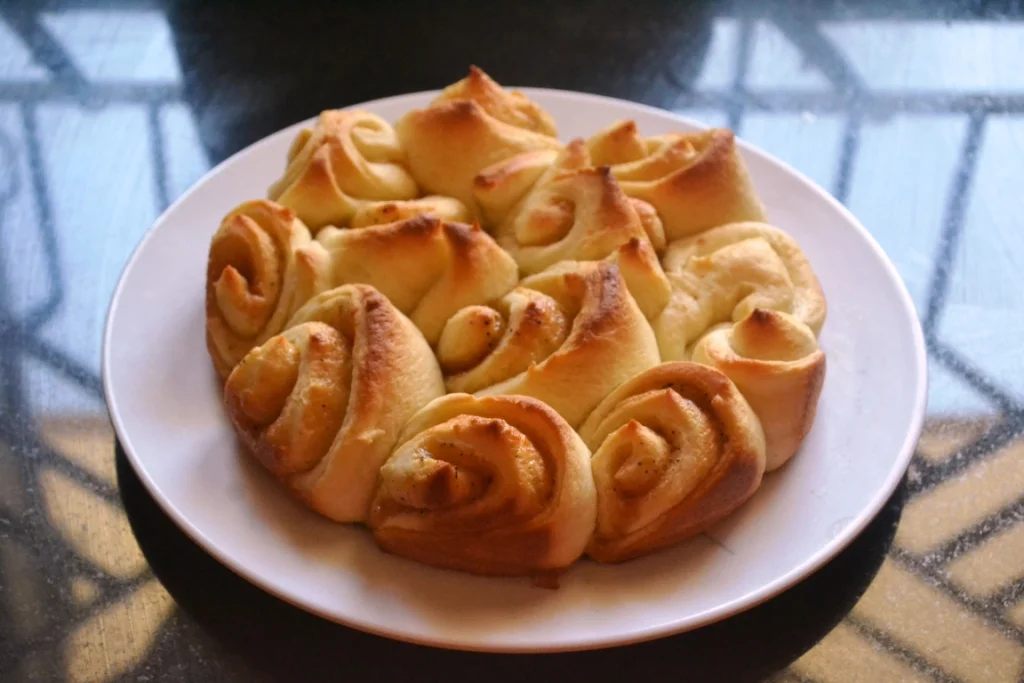
These soft, egg-free Japanese-style bread rolls use a cooked milk-and-flour paste called tangzhong to help give the dough a tender texture. A cinnamon-sugar filling makes them a cosy bake to share warm from the oven.
Ingredients
- 1 tbspMaida or all-purpose flour
- 3 tbspMilk
- 180 gMaida
- 1 1/2 tspInstant yeast
- 25 gSugar
- 1/2 tspSalt
- 50 mlMilk
- 25 gButter, melted
- 2 tbspCurd
- 1 tbspButter
- 2–3 tbspSugar
- to tasteCinnamon
Instructions
- 1
Cook the paste
Mix the milk and flour for the tangzhong in a pan and heat them. As the mixture thickens, whisk until smooth and thick with no lumps.
- 2
Cool the paste
Take the pan off the heat and immediately transfer the paste to a bowl. Cover it with cling film pressed against the surface to prevent a skin forming, then leave it to cool completely.
- 3
Mix the dough
Combine all the dough ingredients with the cooled tangzhong in a bowl and bring them together into a soft dough.
- 4
Knead until smooth
Knead the dough on the work surface for 10 minutes, until smooth and elastic.
- 5
Let the dough rise
Put the dough in an oiled bowl, cover with cling film and leave it until doubled in volume. This may take 45–70 minutes, depending on the temperature where you are.
- 6
Shape the dough
Return the dough to the work surface, press it down and roll it into a thin rectangle.
- 7
Add the filling
Spread the butter over the dough and sprinkle on the sugar and cinnamon. Starting at the rectangle’s longest side, roll it into a tight log.
- 8
Heat the oven
Preheat the oven to 200°C.
- 9
Cut the log
Slice the log into triangles.
- 10
Prepare the tin
Grease an 8-inch round springform tin.
- 11
Arrange the rolls
Place the triangles inside the prepared tin.
- 12
Rest the rolls
Cover the tin with cling film and leave the dough to rest for 15 minutes.
- 13
Bake until golden
Bake for 15–20 minutes, until the top is golden.
- 14
Cool and serve
Remove the tin’s outer ring and let the bread cool. Once it is warm enough to handle, transfer it to a serving plate and serve immediately.
What are Japanese bread rolls?
These are soft, enriched rolls made with a tangzhong, a cooked flour-and-milk paste used in some Japanese-style bread-making. The technique is associated with shokupan-style soft breads and helps make this dough tender without using eggs.
Here, the dough is rolled up with butter, sugar and cinnamon, then baked together in a round tin. The result is a pull-apart centre with golden edges and a sweet swirl.
Nutrition and macros by portion
The nutrition label shows one serving as written: 320 calories, 6g protein, 50g carbs, 10g fat.
| Portion | Adjustment | kcal | Protein | Carbs | Fat |
|---|---|---|---|---|---|
| Lighter | Use less filling sugar | 224 kcal | 4g | 35g | 7g |
| This serving | As written | 320 kcal | 6g | 50g | 10g |
| Hungry | Serve a larger portion | 480 kcal | 9g | 75g | 15g |
The flour and sugars provide most of the carbohydrates, while the butter contributes much of the fat. Flour, milk and curd provide some protein, though this is primarily a bread-based serving. Pair a roll with fruit or yoghurt for a more balanced plate.
Why the tangzhong matters
Cooked paste: heating the flour and milk until thick gives the dough a smooth, gel-like addition. Whisk continuously as it thickens to keep lumps from forming.
Cool completely: the paste needs to be cool before it goes into the dough. Covering its surface with cling film helps prevent a dry skin.
Kneading and the first rise
Kneading: work the dough for the full 10 minutes, until it feels elastic and looks smooth. It should come together as a soft dough rather than remain rough and ragged.
Rising: judge the first rise by the dough’s volume, not just the clock. The recipe gives 45–70 minutes as a guide, with room temperature affecting the timing.
Rolling and filling
Even layer: roll the dough into a thin rectangle so the filling can spread across it. Apply the butter, then scatter the sugar and cinnamon over the surface.
Tight log: roll from the longest side to make a compact coil. This keeps the filling within the dough as you cut the triangles.
Cutting and baking
Triangle slices: cut the log into triangles and arrange them in the greased springform tin. The recipe does not specify a slice count, so divide the log into pieces that fit the tin.
Doneness: bake at 200°C for 15–20 minutes, looking for a golden top. Begin checking at the shorter end of the stated baking time.
Serving the rolls
Let the bread cool briefly after removing the outer ring, then transfer it once it is warm enough to handle. It is intended to be served immediately while still warm.
The sweet, buttery rolls pair well with plain yoghurt or fresh fruit, which adds a cool, fresh contrast to the cinnamon filling.
Recipe notes & tips
- Whisk the tangzhong as it cooks so it thickens evenly.
- Wait until the tangzhong is completely cool before mixing the dough.
- Use the dough’s doubled volume as the cue for the first rise.
- Roll the dough tightly from its longest side to help contain the filling.
- Grease the springform tin well so the baked bread releases cleanly.
- Check for a golden top after 15 minutes of baking.
Variations
- Adjust the spice: add a little more cinnamon if you prefer a stronger flavour.
- Use brown sugar: swap it for the filling sugar for a deeper, caramel-like note.
- Add chopped nuts: scatter a small amount over the filling before rolling.
- Make smaller rolls: cut the log into more triangles and arrange them in the tin.
- Serve with fruit: add fresh fruit alongside the warm bread for contrast.
Common mistakes to avoid
- Lumpy tangzhong: whisk continuously as the milk and flour heat and thicken.
- Skin on the paste: press cling film directly onto its surface while it cools.
- Warm tangzhong in the dough: let it cool completely before combining it with the other dough ingredients.
- Under-kneaded dough: knead for 10 minutes, until the dough is smooth and elastic.
- Rushing the first rise: wait until the dough has doubled rather than relying only on the clock.
- Overbaking: check the top from 15 minutes and remove the bread when it is golden.
How to store
The recipe is best served immediately. Any leftovers can be kept in an airtight container at room temperature for up to 2 days; warm them briefly in the oven before serving.
Frequently asked questions
What is tangzhong?
It is a cooked paste made from flour and liquid, in this recipe flour and milk. It is cooled before being mixed into the dough.
Can I use all-purpose flour instead of maida?
Yes. The recipe lists maida and all-purpose flour as alternatives for the tangzhong; all-purpose flour can also be used for the main dough.
How long does the dough need to rise?
The first rise may take 45–70 minutes, depending on room temperature. Leave it until it has doubled in volume.
How do I know when the rolls are baked?
The method gives a baking time of 15–20 minutes at 200°C. Look for a golden top and start checking at 15 minutes.
Can I prepare the rolls ahead?
The recipe does not include an overnight or make-ahead rise. For the stated method, shape them, rest for 15 minutes and bake.
Are these rolls egg-free?
Yes. The listed ingredients contain no eggs; curd is used in the dough.
Cook it from the original
This recipe comes from gayathriscookspot.com. Their page has the author’s own photos, notes and tips — the best place to cook it from.
Open the recipe on gayathriscookspot.com