
Homemade Soft Malai Chenna / Crumbled Paneer - Video Recipe
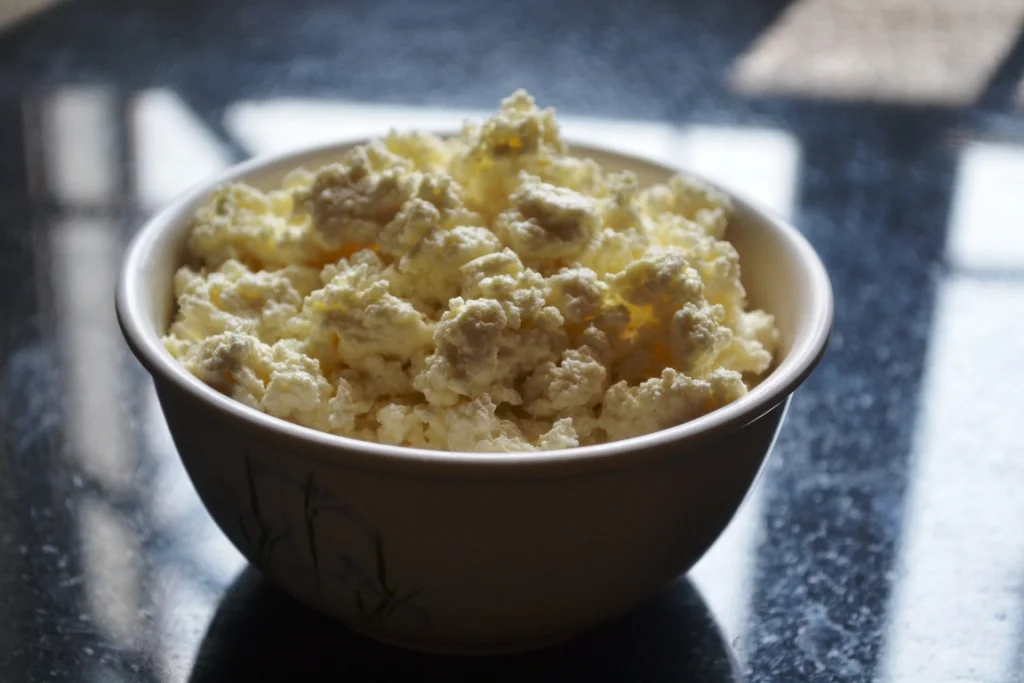
This homemade malai chenna is a soft, creamy Indian fresh cheese made by splitting milk and cream with vinegar, then draining the curds. Use it crumbled in Indian sweets or savoury dishes where a tender paneer texture is welcome.
Ingredients
- 2.5 Lfull-fat milk
- 250 mlfresh cream
- 3–4 tbspvinegar
Instructions
- 1
Mix milk and cream
Combine the milk and cream in a pan.
- 2
Bring to boil
Heat the mixture until it comes to a boil.
- 3
Remove from heat
As soon as it starts boiling, take the pan off the heat and set it aside.
- 4
Separate the curds
Add the vinegar and stir until the whey separates from the milk solids.
- 5
Check the whey
If the whey is cloudy, stir in an extra teaspoon of vinegar.
- 6
Check the separation
Look for clear whey and distinct milk solids.
- 7
Line a sieve
Line a sieve with a cotton cloth, then transfer the milk solids into it.
- 8
Drain the curds
Cover the cloth and leave the curds to drain for one hour.
- 9
Finish the chenna
The malai chenna is ready to use.
What is malai chenna?
Chenna is a fresh Indian cheese made by curdling milk with an acid and separating the curds from the whey. It is closely related to paneer, though chenna is often left soft and crumbly rather than pressed into a firm block.
This version adds cream to full-fat milk, giving the curds a richer character. The method is simple: heat, split, then drain.
Nutrition and macros by portion
The nutrition label shows one serving as written: 20 calories, 1g protein, 1g carbs, 1g fat.
| Portion | Adjustment | kcal | Protein | Carbs | Fat |
|---|---|---|---|---|---|
| Lighter | Use less cream | 14 kcal | 1g | 1g | 1g |
| This serving | As written | 20 kcal | 1g | 1g | 1g |
| Hungry | Serve a larger portion | 30 kcal | 1g | 2g | 2g |
Most of the energy and fat come from the full-fat milk and cream, while the milk solids provide protein; some lactose and other soluble components drain away with the whey. The stated 100 servings make each calculated portion very small, so pair a practical portion with vegetables and rice or flatbread for a fuller plate.
Why add cream?
Full-fat milk: it provides the main body of the curds and the milk solids that form the chenna.
Fresh cream: mixed into the milk before heating, it gives this version a more indulgent, soft finish.
Getting a clean separation
Vinegar: add it after taking the pan off the heat, then stir until the curds and whey visibly separate. The recipe gives a range of 3–4 tablespoons because the amount needed can vary.
Cloudy whey: if the liquid has not cleared, add an extra teaspoon of vinegar as directed. Look for clearly distinct milk solids and whey before straining.
Drain without pressing
Cotton cloth: line the sieve so the small curds stay contained while the whey drains away. Transfer the curds gently rather than pouring them through an unlined sieve.
One hour: cover the cloth and let the curds drain for the stated time. The recipe does not call for pressing, so the result should remain soft and crumbly.
Ways to use it
Savoury dishes: crumble the chenna into a spiced curry or fold it into a cooked vegetable dish near the end, so the soft curds are not handled more than necessary.
Sweet dishes: use it as a base for Indian sweets that call for fresh chenna. The finished texture will depend on how thoroughly it has drained.
Serving and portioning
The listed recipe makes a large batch, and its stated yield is 100 servings. Divide the finished chenna according to your intended use rather than assuming each portion is a full serving of paneer.
For a more complete plate, serve a portion alongside vegetables and a source of carbohydrates such as rice or flatbread.
Recipe notes & tips
- Use a pan large enough to hold the milk and cream comfortably.
- Keep an eye on the mixture as it heats so you can remove it as soon as it boils.
- Stir after adding the vinegar until the separation is clear.
- Add the extra teaspoon of vinegar only if the whey remains cloudy.
- Use a clean cotton cloth with a weave fine enough to hold the curds.
- Drain for the full hour before using the chenna.
Variations
- Gentler flavour: use the lower end of the vinegar range, then add more only if the whey remains cloudy.
- Firmer chenna: allow it to drain longer after the stated hour if your intended dish needs less moisture.
- Soft crumble: use the chenna after the one-hour drain without pressing it.
- Savoury seasoning: mix spices and herbs into the drained chenna just before serving.
- Sweet preparation: use the plain chenna in a dessert recipe that calls for fresh Indian cheese.
Common mistakes to avoid
- Adding vinegar while boiling: remove the pan from the heat first, as the method directs.
- Stopping too soon: keep stirring until the whey and milk solids have clearly separated.
- Ignoring cloudy whey: add an extra teaspoon of vinegar and check again.
- Using an unlined sieve: line it with cotton cloth so the curds do not escape.
- Pressing the curds: leave them to drain under cover for an hour to keep the result soft.
- Serving too soon: give the curds the full draining time before using them.
How to store
Refrigerate the drained chenna in a covered container and use it within 2–3 days. Reheat gently in a dish that contains it, as prolonged cooking can make fresh cheese firmer.
Frequently asked questions
What should the whey look like?
It should be clear, with the milk solids visibly separated from it. If it is cloudy, add an extra teaspoon of vinegar as the recipe instructs.
Can I use another vinegar?
Use a plain vinegar with a mild flavour if possible. Strongly flavoured varieties may leave their taste in the chenna.
How long should I drain the chenna?
The recipe specifies one hour. Drain it longer only if you need a drier texture for your intended dish.
Is this the same as paneer?
It is a closely related fresh cheese. This chenna is drained but not pressed, so it stays softer and more crumbly than a firm paneer block.
Why is my chenna still wet?
It may need more draining time. Keep it in the cloth over the sieve and let excess whey drip away before using it.
Can I freeze malai chenna?
Freezing may change the soft, crumbly texture. Refrigeration and prompt use are preferable for this fresh cheese.
Cook it from the original
This recipe comes from gayathriscookspot.com. Their page has the author’s own photos, notes and tips — the best place to cook it from.
Open the recipe on gayathriscookspot.com