
Rollos de huevo coreanos con queso - Recetas fáciles bajas en carbohidratos
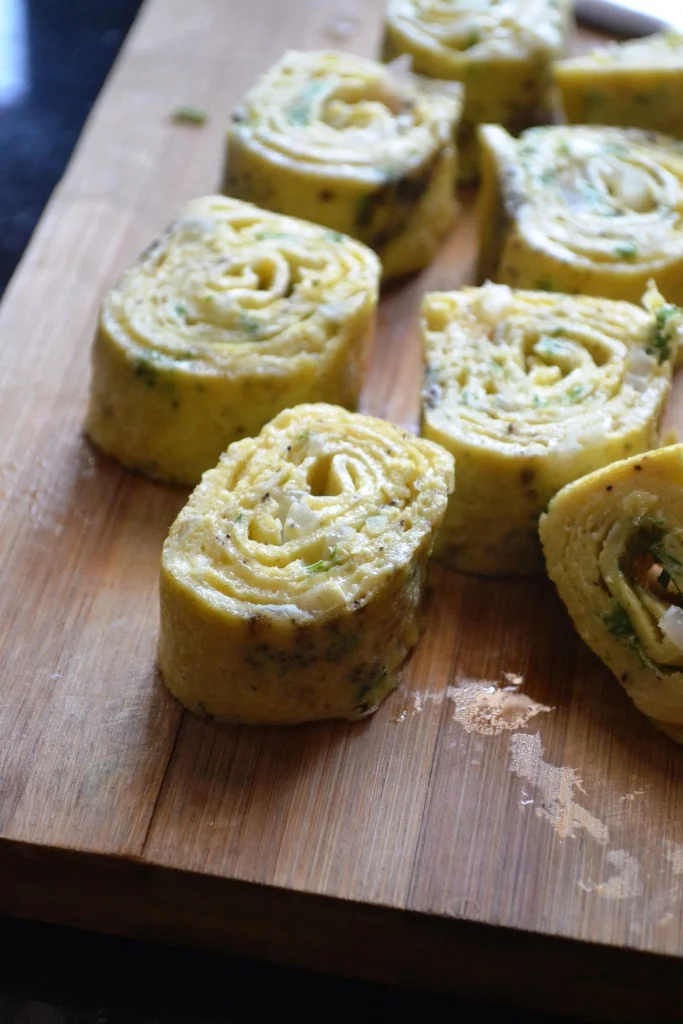
These Korean-style rolled eggs are made by layering a savoury egg mixture with grated cheese, then rolling it into a tender omelette. They make a quick hot meal or snack, with onion and parsley adding freshness.
Ingredients
- 5eggs
- to tastesalt and pepper
- 1Amul cheese cube
- 30 ml (2 tbsp)parsley
- 1 smallonion
- as neededghee, for greasing the pan
Instructions
- 1
Beat the eggs
Beat the eggs until thoroughly combined.
- 2
Strain the mixture
Pour the beaten eggs through a strainer to make the mixture even.
- 3
Add the seasonings
Add salt, pepper, chopped onion and parsley, then mix.
- 4
Heat the pan
Heat a tawa and grease it with ghee.
- 5
Pour the eggs
Pour in one ladleful of egg mixture and swirl the pan so it spreads across the surface.
- 6
Add some cheese
Sprinkle a little grated cheese over the egg.
- 7
Begin rolling
Cook over a low flame. Once the egg is set, start rolling it up.
- 8
Add another layer
When half the egg is rolled, push the roll to one side of the pan. Pour more egg mixture into the empty space, letting a little flow underneath the existing roll.
- 9
Sprinkle with cheese
Add some more cheese and cook.
- 10
Roll the layer
Once the new egg layer is set, roll it up around the existing roll.
- 11
Repeat the layers
Continue in the same way until all the egg mixture has been used.
- 12
Finish cooking
After rolling in all the egg mixture, cook over a low flame for 1–2 minutes. Transfer the roll to a chopping board.
- 13
Slice the roll
Cut it into rounds about 2.5 cm (1 inch) thick.
- 14
Serve hot
Serve hot with ketchup.
What are Korean rolled eggs?
Gyeran-mari is a Korean rolled omelette, made by cooking egg in thin layers and rolling each one around the last. This version adds cheese, onion and parsley for a savoury filling.
The gradual layering is what makes the roll hold together and gives each slice its distinctive spiral.
Nutrition and macros by portion
The nutrition label shows one serving as written: 245 calories, 18g protein, 4g carbs, 18g fat.
| Portion | Adjustment | kcal | Protein | Carbs | Fat |
|---|---|---|---|---|---|
| Lighter | Use less ghee and cheese | 172 kcal | 13g | 3g | 13g |
| This serving | As written | 245 kcal | 18g | 4g | 18g |
| Hungry | Serve with rice | 368 kcal | 27g | 6g | 27g |
Eggs provide most of the protein, while the cheese and ghee contribute much of the fat; the onion and parsley add a small amount of carbohydrate. Pair a serving with vegetables or a modest portion of rice for a more complete plate.
Choosing the ingredients
Eggs: Straining the beaten eggs helps remove streaks of white and makes the mixture easier to spread in an even layer.
Cheese: The cheese cube is grated so it can be sprinkled between layers and melt as the egg cooks. Onion and parsley bring savoury flavour and a fresh note.
Rolling in layers
First layer: Pour in only enough egg mixture to cover the pan thinly, then let it cook until set enough to roll without tearing.
Next layer: Move the roll aside and pour fresh egg into the cleared space, letting it run slightly beneath the roll. This helps the new layer join the existing one.
Getting the texture right
Low heat: Keep the flame low so the egg has time to set without browning too quickly. The layers should remain soft and tender.
Doneness: Roll each layer once it is set enough to lift, rather than waiting until it is dry or crisp. Finish the completed roll over low heat for 1–2 minutes as directed.
Serving the slices
Rest the roll on the chopping board briefly so it is easier to cut cleanly into rounds about 2.5 cm (1 inch) thick.
Serve it hot with ketchup, as suggested in the method. It also fits well alongside rice or a simple vegetable side.
Timing and pan choice
A flat tawa or similar frying pan gives the egg room to spread and makes it easier to push the roll aside as you add each layer.
The recipe gives no overall cooking time; the pace depends on how quickly each thin layer sets. Keep the heat low and work through the mixture in repeated additions.
Recipe notes & tips
- Strain the eggs after beating for a more uniform mixture.
- Chop the onion finely so it is easier to roll into the thin egg layers.
- Grate the cheese before heating the pan so it is ready to sprinkle.
- Keep the flame low while cooking and rolling each layer.
- Let a little fresh egg flow under the roll to help the layers stick together.
Variations
- Spring onion: Use finely sliced spring onion in place of the onion for a milder flavour.
- Chilli: Add chopped fresh chilli to the egg mixture for a little heat.
- Extra herbs: Swap or combine the parsley with finely chopped chives.
- Cheese blend: Use a different melting cheese, grated, in place of the cheese cube.
- Vegetable addition: Add a small amount of finely diced, cooked vegetables to the egg mixture.
Common mistakes to avoid
- High heat: The egg can brown before it is ready to roll; keep the flame low.
- Overfilling a layer: Thick egg layers are harder to roll; pour in one ladleful at a time as directed.
- Rolling too soon: Very runny egg may tear; wait until the layer is set enough to lift.
- Waiting too long: Egg that has dried out can crack; roll each layer while it is still tender.
- Skipping the overlap: The layers may separate; let some fresh egg run beneath the existing roll.
How to store
Refrigerate leftovers in a covered container and eat within 2 days. Reheat gently in a pan over low heat or in short bursts in the microwave, until warmed through.
Frequently asked questions
What pan can I use instead of a tawa?
Use a flat frying pan with enough room to spread the egg and roll it to one side. A non-stick pan can make the layers easier to handle.
How do I know when each layer is ready to roll?
Wait until the surface is set enough to lift without flowing, while the egg still looks tender. It should not be dry or crisp.
Why is the egg mixture strained?
Straining helps make the beaten eggs more even by removing strands of egg white. This makes the mixture easier to spread into thin layers.
Can I make the roll ahead of time?
Yes. Cook it, cool it, and refrigerate it covered; reheat gently before serving for the best texture.
Can I leave out the cheese?
Yes, though the roll will be less rich and will not have the same cheesy layers. Continue rolling the egg in thin layers as directed.
Cook it from the original
This recipe comes from gayathriscookspot.com. Their page has the author’s own photos, notes and tips — the best place to cook it from.
Open the recipe on gayathriscookspot.com