
Paneer Kozhukattai - Recetas fáciles bajas en carbohidratos
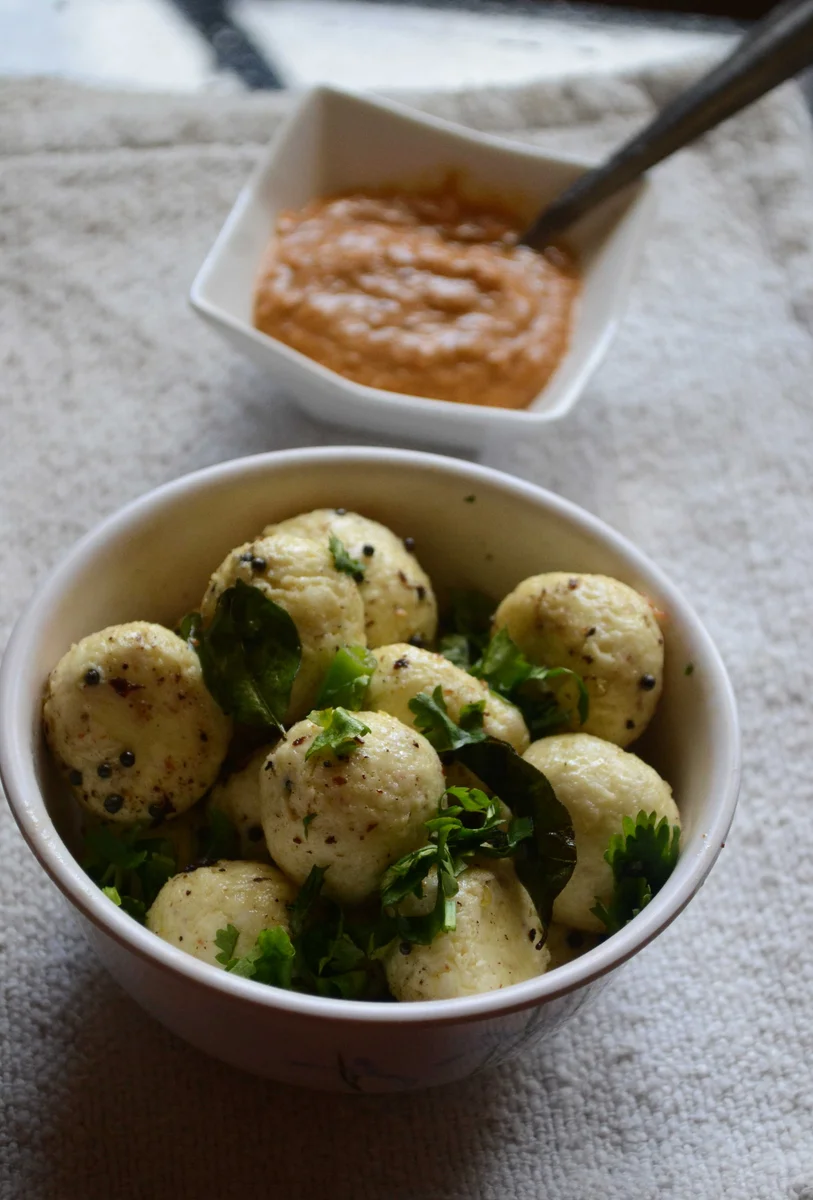
Paneer kozhukattai are soft, steamed dumplings made here with paneer, grated coconut and isabgol, then tossed in a fragrant ghee tempering. They make a savoury Indian-inspired dish when you want a warm, filling meal with a soft, tender texture.
Ingredients
- 200 gpaneer
- 20 g (about ¼ cup)grated coconut
- to tastesalt
- 2 tbsp (30 ml)isabgol (psyllium husk)
- 1 tsp (5 ml)ghee
- ¼ tspmustard seeds
- 2 sprigscurry leaves
- 2green chillies
- to garnishcoriander leaves
Instructions
- 1
Make the dough
Mix the soft paneer, coconut, salt and isabgol in a bowl to form a soft dough. If using shop-bought paneer, crumble it in a mixer first, then make the dough.
- 2
Shape the dumplings
Divide the dough into small portions and roll each portion into a ball.
- 3
Steam the dumplings
Arrange the balls in a steamer and steam for 10 minutes.
- 4
Cool the dumplings
Once they have cooled, remove them from the steamer.
- 5
Prepare the tempering
Heat the ghee in a pan, then add the mustard seeds, curry leaves and chillies.
- 6
Add the dumplings
Add the prepared kozhukattai and salt to taste.
- 7
Toss and finish
Mix well, then take the pan off the heat.
- 8
Garnish and serve
Finish with coriander leaves and serve.
What are paneer kozhukattai?
Kozhukattai are dumplings associated with South Indian cooking, often made from a dough and steamed. This version takes a different route, forming the dumplings from paneer, coconut and isabgol.
Paneer gives them a rich, mild base, while the final tempering brings mustard seeds, curry leaves and chillies into the dish. Steaming keeps the dumplings tender without needing to brown them.
Nutrition and macros by portion
The nutrition label shows one serving as written: 665 calories, 36g protein, 9g carbs, 53g fat.
| Portion | Adjustment | kcal | Protein | Carbs | Fat |
|---|---|---|---|---|---|
| Lighter | Use less ghee | 465 kcal | 25g | 6g | 37g |
| This serving | As written | 665 kcal | 36g | 9g | 53g |
| Hungry | Serve with extra vegetables | 998 kcal | 54g | 14g | 80g |
Paneer supplies most of the protein and fat, with ghee and coconut adding further fat. The coconut contributes some carbohydrate, while isabgol contributes fibre; the precise sodium depends on the salt used and the paneer. Serve with a generous vegetable side for a more balanced plate.
Choosing the paneer
Soft paneer: it is easiest to work into a cohesive dough and helps the dumplings stay tender.
Shop-bought paneer: crumble it in a mixer first, as the recipe directs, so there are no large pieces in the mixture.
Getting the dough right
Isabgol: mix it thoroughly with the paneer and coconut so it is distributed throughout the dough.
Texture: aim for a soft dough that can be shaped into balls. If it is uneven, continue mixing rather than leaving clumps of paneer.
Shaping and steaming
Even portions: keep the balls roughly similar in size so they steam at about the same rate.
Doneness: steam for the stated 10 minutes, then let the dumplings cool before removing them. They will be delicate while hot.
Making the tempering
Mustard seeds: add them to the heated ghee along with the curry leaves and chillies, as described in the method.
Chillies: leave them whole for a milder result, or cut them if you prefer their heat to spread through the tempering.
Serving ideas
Serve the kozhukattai warm, topped with coriander leaves. A fresh vegetable side or a crisp salad adds contrast to their soft texture.
Taste before serving and adjust the seasoning with salt if needed, since the recipe adds salt both to the dough and during the final toss.
Recipe notes & tips
- Crumble firm shop-bought paneer in a mixer before combining it with the other dough ingredients.
- Mix the isabgol evenly through the paneer and coconut.
- Shape the dumplings to a similar size for more even steaming.
- Allow the dumplings to cool before lifting them from the steamer.
- Keep an eye on the pan while preparing the tempering so the curry leaves and chillies do not scorch.
- Taste before serving, as salt is added at more than one stage.
Variations
- Adjust the heat: use fewer green chillies for a milder tempering.
- Boost the coconut: add a little extra grated coconut to the dough for a more pronounced coconut flavour.
- Add coriander: mix some chopped coriander leaves into the dough as well as using them to garnish.
- Change the finish: serve with a squeeze of lemon for a bright contrast.
- Make smaller dumplings: shape the dough into smaller balls for bite-sized portions.
Common mistakes to avoid
- Using paneer in large chunks: crumble shop-bought paneer in a mixer before making the dough.
- Uneven shaping: make the portions similar in size so they steam more consistently.
- Removing them while hot: let the dumplings cool before taking them out of the steamer.
- Skipping the seasoning check: taste the finished dish and add salt if needed.
- Overheating the tempering: add the leaves and chillies once the ghee is hot, and take care not to scorch them.
How to store
Refrigerate leftovers in a covered container and use within 2 days. Reheat gently in a steamer or in a covered pan with a small splash of water, until hot throughout.
Frequently asked questions
Can I use shop-bought paneer?
Yes. Crumble it in a mixer before combining it with the coconut, salt and isabgol, as directed in the method.
How long do the dumplings steam?
Steam them for 10 minutes, then let them cool before removing them.
Why does the recipe use isabgol?
It is mixed into the paneer and coconut to form the dough. Mix it in evenly so the dough is consistent.
Can I make the dumplings ahead?
You can steam them ahead and refrigerate them in a covered container for up to 2 days. Prepare the ghee tempering and toss them through it when reheating.
How can I make the dish less spicy?
Use fewer chillies, or leave them whole rather than cutting them so less heat spreads through the tempering.
Cook it from the original
This recipe comes from gayathriscookspot.com. Their page has the author’s own photos, notes and tips — the best place to cook it from.
Open the recipe on gayathriscookspot.com