
Pol Roti Recipe
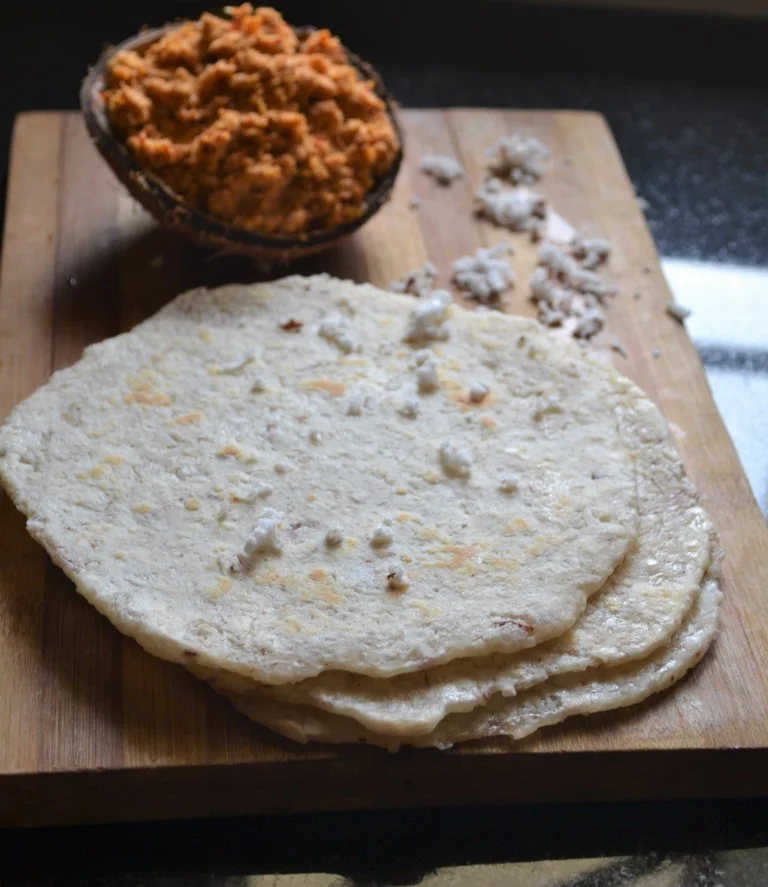
Pol roti is a Sri Lankan flatbread made with flour and grated coconut, cooked on a hot tawa until lightly browned. It is a simple, savoury bread to serve with pol sambol or alongside a meal.
Ingredients
- 125 g (1 cup)plain flour (maida)
- 56 g (¾ cup)grated coconut
- to tastesalt
- for cookingghee or oil
- enough to make a soft doughwater
Instructions
- 1
Mix the ingredients
In a bowl, combine the grated coconut, flour and salt.
- 2
Make the dough
Add enough water to bring the mixture together into a soft dough.
- 3
Rest the dough
Cover the bowl and leave the dough to rest for 15 minutes.
- 4
Knead briefly
Knead the dough for 1 minute.
- 5
Divide into balls
Split the dough into three portions and shape each into a ball.
- 6
Roll into discs
Use a rolling pin to roll each ball into a thin disc.
- 7
Cook the roti
Cook the discs on a tawa until both sides are lightly browned.
- 8
Add cooking fat
Drizzle with oil or ghee for cooking.
- 9
Serve with sambol
Serve the roti with pol sambol.
What is pol roti?
Pol roti is a Sri Lankan flatbread whose name refers to its coconut. This version combines grated coconut with plain flour for a simple dough that cooks on a tawa.
Coconut brings a tender, slightly textured crumb, while the thin shape lets the bread cook quickly and develop light browning. It is commonly enjoyed with pol sambol, as suggested here.
Nutrition and macros by portion
The nutrition label shows one serving as written: 260 calories, 6g protein, 40g carbs, 9g fat.
| Portion | Adjustment | kcal | Protein | Carbs | Fat |
|---|---|---|---|---|---|
| Lighter | Use less cooking fat | 182 kcal | 4g | 28g | 6g |
| This serving | As written | 260 kcal | 6g | 40g | 9g |
| Hungry | Make a larger portion | 390 kcal | 9g | 60g | 14g |
The flour supplies most of the carbohydrates, while the coconut and any ghee or oil contribute most of the fat; the flour and coconut provide some protein. Serve a roti with a vegetable-rich curry or dhal to make the plate more substantial and varied.
Choosing the ingredients
Flour: Plain flour gives the dough structure and makes it easy to roll into discs. Measure it consistently, as extra flour can make the dough firm.
Coconut: Freshly grated coconut gives the roti a moist, distinct coconut texture. If using packaged coconut, check that it is unsweetened.
Getting the dough right
Water: Add it gradually rather than all at once, mixing until the dough is soft and holds together. The amount needed can vary with the moisture in the coconut and flour.
Resting: Covering the dough for 15 minutes gives the flour time to absorb moisture. A brief knead afterwards brings it together before shaping.
Rolling and cooking
Thin discs: Roll each portion evenly so it cooks through at a similar pace. Use only a light dusting of flour if the dough sticks.
Tawa: Cook until both sides are slightly browned, as the method specifies. If the surface darkens very quickly, lower the heat so the centre has time to cook.
Serving the roti
Pol sambol is the suggested accompaniment and adds a vivid, savoury contrast to the mild coconut bread. Serve the rotis warm for the best texture.
For a fuller meal, pair them with a vegetable curry or dhal. These are serving ideas rather than ingredients in this recipe.
Timing and texture cues
The only fixed resting time is 15 minutes; total preparation and cooking time is not specified. Allow extra time if rolling and cooking each disc in batches.
The dough should feel soft rather than dry or crumbly, and the cooked rotis should show light browning on both sides. Avoid cooking them until deeply crisp if you want a softer bread.
Recipe notes & tips
- Add the water in small amounts so the dough does not become sticky.
- Keep the dough covered while it rests and while you shape the portions.
- Roll the discs to an even thickness so they cook uniformly.
- Cook the rotis in batches if needed, without crowding the tawa.
- Use a small drizzle of ghee or oil rather than pouring it over the bread.
Variations
- Wholemeal flour: Replace some of the plain flour with wholemeal flour, adding water gradually as needed.
- Fresh coconut: Use freshly grated coconut for a moist, pronounced coconut flavour.
- Herbs: Mix finely chopped coriander into the dough for a fresh note.
- Spice: Add a little finely chopped chilli to the dough for heat.
- Serve as a wrap: Fold the cooked roti around a savoury filling just before serving.
Common mistakes to avoid
- Adding water too quickly: The dough can turn sticky; add it a little at a time.
- Skipping the rest: The dough may be harder to roll; cover it and leave it for the full 15 minutes.
- Using too much flour to roll: Excess flour can make the roti dry; dust the surface lightly.
- Cooking over very high heat: The outside may brown before the centre cooks; reduce the heat.
- Rolling unevenly: Thick patches cook more slowly; aim for discs of even thickness.
How to store
Keep cooled rotis in an airtight container in the fridge for up to 3 days. Reheat them briefly on a warm tawa, turning once, until heated through.
Frequently asked questions
Can I make the dough ahead?
You can prepare it ahead and keep it covered in the fridge. Bring it closer to room temperature before dividing and rolling, as chilled dough may be firmer.
How much water should I use?
The recipe does not give a fixed amount. Add water gradually until the flour and coconut form a soft dough.
Can I use desiccated coconut?
Yes, but it is drier than fresh grated coconut, so the dough may need more water. Add it gradually and stop when the dough feels soft.
How do I know when a roti is cooked?
The method calls for both sides to be slightly browned. If the roti is colouring too quickly, lower the heat to give the middle more time.
What can I serve with pol roti?
Pol sambol is the accompaniment specified in the recipe. Dhal or a vegetable curry also makes a suitable partner.
Cook it from the original
This recipe comes from gayathriscookspot.com. Their page has the author’s own photos, notes and tips — the best place to cook it from.
Open the recipe on gayathriscookspot.com