
Xinjiang Nang Bread Recipe
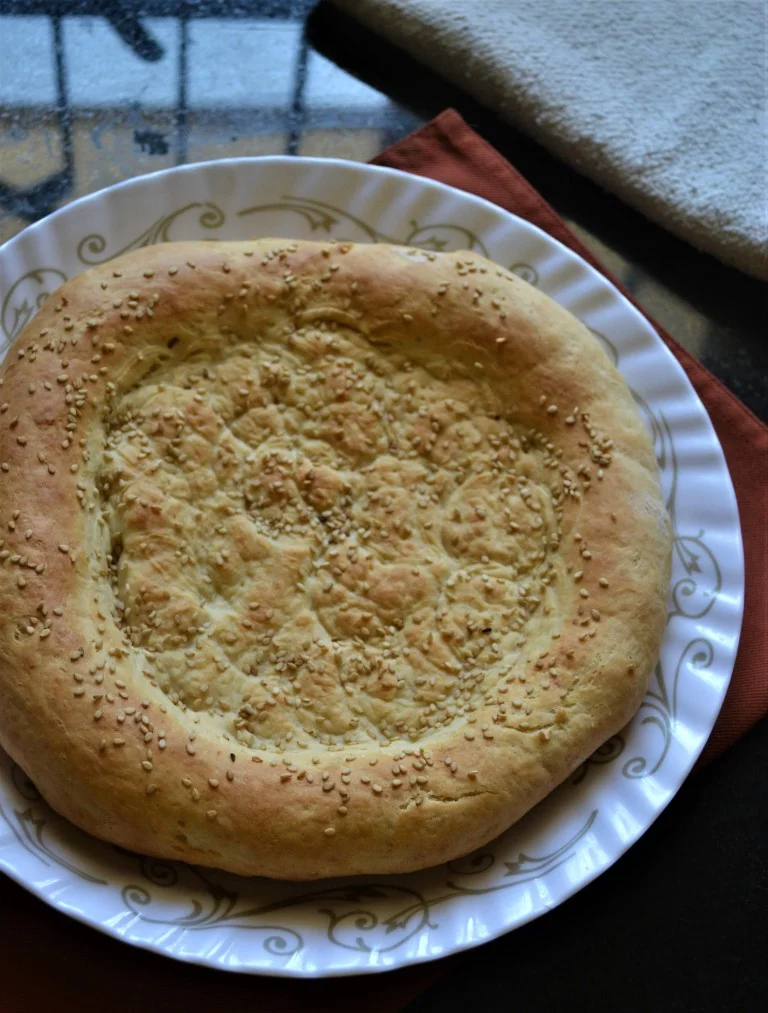
Xinjiang nang is a round, oven-baked bread with a patterned centre, a golden crust and a soft, slightly chewy crumb. This home version uses yoghurt and butter for tenderness and is best served warm alongside a meal or with dips.
Ingredients
- 190 g (1 1/2 cups)plain flour (all-purpose flour)
- 4.5 g (3/4 tsp)salt
- 25 g (2 tbsp)sugar
- 3 g (1 tsp)instant yeast
- 14 g (1 tbsp)butter
- 30 g (2 tbsp)yoghurt
- 60 ml (1/4 cup)water
- As neededmilk, for the wash
- As neededsesame seeds, for topping
Instructions
- 1
Mix dry ingredients
In a bowl, combine the flour, sugar, salt and instant yeast.
- 2
Add butter and yoghurt
Add the butter and yoghurt, then mix well.
- 3
Make the dough
Add the water and mix to form a soft dough. If needed, add another 1 tsp to 1 tbsp water.
- 4
Rest the dough
Cover the bowl and leave the dough to rest for 10 minutes.
- 5
Knead and rise
Knead the dough for 1–2 minutes, then cover it and leave it until doubled in volume.
- 6
Heat the oven
Preheat the oven to 250°C.
- 7
Shape the dough
Punch the dough down and shape it into a ball.
- 8
Form a disc
Press the dough with your fingers into a large disc, keeping the edges thicker than the centre.
- 9
Pattern the centre
Make designs in the centre with a cookie press or the bottom of a cup. A fork can also be used.
- 10
Add the topping
Brush the bread with milk wash and sprinkle sesame seeds over the top.
- 11
Transfer to the oven
Gently slide the shaped bread onto the hot tray in the oven.
- 12
Bake until golden
Bake for 10–15 minutes, or until golden.
- 13
Serve the bread
Serve straight from the oven or at room temperature.
What is Xinjiang nang bread?
Nang is a round, baked bread associated with Xinjiang in north-western China and the wider Central Asian bread tradition. It is often marked with a patterned centre and a thicker rim.
This version uses a simple yeasted dough enriched with butter and yoghurt. Pressing the middle thinner gives the loaf its characteristic shape and helps create a distinct edge.
Nutrition and macros by portion
The nutrition label shows one serving as written: 940 calories, 23g protein, 166g carbs, 17g fat.
| Portion | Adjustment | kcal | Protein | Carbs | Fat |
|---|---|---|---|---|---|
| Lighter | Less sugar, light topping | 658 kcal | 16g | 116g | 12g |
| This serving | As written | 940 kcal | 23g | 166g | 17g |
| Hungry | Serve with a hearty side | 1410 kcal | 35g | 249g | 26g |
For the whole loaf, most of the carbohydrates come from the flour and sugar, while butter contributes much of the fat. Flour, yoghurt and sesame seeds provide some protein, though the loaf is mainly a bread portion. Balance it with vegetables and a protein-rich accompaniment.
Building a soft dough
Flour and yeast: mix these with the sugar and salt before adding the wet ingredients, so the yeast is distributed through the flour.
Water: add the measured water first, then only add more if the dough needs it. The finished dough should be soft rather than stiff or sticky.
Letting the dough rise
First rest: the 10-minute pause gives the flour time to absorb moisture before kneading.
Final rise: after kneading, cover the dough and wait until it has doubled in volume. The timing depends on the warmth of the room, so use the change in size as your guide.
Shaping and patterning
Thick rim: press from the middle outwards, leaving a fuller edge around the disc. This contrast is part of the bread's shape.
Patterned centre: press the middle with a cookie press or cup base, or prick it with a fork. Make the marks clear without flattening the raised rim.
Baking for a golden crust
Hot oven: the recipe calls for 250°C, so allow the oven to reach temperature before baking. Handle the hot tray carefully when transferring the shaped bread.
Doneness: start checking at 10 minutes. Take the bread out when it is golden, within the stated 10–15-minute baking time.
How to serve it
Nang can be served hot from the oven or allowed to cool to room temperature. It works well alongside soups, stews or a spread of dips.
For a more substantial plate, pair a portion with vegetables and a protein-rich dish, such as beans, eggs or meat.
Recipe notes & tips
- Add extra water gradually so the dough stays soft without becoming difficult to handle.
- Use the dough's doubled volume, rather than a fixed time, to judge when its rise is complete.
- Press the centre more firmly than the rim to keep the characteristic thicker edge.
- Keep a close eye on the bread from the 10-minute mark because ovens can brown it at different rates.
- Apply the milk wash gently so the shaped dough does not get flattened.
Variations
- Cumin topping: sprinkle cumin seeds over the milk wash along with the sesame seeds.
- Nigella seeds: use nigella seeds in place of, or alongside, sesame seeds.
- Garlic finish: brush the baked bread with garlic butter while it is still warm.
- Herb topping: scatter dried herbs over the top before baking.
- Plain finish: leave off the sesame seeds for a simple golden crust.
Common mistakes to avoid
- Adding too much water: the dough can turn sticky, so add any extra a little at a time.
- Rushing the rise: wait until the dough has doubled in volume before shaping.
- Flattening the rim: press the centre while leaving the outer edge thicker.
- Skipping the hot oven: preheat fully to 250°C before baking.
- Overbaking: check from 10 minutes and remove the bread when it is golden.
How to store
Once cool, store the bread in an airtight container at room temperature for up to 2 days. Reheat briefly in a warm oven to soften it; avoid heating it for too long, which can dry it out.
Frequently asked questions
Can I use plain flour for this bread?
Yes. Plain flour is the all-purpose flour specified in the recipe.
How much extra water might the dough need?
The method allows an additional 1 tsp to 1 tbsp if needed. Add it gradually until the dough is soft.
How do I know when the dough has risen enough?
It should be about double its original volume. The time needed can vary with room temperature.
Can I make the centre pattern without a cookie press?
Yes. Use the bottom of a cup or prick the centre with a fork, as described in the method.
Can I serve nang at room temperature?
Yes. The recipe says to serve it either hot from the oven or at room temperature.
Cook it from the original
This recipe comes from gayathriscookspot.com. Their page has the author’s own photos, notes and tips — the best place to cook it from.
Open the recipe on gayathriscookspot.com