
Receta de vadai de remolacha
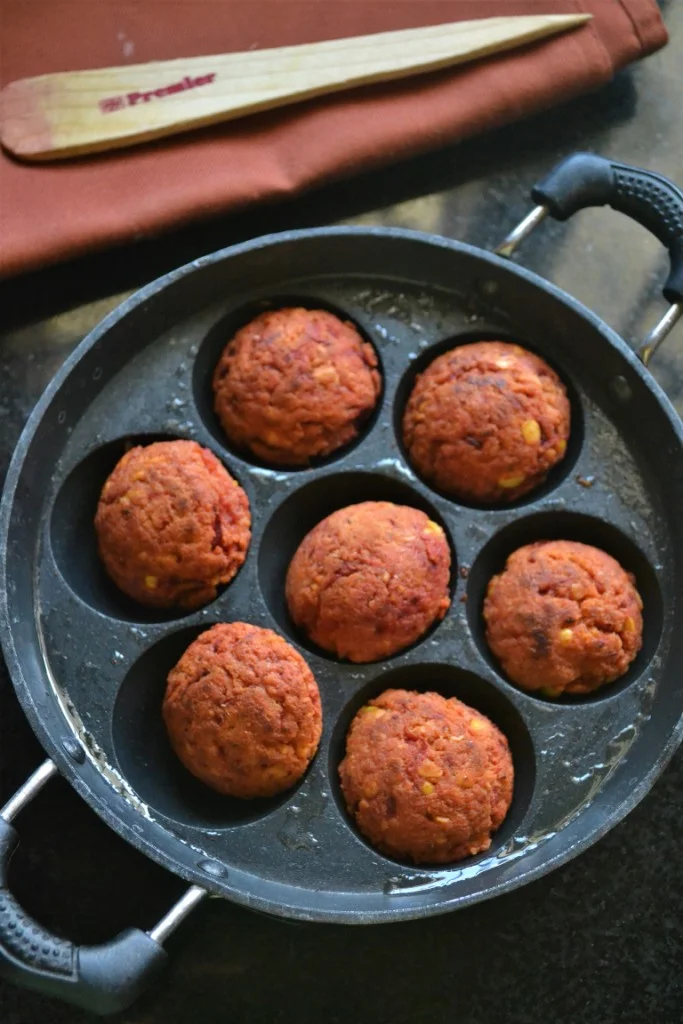
These beetroot vadai are small, savoury Indian fritters made with coarsely ground toor dal, grated beetroot and warming spices. Cooking them in an appe pan gives them crisp, golden sides with less oil than deep-frying.
Ingredients
- 200 g (1 cup)toor dal
- 1 smallbeetroot
- ¼ tspred chilli powder
- ¼ tspground black pepper
- to tastesalt
- for shallow-fryingcoconut oil
Instructions
- 1
Soak the dal
Wash the toor dal and leave it to soak for 3–4 hours.
- 2
Grind coarsely
Drain the dal, then grind it to a coarse paste.
- 3
Mix the batter
Add the grated beetroot, red chilli powder, pepper and salt. Mix until you have a thick batter.
- 4
Heat the pan
Heat an appe or paniyaram pan.
- 5
Fill the moulds
Add coconut oil to the moulds, then put a lemon-sized ball of batter into each one.
- 6
Cook until crisp
Cook the vadai until both sides are golden and crisp.
- 7
Serve hot
Serve the vadai hot.
What are beetroot vadai?
Vadai are savoury South Indian snacks commonly made from pulses and cooked until crisp. This version adds grated beetroot to a toor dal batter, bringing colour and a mild earthiness.
Coarsely grinding the soaked dal keeps the mixture textured, while the appe pan cooks small portions in individual moulds.
Nutrition and macros by portion
The nutrition label shows one serving as written: 75 calories, 3g protein, 10g carbs, 3g fat.
| Portion | Adjustment | kcal | Protein | Carbs | Fat |
|---|---|---|---|---|---|
| Lighter | Use less coconut oil | 53 kcal | 2g | 7g | 2g |
| This serving | As written | 75 kcal | 3g | 10g | 3g |
| Hungry | Serve a larger portion | 113 kcal | 5g | 15g | 4g |
Toor dal provides most of the carbohydrates and protein, while coconut oil contributes most of the fat. Beetroot adds a smaller amount of carbohydrate and fibre; serve a few vadai with vegetables or salad to make a more balanced plate.
Getting the dal texture right
Soaking: Give the toor dal the full 3–4 hours to soften before grinding. Drain it well so the batter does not become loose.
Grinding: Aim for a coarse paste rather than a smooth purée. That texture helps the vadai hold their shape and gives them a satisfying bite.
Making a thick batter
Beetroot: Grate it before adding it to the dal so it distributes through the batter and cooks evenly in the small moulds.
Seasoning: Mix in the chilli, pepper and salt, then check that the batter is thick enough to portion into the pan. The recipe gives no fixed salt quantity, so season to taste.
Cooking in an appe pan
Oil: Add coconut oil to the moulds before putting in the batter. This helps the vadai brown and release from the pan.
Doneness: Cook until both sides are golden and crisp. The recipe does not specify a cooking time, so use the colour and crisp surface as your cues.
Serving the vadai
These are best served hot, while their outsides are crisp. They can be eaten as a snack or served as part of a larger Indian meal.
For a fuller plate, pair them with a vegetable dish or a fresh salad; a yoghurt-based accompaniment can also temper the spices.
Planning the timing
The soaking stage takes 3–4 hours, so plan ahead before you start mixing the batter. The remaining method is brief, though the recipe does not give a total cooking time.
Grind and season the dal after soaking, then cook the vadai shortly before serving for the best crispness.
Recipe notes & tips
- Measure the soaking time from when the washed dal is covered with water.
- Drain the dal thoroughly before grinding to help keep the batter thick.
- Grate the beetroot finely so it mixes evenly into the batter.
- Use lemon-sized portions as directed so the vadai fit the pan moulds.
- Serve soon after cooking for the crispest texture.
Variations
- More heat: Increase the red chilli powder slightly to make the vadai spicier.
- Extra pepper: Add a little more ground black pepper for a sharper flavour.
- Herb addition: Mix chopped coriander into the batter for a fresh note.
- Smaller vadai: Use smaller portions of batter for bite-sized snacks.
- Pan choice: Cook the batter in batches in an appe or paniyaram pan, as in the recipe.
Common mistakes to avoid
- Grinding too smooth: Keep the dal coarse so the vadai retain texture.
- Wet batter: Drain the soaked dal well before grinding to avoid a loose mixture.
- Skipping the oil: Coat the moulds with coconut oil so the batter can brown and release.
- Oversized portions: Use lemon-sized balls so the vadai fit the moulds and cook through.
- Serving them later: Vadai lose crispness as they stand, so serve them hot.
How to store
Cool leftovers and refrigerate them in a covered container for up to 3 days. Reheat in a pan until warmed through and crisp again; avoid storing them while hot, as trapped steam softens the crust.
Frequently asked questions
How long should I soak the toor dal?
Soak it for 3–4 hours, as specified in the recipe. Drain it before grinding.
Should the dal be ground completely smooth?
No. Grind it to a coarse paste for a textured batter.
What is an appe or paniyaram pan?
It is a pan with several small round moulds, used here to cook the vadai as individual portions.
How do I know when the vadai are done?
Cook until both sides are golden and crisp. The recipe does not give a set cooking time.
Can I make the batter ahead?
You can soak the dal ahead, but the method does not specify how long the mixed batter keeps. For the crispest result, cook the vadai close to serving time.
Cook it from the original
This recipe comes from gayathriscookspot.com. Their page has the author’s own photos, notes and tips — the best place to cook it from.
Open the recipe on gayathriscookspot.com