
Miso Sake Salmon
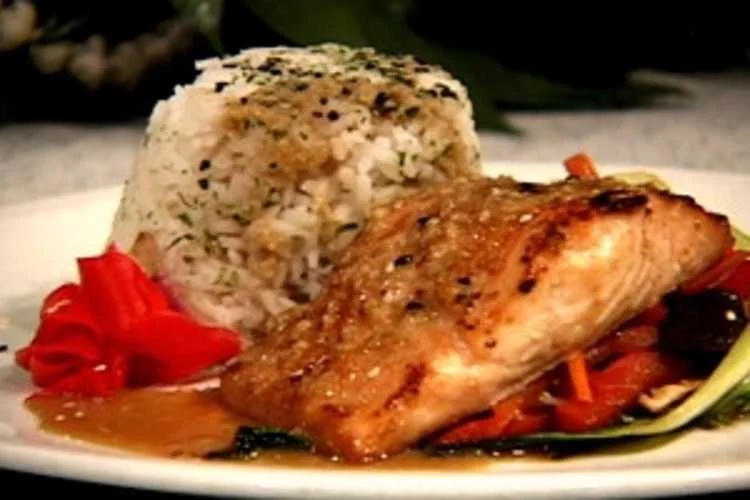
Miso Sake Salmon pairs skin-on salmon with a sweet, savoury marinade of white miso, shoyu, sugar and beer. Sear it in a pan, finish it in the oven, then serve with the stir-fried vegetables and rice mentioned in the method.
Ingredients
- 7–8 oz (198–227 g) per steakdeboned, skin-on salmon steaks
- 60 ml (¼ cup)white miso
- 60 ml (¼ cup)Aloha shoyu
- 60 ml (¼ cup)granulated sugar
- 60 ml (¼ cup)beer
- 15 ml (1 tbsp)minced garlic
- 15 ml (1 tbsp)minced ginger
Instructions
- 1
Marinate the salmon
Prepare the salmon steaks as described, then coat them evenly with the marinade. Leave to marinate overnight.
- 2
Sear and roast
Heat vegetable oil in a sauté pan over medium heat. Add the salmon flesh-side down and sear until golden brown. Put it skin-side down on a sizzle platter and roast in a 204°C (400°F) convection oven until the internal temperature reaches 46°C (115°F).
- 3
Cook the vegetables
Meanwhile, sear the bok choy in the sesame-vegetable oil at the start of the stir-fry vegetable recipe. When the bok choy begins to wilt, finish the stir-fry as directed in that recipe.
- 4
Plate and serve
Place rice at the 10 o’clock position and mound the stir-fried vegetables and bok choy over it, trailing towards 5 o’clock. Lean the roasted salmon against the rice and vegetables. Sprinkle sesame seeds over the salmon and place a ginger rosette at its base, then serve.
What is miso sake salmon?
This is a Japanese-inspired salmon preparation built around a miso-and-shoyu marinade. Despite the name, the listed marinade uses beer rather than sake.
White miso and sugar bring a mellow sweetness, while garlic and ginger add savoury warmth. Searing the fish before roasting gives the exterior colour while the centre cooks gently.
Nutrition and macros by portion
The nutrition label shows one serving as written: 510 calories, 43g protein, 24g carbs, 24g fat.
| Portion | Adjustment | kcal | Protein | Carbs | Fat |
|---|---|---|---|---|---|
| Lighter | More vegetables, less rice | 357 kcal | 30g | 17g | 17g |
| This serving | As written | 510 kcal | 43g | 24g | 24g |
| Hungry | Larger salmon steak | 765 kcal | 65g | 36g | 36g |
Salmon supplies most of the protein and fat, while the sugar in the marinade contributes carbohydrates; miso and shoyu contribute much of the sodium. Serve with a generous portion of vegetables alongside the rice to balance the plate, noting that the side quantities are not specified here.
The marinade
Miso and shoyu: white miso gives the coating body and a mild, savoury flavour; shoyu adds saltiness. Stir them thoroughly with the sugar, beer, garlic and ginger so the marinade is evenly mixed.
Overnight rest: the method calls for marinating the steaks overnight. Keep the fish covered and refrigerated during this time.
Searing and roasting
Golden surface: begin with the flesh side against the hot pan and wait for it to brown before turning the fish skin-side down. A well-heated pan helps the surface colour without prolonged cooking.
Temperature cue: roast at 204°C (400°F) until the centre reaches the recipe’s stated 46°C (115°F). Use a thermometer in the thickest part, and follow local food-safety guidance for fish doneness.
Keep the salmon intact
Skin-side down: placing the fish skin-side down for roasting helps support the steak as it cooks. Handle it gently when transferring it from the pan to the platter.
Watch the centre: salmon can move from moist to dry quickly, especially in a hot oven. Check the internal temperature rather than relying only on the clock.
Timing the meal
The stated total time is 30 minutes, but the method also requires an overnight marinade, so plan that resting time separately. Prepare the rice and vegetables while the salmon cooks.
The recipe refers to a separate stir-fry vegetable recipe for the bok choy and remaining vegetables. Have that recipe and its ingredients ready before you start cooking.
Serving the plate
Rice and vegetables: follow the suggested layout, placing the rice at 10 o’clock and the vegetables trailing towards 5 o’clock. Rest the salmon against them so the components stay distinct.
Sesame seeds and a ginger rosette finish the plate as directed. The listed ingredients do not specify quantities for these garnishes or for the rice and vegetables.
Recipe notes & tips
- Marinate the salmon covered in the fridge overnight as directed.
- Let excess marinade drip off before searing to help the fish brown.
- Use a thermometer in the thickest part of a steak for the stated doneness cue.
- Have the sizzle platter ready before transferring the hot salmon.
- Start the bok choy while the salmon is roasting so both are ready to plate together.
Variations
- Use sake: replace the beer with sake for a version closer to the dish’s name.
- Add chilli: mix a little chilli into the marinade for gentle heat.
- Try another fish: use a firm, thick fish steak and check it carefully as it cooks.
- Boost the ginger: add extra minced ginger to make its flavour more prominent.
Common mistakes to avoid
- Skipping the overnight rest: the method relies on this marinating time, so plan ahead.
- Crowding the pan: the salmon may brown unevenly; sear steaks in batches if needed.
- Turning too soon: wait for the flesh side to develop a golden crust before moving the fish.
- Guessing doneness: check the centre with a thermometer rather than judging by colour alone.
- Starting the sides late: prepare the rice and vegetables in time to serve them with the salmon.
How to store
Refrigerate leftover salmon in a covered container and use within 2 days. Reheat gently until hot throughout, taking care not to overcook it; the method does not specify storage instructions for the accompanying rice or vegetables.
Frequently asked questions
Does the marinade contain sake?
No. The ingredients list beer, not sake. You can substitute sake if you want a version that uses it.
Can I marinate the salmon for less than overnight?
The method specifies an overnight marinade. If you have less time, marinate it for as long as you can while keeping it covered in the fridge, though the result may be less seasoned.
What does 115°F mean for the salmon?
It is the internal temperature given in the recipe, equivalent to 46°C. Check it at the thickest point and follow local food-safety guidance for your preferred level of doneness.
What should I serve with it?
The method calls for rice and stir-fried vegetables with bok choy. It refers to a separate vegetable recipe for the rest of the stir-fry.
Can I cook this without a convection oven?
The method specifies a convection oven at 204°C (400°F). A conventional oven may cook differently, so monitor the internal temperature closely rather than relying on an assumed cooking time.
Cook it from the original
This recipe comes from cookinghawaiianstyle.com. Their page has the author’s own photos, notes and tips — the best place to cook it from.
Open the recipe on cookinghawaiianstyle.com