
MANJU
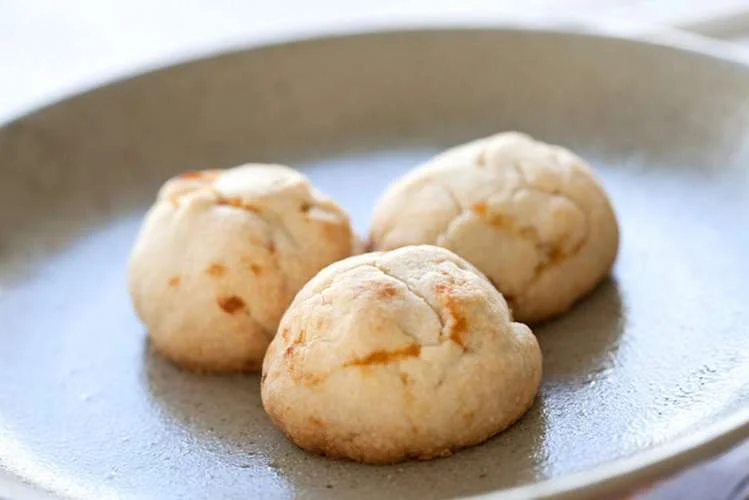
Manju are small, filled pastries with a soft, lightly golden dough and a sweet centre. This version uses sweet red bean paste and is baked, making it a festive snack to serve at room temperature or warm from the oven.
Ingredients
- 625 g (5 cups)plain flour
- 25 g (2 tablespoons)sugar
- 5 g (1 teaspoon)salt
- 473 ml (2 cups)rapeseed oil
- 90–120 ml (6–8 tablespoons)ice water
- 510 g (1 can, 18 oz)tsubushian (sweet red bean paste)
- 80 ml (⅓ cup)evaporated milk
Instructions
- 1
Heat the oven
Preheat the oven to 220°C (425°F) and lightly grease baking trays.
- 2
Mix dry ingredients
Sift the flour, sugar and salt together into a mixing bowl.
- 3
Make the dough
Add the oil and water, then blend well.
- 4
Adjust the water
Add more water as needed.
- 5
Shape the dough
Pinch off balls of dough about 4–5 cm (1½–2 inches) across and flatten them.
- 6
Add the filling
Put a heaped teaspoon of tsubushian in each piece of dough and seal the edges.
- 7
Arrange on trays
Place the manju seam-side down on the prepared trays.
- 8
Brush with milk
Brush the tops of the manju with evaporated milk.
- 9
Bake until golden
Bake for 20–25 minutes, until golden brown.
What is manju?
Manju is a filled pastry found in Chinese, Korean and Japanese food traditions, with many regional and family variations. The description for this recipe connects it with New Year celebrations and notes that traditional fillings often use sweet azuki beans.
This baked version wraps sweet red bean paste in an oil-based dough. It can be eaten warm or, more traditionally in the description, allowed to cool to room temperature.
Nutrition and macros by portion
The nutrition label shows one serving as written: 1888 calories, 25g protein, 190g carbs, 110g fat.
| Portion | Adjustment | kcal | Protein | Carbs | Fat |
|---|---|---|---|---|---|
| Lighter | Use less oil | 1322 kcal | 18g | 133g | 77g |
| This serving | As written | 1888 kcal | 25g | 190g | 110g |
| Hungry | Larger portion | 2832 kcal | 38g | 285g | 165g |
The flour and sweet filling provide most of the carbohydrates, while the large amount of rapeseed oil contributes most of the fat; the bean paste and flour provide some protein. Pair a portion with fresh fruit or another lighter accompaniment if you want a more balanced plate.
The sweet red bean filling
Tsubushian: This is a sweet red bean paste, commonly made with azuki beans. A heaped teaspoon gives each pastry a concentrated centre without making it difficult to seal.
Bringing the dough together
Oil and water: Mix them into the sifted dry ingredients, then add the water as needed. The recipe does not specify an exact dough texture, so add the extra water gradually until the dough can be shaped and flattened.
Sealing each pastry
Shape: Flatten each small ball of dough before adding the filling. Keep the filling away from the edges so the dough can be brought together and sealed.
Position: Set each pastry seam-side down on the greased tray. This helps keep the join underneath as the manju bake.
Baking and serving
Doneness: Bake at 220°C for 20–25 minutes, looking for a golden-brown surface. The milk brushed on top is part of the recipe's preparation before baking.
Serving: The recipe gives no separate serving instructions beyond the note that manju can be served warm or at room temperature. Let them cool enough to handle before serving.
Fruit filling variation
Apple or peach: The recipe suggests using apple or peach pie filling instead of the sweet bean paste. Use it as the centre and seal the dough in the same way.
Recipe notes & tips
- Add the extra ice water gradually so you can stop when the dough is workable.
- Keep the filling in the middle of each flattened piece to leave room to seal the edges.
- Seal the dough completely around the filling before placing each pastry on the tray.
- Place the pastries seam-side down, as directed, before brushing their tops with milk.
- Check for a golden-brown surface within the recipe's 20–25-minute baking window.
Variations
- Apple filling: Use apple pie filling in place of the sweet red bean paste.
- Peach filling: Try peach pie filling as the recipe's alternative centre.
- Room-temperature serving: Let the baked manju cool before serving, as the description notes they are traditionally served at room temperature.
- Warm serving: Serve them warm from the oven after they have cooled enough to handle.
Common mistakes to avoid
- Adding water all at once: Add it gradually and use more only as needed.
- Overfilling: A heaped teaspoon is the recipe's guide; keep the filling away from the edges.
- Leaving the edges open: Seal the dough around the filling before baking.
- Placing the join upwards: Arrange each pastry seam-side down on the tray.
- Baking by time alone: Start checking for the specified golden-brown colour during the 20–25-minute bake.
How to store
Store cooled manju in an airtight container in the refrigerator and eat within 3 days. Reheat briefly in a low oven until warmed through, or bring them back to room temperature before serving.
Frequently asked questions
What is tsubushian?
Tsubushian is sweet red bean paste; the recipe uses one 510 g can. It forms the traditional-style filling described for these manju.
Can I use a different filling?
Yes. The recipe specifically suggests apple or peach pie filling as alternatives to the sweet red bean paste.
How do I know when the manju are ready?
Bake for 20–25 minutes at 220°C and look for a golden-brown finish.
Should manju be served warm or cold?
The description says some are served warm, while room temperature is the more traditional serving temperature. Either is suitable here.
How many manju does this recipe make?
The recipe's final note says it makes 4 dozen. The listed serving count is 4, so those figures do not align; use the yield note as the stated piece count.
Cook it from the original
This recipe comes from cookinghawaiianstyle.com. Their page has the author’s own photos, notes and tips — the best place to cook it from.
Open the recipe on cookinghawaiianstyle.com