
Creamy Vegetable Soup Recipe (Vegan/Low-Carb/Keto)
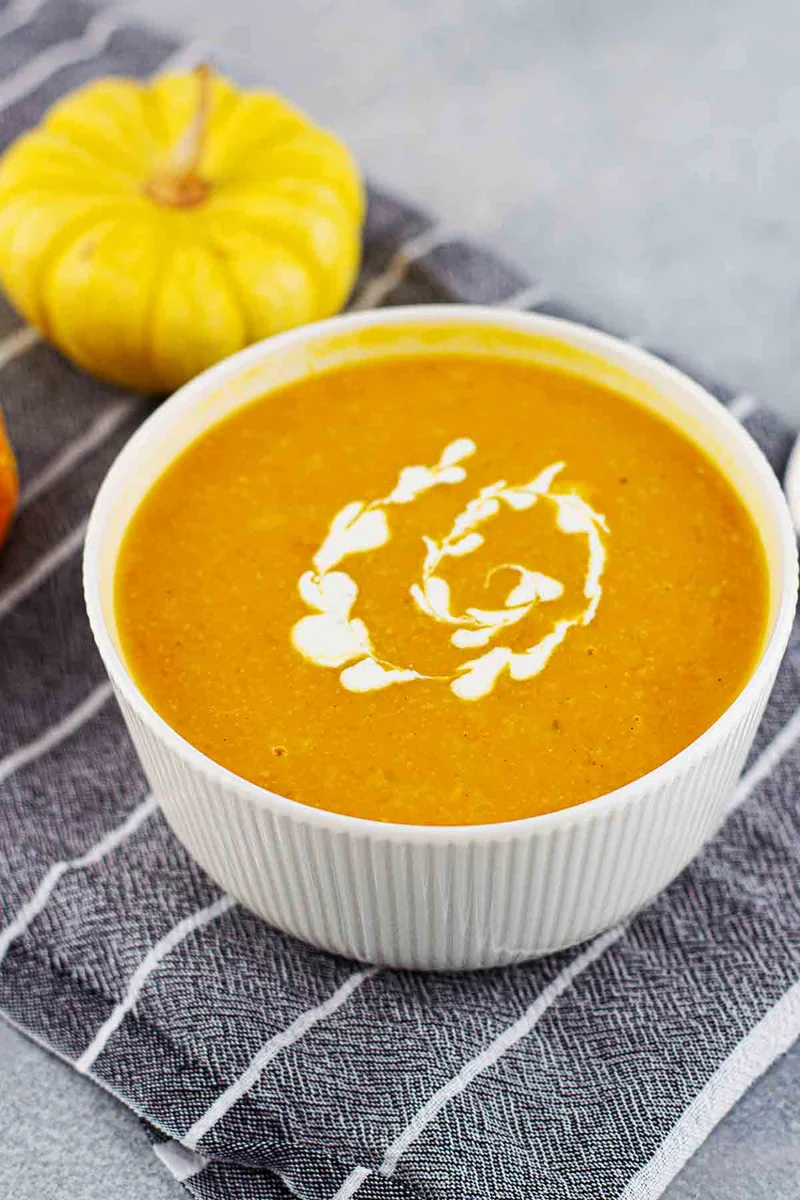
This creamy vegan soup blends pumpkin and cauliflower with warming spices and coconut milk for a smooth, comforting bowl. It is a useful choice when you want a vegetable-led meal with a rich texture and straightforward stovetop cooking.
Ingredients
- 2 heaping cups (about 300 g)pumpkin, peeled and diced
- 2 heaping cups (about 250 g)cauliflower florets
- 1 mediumyellow onion, peeled and diced
- 30 ml (2 tbsp)olive oil, for cooking
- 30 ml (2 tbsp)minced ginger
- 600 ml (2½ cups)vegetable broth
- 360 ml (1½ cups)coconut milk or coconut cream
- 5 ml (1 tsp)fennel seeds
- 5 ml (1 tsp)ground cumin
- 2.5 ml (½ tsp)ground cinnamon
- 5 ml (1 tsp)salt
- 5 ml (1 tsp), optionallemon juice
- to taste, optionalchopped chives, for garnish
Instructions
- 1
Sauté the vegetables
Heat the olive oil in a pan and sauté the diced onion, minced ginger and pumpkin.
- 2
Add broth and spices
Pour in the vegetable broth, then add the cauliflower florets, fennel seeds, cumin, cinnamon and salt. Bring the mixture to a boil.
- 3
Simmer until tender
Reduce the heat to low and simmer for 25–30 minutes, until the vegetables are soft.
- 4
Blend and finish
Use an immersion blender to purée the soup until smooth. Stir in the coconut milk and optional lemon juice, then serve immediately, garnished with chopped chives if desired.
What is creamy vegetable soup?
Creamy vegetable soup is a broad style of blended soup rather than one recipe with a single established origin. This version combines pumpkin and cauliflower with coconut milk, ginger and spices for a smooth, gently sweet and savoury result.
The vegetables simmer in broth until soft, then are puréed before the coconut milk is added. That order gives you control over the texture and keeps the finished soup rich and creamy.
Nutrition and macros by portion
The nutrition label shows one serving as written: 343 calories, 3g protein, 10g carbs, 34g fat.
| Portion | Adjustment | kcal | Protein | Carbs | Fat |
|---|---|---|---|---|---|
| Lighter | Use less coconut milk | 240 kcal | 2g | 7g | 24g |
| This serving | As written | 343 kcal | 3g | 10g | 34g |
| Hungry | Serve a larger bowl | 515 kcal | 5g | 15g | 51g |
The pumpkin and cauliflower supply most of the carbohydrate, while olive oil and coconut milk account for much of the fat. The soup contains relatively little protein per serving; pair it with a protein-rich side such as beans or tofu to make the meal more balanced.
Why pumpkin and cauliflower work
Pumpkin: its mild sweetness and soft flesh give the soup body once blended.
Cauliflower: it adds another tender vegetable to the base and takes on the flavour of the broth and spices.
Coconut milk: it brings the creamy finish; coconut cream can be used for a richer result.
Building the flavour
Ginger: sautéing it with the onion and pumpkin lets its aromatic flavour spread through the base.
Spices: fennel seeds, cumin and cinnamon bring warm, gently sweet notes. Add them with the broth and vegetables so they simmer together.
Getting a smooth texture
Tenderness: the vegetables should be soft after 25–30 minutes at a low simmer. If they are still firm, continue cooking until they are easy to pierce.
Blending: move the immersion blender through the pan until no large vegetable pieces remain. Blend carefully to avoid splashes from the hot soup.
Finishing the soup
Coconut milk: stir it in after blending, as directed, for a creamy finish. If using coconut cream, the soup will be thicker and richer.
Lemon juice: this optional addition gives the finished soup a brighter edge. Stir it in at the end and taste before serving.
Serving ideas
Serve the soup hot, with chopped chives if you like. A slice of bread or a simple salad alongside can make it a more substantial meal.
For a contrasting finish, add a small sprinkle of toasted seeds or a little extra coconut milk at the table.
Recipe notes & tips
- Cut the pumpkin and cauliflower into similar-sized pieces so they become tender at a similar rate.
- Keep the pan at a gentle simmer after bringing the broth to a boil.
- Check the vegetables for softness before blending rather than relying on the timer alone.
- Blend in steady passes and keep the blender head submerged to reduce splashing.
- Add the optional lemon juice gradually and taste the soup before serving.
Variations
- Use coconut cream: swap it for the coconut milk for a thicker, richer soup.
- Add chilli: include a little chilli with the spices for warmth.
- Change the garnish: finish with chopped coriander instead of chives.
- Add toasted seeds: scatter them over each bowl for a crunchy contrast.
- Make it chunkier: blend briefly rather than puréeing the soup completely smooth.
Common mistakes to avoid
- Large vegetable pieces: they may take longer to soften; cut the pumpkin and cauliflower into manageable pieces.
- Boiling too hard: the soup can bubble and splash; lower the heat once it reaches a boil.
- Blending too soon: firm vegetables leave a lumpy texture; simmer until they are soft first.
- Adding coconut milk before blending: follow the method and purée the vegetables before stirring it in.
- Overfilling the pan: hot soup can splash while blending; keep the blender head submerged and work carefully.
How to store
Cool leftovers and refrigerate them in a covered container for up to 3 days. Reheat gently in a saucepan, stirring occasionally; add a splash of broth if the soup has thickened.
Frequently asked questions
Can I use coconut cream instead of coconut milk?
Yes. The recipe allows either, and coconut cream will make the soup thicker and richer.
How do I know when the vegetables are ready to blend?
They should be soft enough to pierce easily. If they are still firm after 30 minutes, keep simmering until tender.
Can I make this soup without an immersion blender?
Yes. Carefully transfer the soup to a countertop blender in batches, following the blender maker’s guidance for hot liquids.
Is the lemon juice essential?
No, it is optional. It adds a brighter note, but the soup can be served without it.
Can I prepare the soup ahead?
Yes. Refrigerate it after cooking and reheat it gently before serving. Stir well as it warms.
Cook it from the original
This recipe comes from joyfuldumplings.com. Their page has the author’s own photos, notes and tips — the best place to cook it from.
Open the recipe on joyfuldumplings.com