
Hake in green sauce
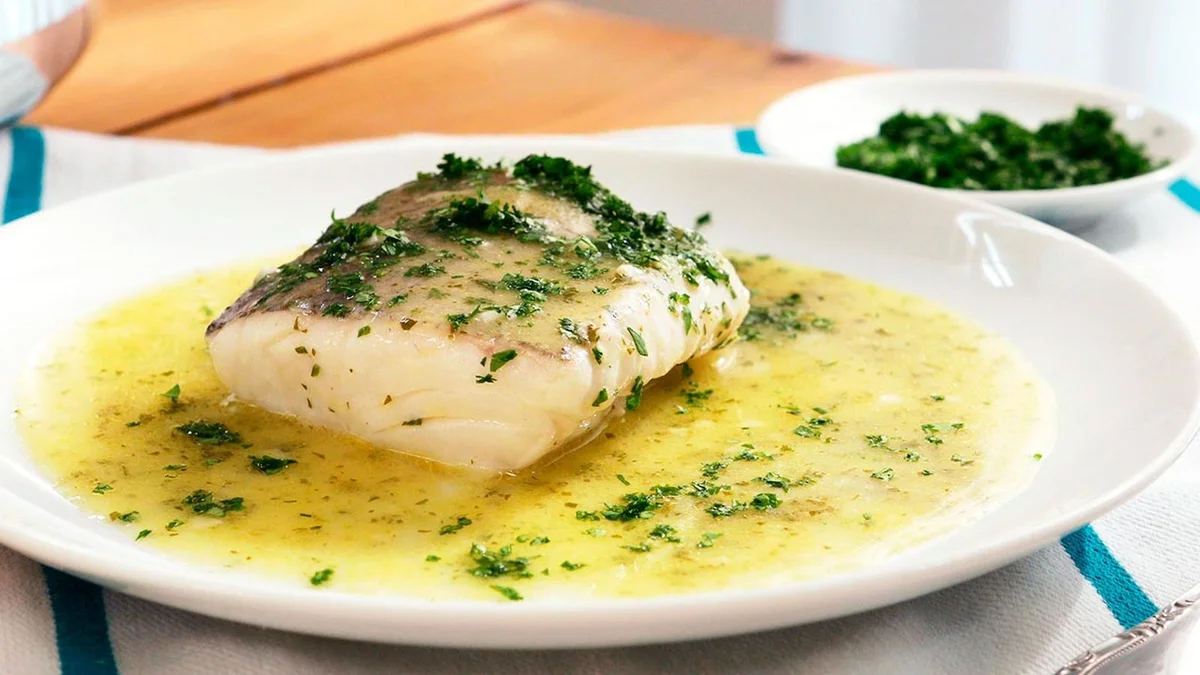
Hake in green sauce is a Basque fish dish of tender hake served in a parsley-flecked sauce thickened with flour and fish stock. It makes a straightforward one-pan meal with a delicate wine and garlic flavour.
Ingredients
- 4hake fillets
- 150 mloil
- 150 mlwhite wine
- 1 tablespoonplain flour
- 5garlic cloves
- to tastechopped parsley
- 200 mlfish stock
- to tastesalt
Instructions
- 1
Start the sauce
Add a little of the oil and the chopped garlic to a shallow casserole. Stir in the flour and cook for a couple of minutes, whisking continuously.
- 2
Add liquids
Pour in the white wine and stir, then add the fish stock while continuing to whisk. Let the sauce simmer for a few minutes until it thickens.
- 3
Add parsley
Stir in the chopped parsley and gently swirl the casserole in a circular motion. Season with salt.
- 4
Add the hake
Season the hake fillets and place them in the sauce with the skin facing upwards. Gently move the casserole.
- 5
Cook and rest
Once the sauce has been simmering for about 5 minutes, turn off the heat, cover the casserole and leave it to rest for another 5 minutes.
- 6
Serve the fish
Serve the hake in green sauce, garnished with chopped parsley.
What is hake in green sauce?
This dish is a Basque preparation of hake cooked in a parsley-green sauce, with garlic, white wine and fish stock forming its base. The flour helps give the liquid enough body to coat the fish.
This version keeps the method in one shallow casserole, so the hake cooks directly in the sauce and is ready to serve with it.
Nutrition and macros by portion
The nutrition label shows one serving as written: 320 calories, 11g protein, 6g carbs, 27g fat.
| Portion | Adjustment | kcal | Protein | Carbs | Fat |
|---|---|---|---|---|---|
| Lighter | Use less oil | 224 kcal | 8g | 4g | 19g |
| This serving | As written | 320 kcal | 11g | 6g | 27g |
| Hungry | Add boiled potatoes | 480 kcal | 17g | 9g | 41g |
The hake provides protein, while the oil supplies most of the fat; the flour and wine contribute some carbohydrates. Serve a fillet with vegetables or potatoes to make a balanced plate, adjusting the side to suit your appetite.
Building the sauce
Garlic first: cook it with a little oil, then stir in the flour and keep whisking for a couple of minutes. This helps distribute the flour through the oil before the liquids go in.
Liquids next: add the wine and then the fish stock while stirring. Simmer until the sauce thickens, rather than adding the hake to a very thin base.
Choosing the fish
Hake fillets: use portions of similar thickness so they cook at a similar rate. Handle them gently as they go into the sauce, especially if they are delicate or skinless.
Fish stock: its flavour carries through the mild sauce, so a stock you enjoy tasting on its own works well here.
Cooking the hake gently
Skin side up: place the seasoned fillets into the sauce this way, then move the casserole gently rather than stirring around the fish. That helps keep the portions intact.
Doneness: the recipe calls for about 5 minutes of simmering followed by 5 minutes of covered resting off the heat. Check that the thickest part is opaque and flakes easily before serving.
Timing and texture
Thickening: simmer the wine and stock for a few minutes before adding the parsley and fish. The sauce should have some body but still be loose enough to move around the casserole.
Resting: keep the lid on for the final 5 minutes off the heat. The residual warmth finishes the fish gently while the sauce settles around it.
What to serve with it
Potatoes: boiled or steamed potatoes make a simple accompaniment and are useful for soaking up the sauce.
Bread: serve crusty bread alongside if you want an easy way to enjoy every bit of the garlicky, parsley-flecked sauce. A plain green vegetable also fits without distracting from the hake.
Recipe notes & tips
- Chop the garlic finely so it disperses evenly through the sauce.
- Whisk steadily as you add the fish stock to help prevent flour lumps.
- Use gentle circular movements to shift the sauce without breaking the hake.
- Keep the casserole covered during the 5-minute resting time.
- Garnish with fresh chopped parsley just before serving.
Variations
- Add peas: stir them into the sauce near the end so they heat through.
- Use clams: add cleaned clams to the casserole and cook until they open.
- Try another fish: use firm white-fish fillets and check their doneness carefully.
- Add chilli: include a little finely chopped chilli with the garlic for gentle heat.
- Serve with asparagus: add cooked asparagus on the side for a fresh accompaniment.
Common mistakes to avoid
- Adding stock too quickly: pour it in while whisking so the flour blends smoothly.
- Leaving the garlic unattended: stir it with the oil and avoid letting it brown too much.
- Stirring the fish: move the casserole gently instead to keep the fillets whole.
- Boiling hard: keep the sauce at a gentle simmer to cook the hake more evenly.
- Skipping the rest: cover the casserole and leave it off the heat for the full 5 minutes.
How to store
Refrigerate leftovers in a covered container and use within 1–2 days. Reheat gently in a covered pan over low heat until hot, adding a splash of water or stock if the sauce has thickened; avoid prolonged heating, which can dry out the hake.
Frequently asked questions
Can I use frozen hake?
Yes, thaw it fully and pat it dry before seasoning and adding it to the sauce. Excess water can thin the sauce.
How do I know when the hake is cooked?
The flesh should be opaque and flake easily at its thickest point. Follow the recipe's simmer and covered-rest timing, then check before serving.
Can I make the sauce ahead?
You can prepare the sauce base ahead, then reheat it gently and cook the hake in it shortly before serving. Add the parsley as directed so its flavour stays fresh.
What can I use instead of hake?
A similar firm white fish can work. Choose fillets of comparable thickness and check them for doneness, as cooking time may vary.
Can I reheat leftovers?
Yes. Warm them gently in a covered pan over low heat until hot, taking care not to cook the fish for too long.
Cook it from the original
This recipe comes from cocinatis.com. Their page has the author’s own photos, notes and tips — the best place to cook it from.
Open the recipe on cocinatis.com