
Crispy Baked Yuca Fries (Gluten-Free, Vegan)
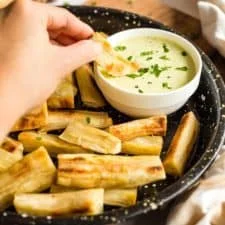
These baked yuca fries are a crisp-edged alternative to potato wedges, made by boiling cassava until tender and then roasting it with oil. Serve them as a side, snack or appetiser with a dipping sauce.
Ingredients
- 1.9 litresfiltered water
- 10 mlsalt
- 2 large (about 950 ml cut into pieces)yuca
- 60 mlsunflower oil
- to tastesalt and pepper
Instructions
- 1
Boil the water
Put the water and 10 ml of salt in a large saucepan and bring to the boil.
- 2
Peel the yuca
While the water heats, trim the ends from the yuca and peel away the brown skin with a vegetable peeler.
- 3
Cut into wedges
Cut the peeled yuca into even, finger-sized wedges, like potato wedges.
- 4
Boil until tender
Add the wedges to the boiling water and cook for about 15 minutes, until a fork passes through them easily.
- 5
Heat the oven
Preheat the oven to 220°C and line a large baking tray with baking parchment.
- 6
Dry the wedges
Lift the cooked yuca from the water and pat it dry with kitchen paper so excess moisture does not make it soggy in the oven.
- 7
Oil and arrange
Toss the yuca with the sunflower oil, or spray it with cooking spray, then arrange it in a single layer on the lined tray, leaving space between the pieces.
- 8
Bake until crisp
Bake for 40 minutes, turning the wedges every 10 minutes, until golden and crisp.
- 9
Season and serve
Season with salt and pepper, or another seasoning of your choice, and serve straight away.
What are yuca fries?
Yuca, also known as cassava, is a starchy root used in cuisines across Latin America and the Caribbean. These fries take inspiration from fried yuca but finish in the oven instead.
Boiling first softens the dense root, while drying and roasting help the outside become golden. The result is a substantial, crisp-edged alternative to potato wedges.
Nutrition and macros by portion
The nutrition label shows one serving as written: 289 calories, 6g protein, 34g carbs, 14g fat.
| Portion | Adjustment | kcal | Protein | Carbs | Fat |
|---|---|---|---|---|---|
| Lighter | Use less sunflower oil | 202 kcal | 4g | 24g | 10g |
| This serving | As written | 289 kcal | 6g | 34g | 14g |
| Hungry | Serve a larger portion | 434 kcal | 9g | 51g | 21g |
Yuca provides most of the carbohydrates, while sunflower oil contributes most of the fat; the dish contains a modest amount of protein. Balance the plate with a generous serving of vegetables and a protein-rich accompaniment such as beans.
Choosing and preparing yuca
Fresh yuca: Choose firm roots and peel away the thick brown skin before cutting. Keep the wedges as similar in size as possible so they cook evenly.
Water and salt: The salted water seasons the yuca as it cooks. Use a large saucepan so the wedges can be submerged.
The key to crispness
Dry thoroughly: Pat the boiled wedges dry before adding the oil. Leftover water can steam the yuca on the tray rather than letting its surface roast.
Leave space: Spread the pieces out in a single layer with room around each one. If they are crowded, bake them in batches rather than piling them together.
Check the texture
After boiling: The wedges are ready for the tray when a fork can pierce them easily, after about 15 minutes. Avoid boiling them until they break apart.
After baking: Look for golden surfaces and crisp edges after 40 minutes, turning every 10 minutes. The centres should remain tender.
Timing and tray space
The water can heat while you peel and cut the yuca, making good use of the preparation time. Start heating the oven while the yuca boils.
A single uncrowded layer is important for even browning. Use a second tray if needed, and rotate trays if your oven browns unevenly.
Dips and serving ideas
Serve the fries hot with garlic aioli, Sriracha sauce or a cilantro-lime crema. A fresh, tangy dip contrasts well with the yuca's starchy texture.
They also work alongside a simple salad or vegetables for a more rounded plate. Season the fries just before serving so the salt stays on the surface.
Recipe notes & tips
- Cut the wedges to a similar thickness so they finish cooking at the same time.
- Use a sturdy vegetable peeler and trim the ends before peeling.
- Pat each wedge dry rather than leaving moisture on the surface.
- Turn the wedges every 10 minutes for more even browning.
- Serve immediately for the crispiest texture.
Variations
- Garlic seasoning: Toss the baked fries with garlic powder just before serving.
- Smoky paprika: Add paprika after baking for a warm, smoky flavour.
- Herb finish: Scatter chopped fresh coriander over the fries before serving.
- Chilli heat: Add chilli flakes to the finished wedges for a little heat.
- Citrus lift: Serve with lime wedges for a bright, tangy finish.
Common mistakes to avoid
- Uneven wedges: Pieces of different sizes cook at different rates; cut them to a similar thickness.
- Wet yuca: Excess moisture can leave the fries soft; pat the boiled wedges dry before oiling.
- Crowded tray: Overlapping wedges trap steam; arrange them in one layer with space between.
- Skipping the turns: One side may brown more than the other; turn the wedges every 10 minutes.
- Overboiling: Yuca that falls apart is harder to handle; stop boiling when a fork pierces it easily.
How to store
Store leftovers in an airtight container in the fridge for up to 3 days. Reheat on a baking tray in a hot oven until warmed through and crisp; they may be softer than when freshly baked.
Frequently asked questions
What is yuca?
Yuca, or cassava, is a starchy root vegetable. It is different from yucca, the ornamental plant.
Can I use frozen yuca?
Yes, if it is sold peeled and prepared for cooking. Follow the packet directions for boiling, then pat it dry before baking.
How do I know when the yuca is tender?
After about 15 minutes of boiling, a fork should pass into a wedge easily. The pieces should still hold their shape.
Why are my yuca fries not crisp?
They may have been damp after boiling or crowded on the tray. Dry them thoroughly and leave space between the wedges.
Can I prepare them ahead?
You can boil and dry the wedges ahead, then refrigerate them until ready to oil and bake. For the best texture, bake just before serving.
Cook it from the original
This recipe comes from dishbydish.net. Their page has the author’s own photos, notes and tips — the best place to cook it from.
Open the recipe on dishbydish.net