
Sardines in escabeche
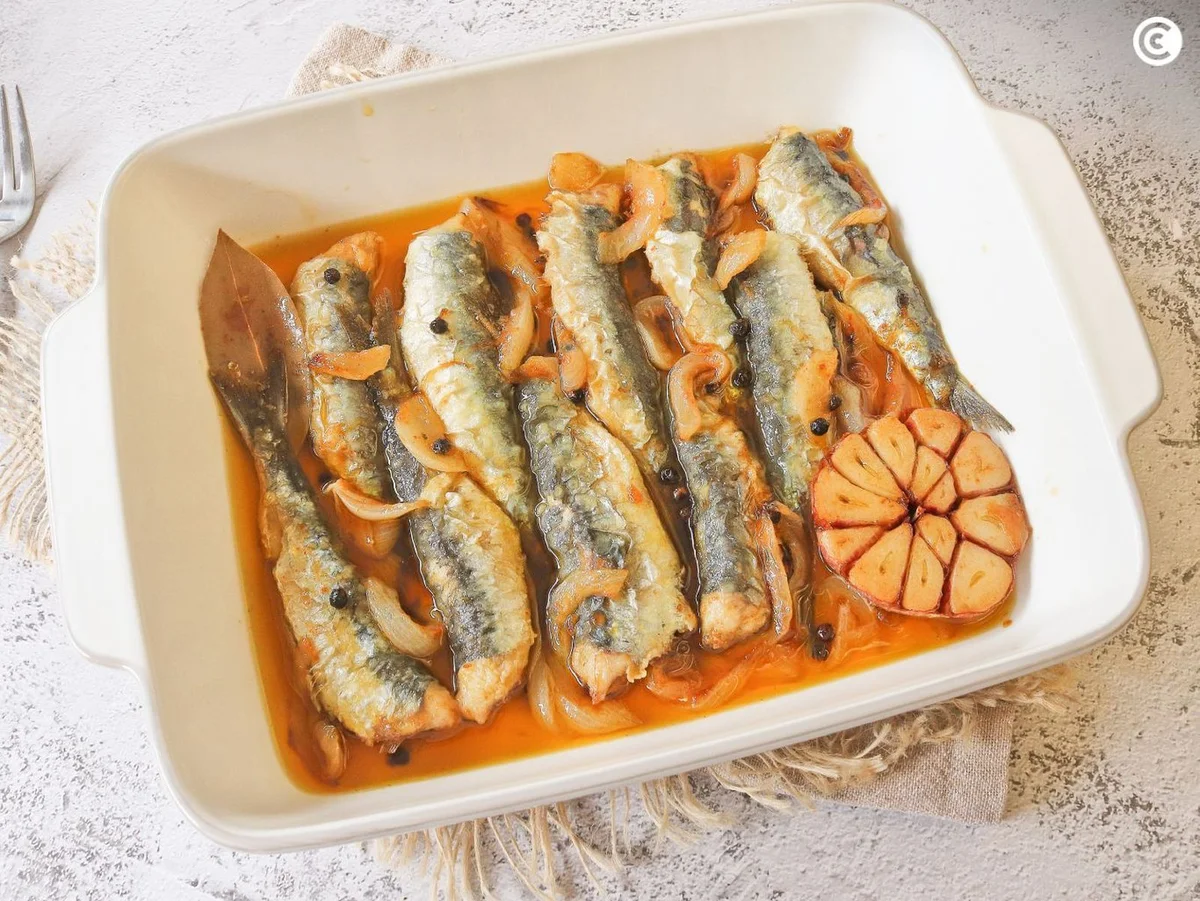
Sardines in escabeche are fried sardines preserved in a fragrant mixture of olive oil, wine and vinegar. This traditional Spanish dish is worth making ahead: a night in the fridge lets the fish take on the sharp, savoury flavours.
Ingredients
- 500 gsardines
- to tastesalt
- 75 mlplain flour
- 200 mlextra-virgin olive oil
- 1spring onion
- 1/2 headgarlic
- 1 teaspoonblack peppercorns
- 2bay leaves
- 1/2 teaspoon (optional)paprika
- 1/2 teaspoon (optional)dried herbs
- 100 mlwhite wine
- 75 mlwhite vinegar
Instructions
- 1
Clean the sardines
If the fishmonger has not already prepared them, remove the heads from the 500 g of fresh sardines. Run a finger gently along each backbone to remove the entrails, then rinse the fish under cold running water to clean the insides and remove the scales.
- 2
Season and flour
Pat the cleaned sardines dry with kitchen paper and season both sides with salt. Put 75 g of flour on a plate and lightly coat each sardine.
- 3
Fry the sardines
Heat 150 ml of extra-virgin olive oil in a frying pan. Fry the sardines in batches over a medium-high heat, taking care not to overcook them or they may dry out. Set them aside on a plate as they are ready.
- 4
Soften the aromatics
Strain the frying oil, clean the pan and return the filtered oil to it. Slice the spring onion into strips and halve the garlic head without removing its skin. Add both to the pan with 1 teaspoon of whole black peppercorns and 2 bay leaves. Cook over a medium-low heat until the garlic softens and the onion is well softened.
- 5
Add wine and vinegar
Stir in 1/2 teaspoon of paprika and, if using, 1/2 teaspoon of dried herbs such as thyme or oregano. Pour in 100 ml of white wine and raise the heat to let the alcohol evaporate, then add 75 ml of white wine vinegar.
- 6
Simmer in escabeche
Return the sardines to the pan and cover them with a further 50 ml of extra-virgin olive oil. Turn them gently so they take on the escabeche, cover the pan and cook over a low heat for about 5 minutes. Transfer everything to a lidded container and refrigerate for at least 24 hours before serving so the fish can absorb the flavours.
- 7
Serve the sardines
Serve and enjoy the homemade sardines in escabeche.
What are sardines in escabeche?
Escabeche is a Spanish preparation in which cooked food is dressed or preserved in a tangy mixture that commonly includes vinegar, oil and aromatics. It has roots in older preservation traditions, and sardines are a natural match for its punchy, savoury flavours.
This version lightly flours and fries the fish before adding onion, garlic, peppercorns and bay. The overnight rest is central to the dish: it gives the sardines time to absorb the vinegar and the seasoned oil.
Nutrition and macros by portion
The nutrition label shows one serving as written: 800 calories, 24g protein, 20g carbs, 62g fat.
| Portion | Adjustment | kcal | Protein | Carbs | Fat |
|---|---|---|---|---|---|
| Lighter | Use less olive oil | 560 kcal | 17g | 14g | 43g |
| This serving | As written | 800 kcal | 24g | 20g | 62g |
| Hungry | Add bread or potatoes | 1200 kcal | 36g | 30g | 93g |
The sardines provide most of the protein, while the flour contributes carbohydrates. Olive oil carries much of the fat, with smaller amounts also coming from the fish. Serve a portion with salad or vegetables and bread or potatoes to make a more balanced plate.
Prepare the fish carefully
Cleaning: Remove the heads and entrails if your fishmonger has not done so, then rinse the sardines well. Dry them thoroughly before seasoning so the flour forms a light coating rather than a damp paste.
Flouring: Coat the fish lightly, shaking off any excess. The thin layer helps the sardines brown in the pan without creating a heavy crust.
Build the flavour gently
Aromatics: Cook the spring onion and halved garlic over a medium-low heat with the peppercorns and bay leaves. Give them time to soften; the garlic should become tender without scorching.
Acidity: Let the wine heat after adding it, then stir in the vinegar. Paprika and dried herbs are optional, so you can leave them out or choose herbs such as thyme or oregano.
Fry without drying
Batch cooking: Fry the sardines in batches over a medium-high heat, leaving space in the pan. This helps them fry rather than steam.
Doneness: The recipe does not specify an exact frying time, so keep an eye on the fish and take each batch out once cooked through. They will have a further 5 minutes in the escabeche, so avoid leaving them in the frying pan too long.
Give the escabeche time
Gentle simmer: Once the fish is back in the pan, turn it carefully so the seasoned liquid reaches all sides. Keep the heat low and cook covered for about 5 minutes.
Resting: Transfer the fish and aromatics to a lidded container and chill for at least 24 hours. This resting time is part of the recipe, not just a storage step, as it allows the flavours to mingle.
Serve it simply
Sardines in escabeche work well as part of a tapas spread or as a main course with bread to mop up the sharp, aromatic oil. A simple salad or plain boiled potatoes make useful accompaniments without competing with the fish.
The recipe does not specify a serving temperature. Keep the container chilled and take out only the portion you plan to serve.
Recipe notes & tips
- Ask the fishmonger to clean the sardines if you would rather not prepare them at home.
- Dry the sardines well before adding the flour so it coats them evenly.
- Fry in batches to avoid crowding the pan.
- Use a low heat when softening the garlic and onion so they do not catch.
- Turn the sardines gently in the escabeche to keep them intact.
- Allow at least 24 hours in the fridge for the flavours to develop.
Variations
- Leave out the paprika: Skip it for a milder, less spiced escabeche.
- Choose spicy paprika: Use hot paprika instead of sweet for a warmer flavour.
- Use thyme or oregano: Add either dried herb for a different aromatic note.
- Serve with potatoes: Add plain boiled potatoes alongside the sardines for a heartier meal.
Common mistakes to avoid
- Wet fish: Pat the sardines dry before flouring so the coating does not turn pasty.
- Too much flour: Coat the fish lightly and shake off excess to avoid a thick, heavy layer.
- Overcrowded pan: Fry the sardines in batches so they brown instead of steaming.
- Scorched garlic: Keep the heat medium-low while the garlic and onion soften.
- Rough handling: Turn the fish gently in the escabeche to help keep the sardines whole.
- Skipping the rest: Chill the dish for at least 24 hours before eating so the flavours have time to develop.
How to store
Transfer the sardines and escabeche to a clean, covered container and refrigerate promptly. Keep chilled and use within 2 days; serve cold or reheat gently until hot, taking care not to break up the fish.
Frequently asked questions
Can I ask the fishmonger to clean the sardines?
Yes. If they are already cleaned, rinse and dry them before seasoning and flouring.
How long should the sardines rest before serving?
The recipe recommends at least 24 hours in the fridge so the fish can absorb the escabeche.
Can I leave out the paprika and dried herbs?
Yes. Both are optional, and the sardines will still have flavour from the onion, garlic, peppercorns, bay, wine and vinegar.
What can I serve with sardines in escabeche?
Try bread, a simple salad or plain boiled potatoes. These pair well with the tangy, seasoned oil.
Can I make this with sardines that are already cleaned?
Yes. Skip the cleaning instructions, then rinse and dry the fish before continuing with the seasoning.
Cook it from the original
This recipe comes from cocinatis.com. Their page has the author’s own photos, notes and tips — the best place to cook it from.
Open the recipe on cocinatis.com