
Cheese-filled plantain balls
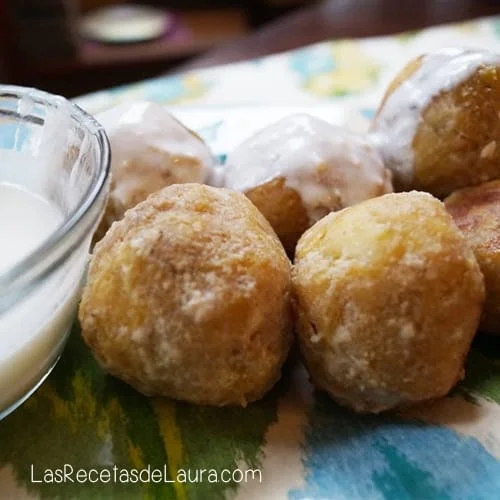
These baked plantain balls have a soft, mildly sweet centre wrapped around fresh cheese, with a savoury cracker and herb coating. They make a comforting snack or light meal, finished with natural yoghurt.
Ingredients
- 1plantain
- to tastesaltine crackers
- 1 pinchmarjoram
- to tastefresh cheese
- 1 tablespoonground cinnamon
- to tastemilk
- to tastenatural yoghurt
Instructions
- 1
Boil the plantain
Cook the plantain in water for around 20 minutes.
- 2
Mash and cool
Remove the peel, mash the plantain with a fork and leave it to cool.
- 3
Prepare the coating
While the plantain cools, blend the crackers with a little marjoram and a pinch of cinnamon until finely powdered.
- 4
Fill the balls
Take a small amount of mashed plantain and roll it into a ball. Make a hollow in the centre, add fresh cheese, then close the plantain around it so the cheese is enclosed.
- 5
Coat and bake
Roll the balls in the powdered crackers. Once they are all coated, bake at 180°C (350°F).
- 6
Add the milk
Bake the balls for around 30 minutes. As they can turn a little dry without added fat, transfer them to a frying pan and add a little milk.
- 7
Turn to hydrate
Let the milk evaporate, turning the balls so they are moistened on all sides.
- 8
Serve with yoghurt
Spoon natural yoghurt over the top or serve it alongside, then enjoy.
What are cheese-filled plantain balls?
Plantain balls are a familiar home-style snack in several Latin American and Caribbean cuisines, where ripe or cooked plantain is shaped around a filling. The exact version varies by household, and this one pairs sweet-leaning plantain with fresh cheese.
Plantain base: boiling softens the fruit so it can be mashed and shaped. A finely ground cracker coating adds a savoury outer layer, while yoghurt gives the finished balls a cool, tangy contrast.
Nutrition and macros by portion
The nutrition label shows one serving as written: 300 calories, 10g protein, 53g carbs, 7g fat.
| Portion | Adjustment | kcal | Protein | Carbs | Fat |
|---|---|---|---|---|---|
| Lighter | Use less cracker coating | 210 kcal | 7g | 37g | 5g |
| This serving | As written | 300 kcal | 10g | 53g | 7g |
| Hungry | Make a larger portion | 450 kcal | 15g | 80g | 11g |
Most of the carbohydrates come from the plantain and cracker coating, while the cheese contributes protein and fat; the yoghurt and milk add smaller amounts. Serve a couple of balls with vegetables or salad to add freshness and make the plate more balanced.
Choosing the ingredients
Plantain: use a plantain that softens enough to mash after boiling; very firm fruit may need a little more cooking time. Let it cool before shaping so it is easier to handle.
Cheese and coating: fresh cheese gives a mild, creamy centre. Blend the crackers finely so the coating clings evenly, and use the marjoram and cinnamon sparingly for a balanced flavour.
Shaping and filling
Portion: take a little mashed plantain at a time and make a deep hollow without splitting the sides. Add enough cheese to fill the centre, but leave a border of plantain all around it.
Seal: pinch the opening closed and roll the ball gently between your hands. If the mash sticks, dampen your hands lightly rather than adding extra ingredients.
Getting an even coating
Fine crumbs: blend the crackers until they resemble a fine powder, which helps them cover the curved surface. Roll each ball in the crumbs and press lightly so the coating stays in place.
Spacing: arrange the coated balls with room around them on the baking tray. Crowding can make the outside less evenly baked.
Baking and finishing
Oven: bake at 180°C (350°F) for around 30 minutes, as directed. The recipe does not specify a browning cue, so check that the coating is set and handle the balls carefully when turning them.
Milk: the recipe uses a little milk in a pan after baking to help moisten the balls. Turn them as the milk evaporates so each side gets some contact with the liquid.
Serving ideas
Yoghurt: serve natural yoghurt on top or alongside for a cool, tangy finish. Add it just before serving so the coating does not soften while the balls stand.
On the plate: pair them with a simple salad or cooked vegetables for a more rounded meal. They can also be served as a snack on their own.
Recipe notes & tips
- Let the plantain cool before shaping so the filling is easier to enclose.
- Mash the plantain thoroughly to avoid lumps that can make the balls split.
- Make the cheese pieces small enough to fit fully inside each ball.
- Grind the crackers finely for a more even coating.
- Turn the balls gently in the pan so the coating stays intact while they absorb the milk.
Variations
- Herb coating: add a little more marjoram to the cracker crumbs for a stronger savoury note.
- Cinnamon balance: use a light dusting in the coating if you prefer the plantain's sweetness to stand out.
- Cheese centre: try another mild cheese that melts well, keeping it enclosed in the plantain.
- Yoghurt finish: serve the yoghurt in a separate bowl for dipping.
- Smaller bites: shape the mixture into smaller balls and check them earlier during baking.
Common mistakes to avoid
- Plantain still hot: it can be difficult to shape; let it cool before forming the balls.
- Thin plantain shell: the cheese may leak out; leave an even layer of mash around the filling.
- Large cheese pieces: they can prevent the ball from sealing; cut the cheese into smaller pieces.
- Coarse crumbs: they may not coat the balls evenly; blend the crackers to a fine powder.
- Skipping the milk finish: the baked balls may be dry; add a little milk in the pan and turn them as it evaporates.
How to store
Refrigerate leftovers in a covered container and eat within 2 days. Reheat gently in a frying pan with a splash of milk, turning carefully; add the yoghurt after reheating.
Frequently asked questions
Can I prepare the plantain mash ahead?
Yes. Cook and mash the plantain, cool it, then cover and refrigerate it until you are ready to shape the balls.
How do I stop the cheese leaking out?
Use a modest amount of cheese and seal the plantain completely around it, checking for cracks before coating.
Can I use a different cheese?
Yes, a mild cheese can work in place of fresh cheese. Choose one that is easy to portion and keep it fully enclosed.
Why are the balls dry?
The recipe notes that baking without added fat can leave them a little dry. The final pan step with a little milk is intended to moisten the outside.
Can I make these without an oven?
The method calls for baking, followed by a brief pan step. It does not give an alternative method for cooking the coated balls entirely on the hob.
Cook it from the original
This recipe comes from lasrecetasdelaura.com. Their page has the author’s own photos, notes and tips — the best place to cook it from.
Open the recipe on lasrecetasdelaura.com