
Vegan hake marinera-style
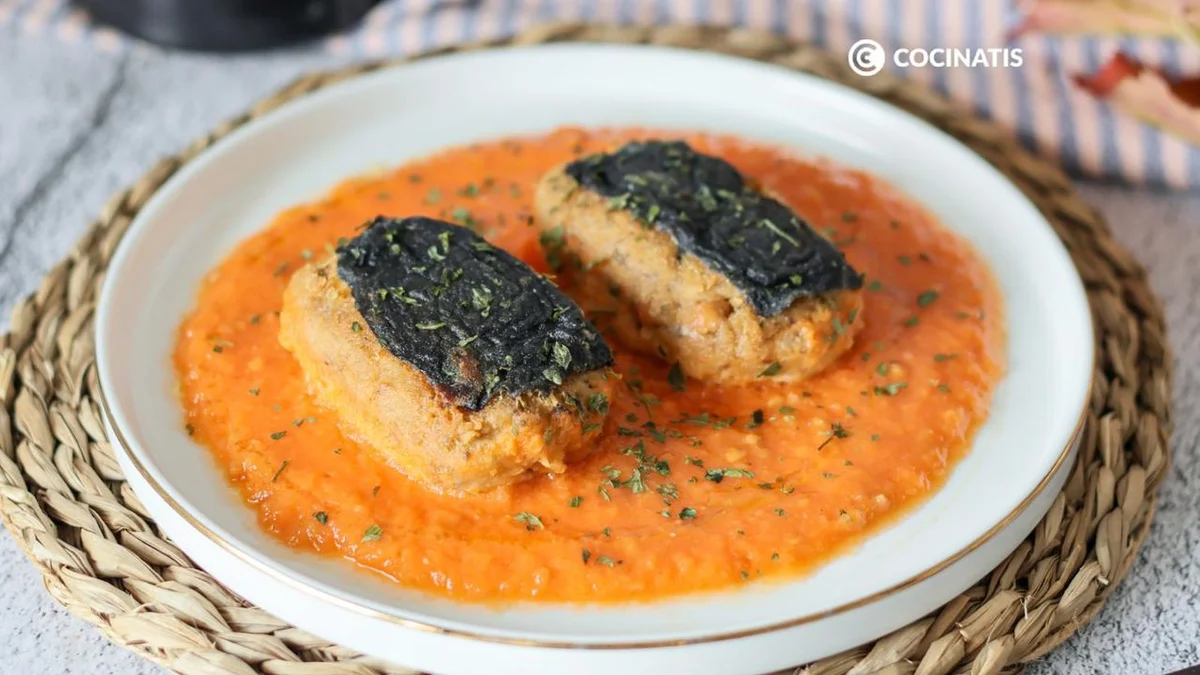
This vegan take on hake marinera pairs firm, nori-seasoned pea-based fillets with a smooth tomato and white wine sauce. It takes a little planning for the fillets to hydrate, but the sauce comes together while they cook.
Ingredients
- 60 gpeas
- 30 gcornflour
- 20 mllemon juice
- 60 mlsoy sauce
- 20 gnori flakes
- to tastenori sheet
- 2tomatoes
- ½onion
- 2 clovesgarlic
- 40 mlwhite wine
- 1 tablespoonparsley
Instructions
- 1
Hydrate the peas
Heat water with the soy sauce and nori flakes. When it boils, turn off the heat and add the textured peas and lemon juice. Leave to hydrate for 1 hour, or preferably overnight.
- 2
Blend the mixture
Strain the liquid and set it aside. Drain the textured peas, pressing out the excess liquid, then blend them with the cornflour.
- 3
Shape and fry
Divide the mixture into portions and shape them into rectangles. Dampen a piece of nori and stick it to one side of each fillet. Coat the fillets in cornflour and fry them.
- 4
Cook the sauce
Sauté the chopped onion and grated garlic for 5 minutes. Add the grated tomatoes and cook for 5 minutes, then pour in the wine. Let the alcohol evaporate, add 2 ladlefuls of the reserved liquid, lower the heat and cook for 15 minutes.
- 5
Blend the sauce
Blend the sauce until it is smoother.
- 6
Serve the dish
Serve the vegan marinera-style hake with the sauce and add a little parsley.
What is hake marinera?
Merluza a la marinera is a Spanish seafood dish, commonly served with a savoury sauce built around tomato, garlic, onion and wine. This plant-based version recreates the sea-inspired flavour with nori and uses a pea-based mixture for the fillets.
The method reserves the nori-seasoned soaking liquid for the sauce, tying the fillets and tomato base together. A final blend makes the sauce smooth enough to spoon over the shaped pieces.
Nutrition and macros by portion
The nutrition label shows one serving as written: 167 calories, 9g protein, 29g carbs, 1g fat.
| Portion | Adjustment | kcal | Protein | Carbs | Fat |
|---|---|---|---|---|---|
| Lighter | Serve with extra vegetables | 117 kcal | 6g | 20g | 0g |
| This serving | As written | 167 kcal | 9g | 29g | 1g |
| Hungry | Make larger fillets | 251 kcal | 13g | 43g | 1g |
The listed nutrition is 167 kcal per serving, with 8.8 g protein, 28.5 g carbohydrates and 0.7 g fat. The peas and cornflour provide most of the carbohydrates, while the peas contribute protein; the soy sauce and frying oil can also affect the final figures. Serve with vegetables or salad to round out the plate.
The pea-based fillets
Hydration: the mixture needs at least 1 hour to soften and take on the soy, nori and lemon flavours; leaving it overnight is the preferred option. The method calls this ingredient textured peas, though the listed ingredient is peas.
Shaping: pressing out excess liquid before blending helps the mixture hold together. Divide it evenly, then form rectangular portions to suggest hake fillets.
Nori and seasoning
Nori flakes: they flavour the soaking liquid, which is later used in the sauce. The recipe also uses a piece of nori on each fillet, giving that side a distinct seaweed layer.
Soy and lemon: soy sauce seasons the mixture, while lemon juice adds brightness. Keep the reserved liquid rather than discarding it, as it becomes part of the marinera sauce.
Getting the sauce right
Tomato base: cook the onion and garlic for 5 minutes before adding the grated tomatoes, then cook those for another 5 minutes. This gives the vegetables time to soften before the wine goes in.
Wine and stock: allow the alcohol to evaporate before adding 2 ladlefuls of the reserved liquid. Keep the heat low and cook for 15 minutes so the sauce can develop.
Frying and texture
Coating: dampen the nori so it adheres to the shaped fillet, then coat the pieces in cornflour as directed. Fry until the outside is set and lightly coloured; the recipe does not specify a temperature or frying time.
Handling: shape the portions gently and turn them carefully during frying. If the mixture feels loose after blending, check that it has been pressed well to remove excess soaking liquid.
Timing and preparation
Plan ahead: the hydration stage takes 1 hour at minimum, and overnight is recommended. The listed total time is unknown, so allow extra time for shaping, frying and finishing the sauce.
Work in stages: hydrate the mixture first, then prepare the sauce while shaping and frying the fillets. Keep the reserved liquid to hand for adding to the pan.
Serving ideas
Serve the fillets with plenty of the blended sauce and finish with parsley. The tomato and wine base also works well alongside boiled potatoes or bread to catch the sauce.
For a fuller plate, add a simple green salad or cooked vegetables. These accompaniments are optional and are not included in the recipe ingredients.
Recipe notes & tips
- For the best flavour, leave the pea mixture to hydrate overnight if you can.
- Press the hydrated mixture well before blending so the fillets are easier to shape.
- Reserve the nori-seasoned liquid after straining; it is used in the sauce.
- Grate the tomatoes so they blend smoothly into the onion and garlic base.
- Dampen the nori before attaching it to the fillets so it sticks in place.
- Blend the sauce after simmering for a finer texture.
Variations
- Add extra parsley: scatter more over the dish just before serving.
- Make it more citrusy: serve with a little extra lemon juice at the table.
- Keep the sauce rustic: skip blending it for a chunkier finish.
- Serve with potatoes: add boiled potatoes alongside the fillets.
- Add vegetables: serve with greens or a simple salad for a fuller plate.
Common mistakes to avoid
- Skipping the soak: the textured mixture needs time to hydrate; allow at least 1 hour.
- Discarding the liquid: strain it into a bowl and save it for the sauce.
- Leaving excess water in the peas: press them well before blending so the mixture is easier to shape.
- Adding wine and liquid together: let the alcohol evaporate before adding 2 ladlefuls of reserved liquid.
- Cooking the sauce too quickly: lower the heat and give it the full 15 minutes.
- Using dry nori: dampen it first so it adheres to the fillet.
How to store
Refrigerate leftovers in a covered container and use within 2–3 days. Reheat gently in a pan until piping hot, adding a splash of water if the sauce has thickened; store the fillets and sauce together or separately.
Frequently asked questions
Can I hydrate the mixture overnight?
Yes. The method recommends overnight hydration for the best result; the minimum stated time is 1 hour.
What does the recipe mean by textured peas?
The method refers to textured peas, while the ingredient list names peas. Follow the product intended by the original recipe if you have access to it, as the listed ingredient and method are not fully aligned.
Can I make the sauce without blending it?
Yes. Blending is included to make the sauce finer, but you can leave it unblended for a more rustic texture.
Why is the soaking liquid saved?
It carries flavour from the soy sauce and nori and is added to the tomato sauce. The method calls for 2 ladlefuls.
How do I know when the sauce is ready?
After adding the reserved liquid, simmer it over low heat for 15 minutes, then blend it until smooth.
Can I prepare the fillets ahead?
You can hydrate the mixture ahead of time, preferably overnight. For the best texture, shape and fry the fillets close to serving.
Cook it from the original
This recipe comes from cocinatis.com. Their page has the author’s own photos, notes and tips — the best place to cook it from.
Open the recipe on cocinatis.com