
Chinese Eggplant Stir-Fry with TVP
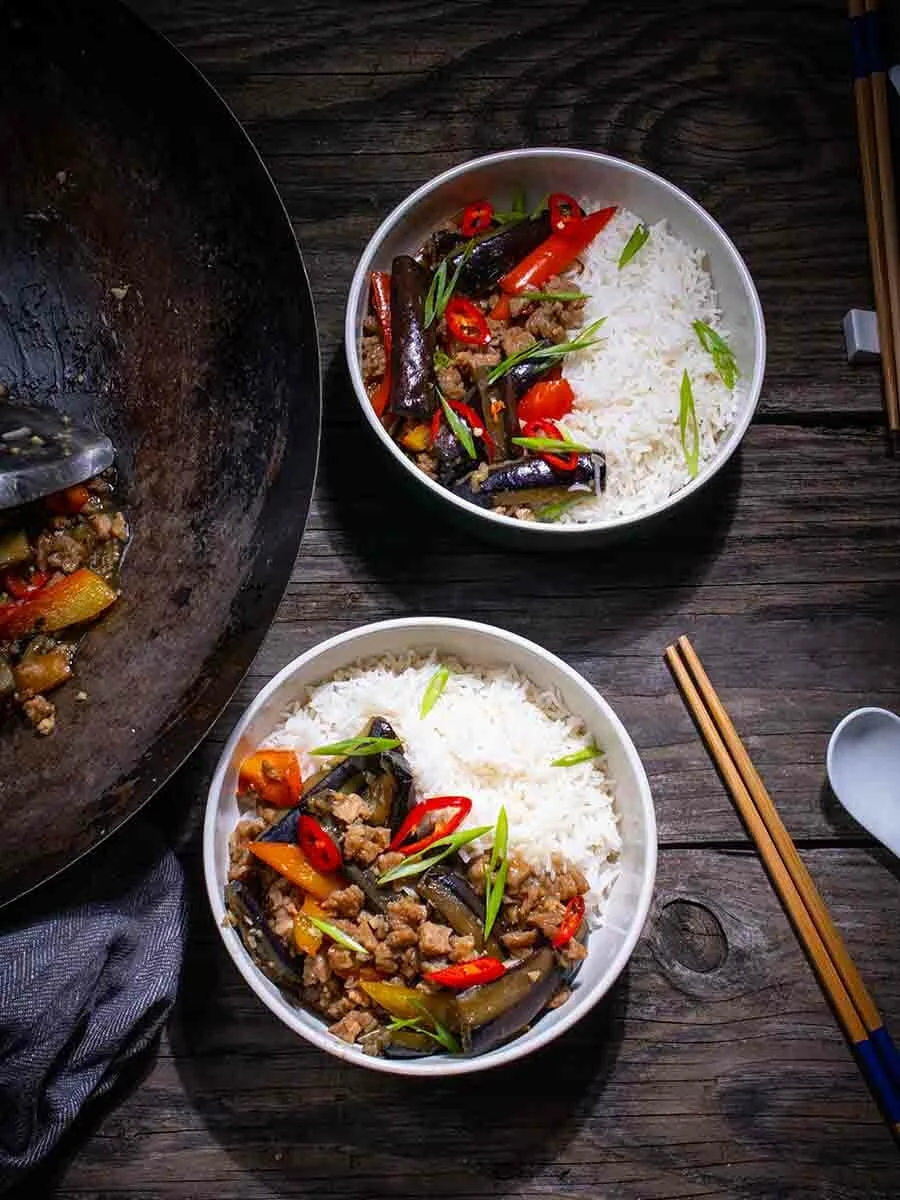
This vegan Chinese-style eggplant stir-fry pairs silky, lightly charred aubergine with TVP in a savoury, sweet-and-tangy sauce. It comes together in about 25 minutes and is satisfying served with rice.
Ingredients
- 30 ml (2 Tbsp)Cooking oil
- 425 g (15 oz)Chinese eggplant
- 1 (about 170 g / 6 oz), cut into stripsBell pepper
- 240 ml (1 cup)Textured vegetable protein (TVP)
- 15 ml (1 Tbsp)Minced garlic
- 5 ml (1 tsp)Minced ginger
- 480 ml (2 cups)Low-sodium vegetable broth
- 15 ml (1 Tbsp)Light soy sauce
- 15 ml (1 Tbsp)Dark soy sauce
- 30 ml (2 Tbsp)Vegan oyster sauce
- 15 ml (1 Tbsp), or 5 ml (1 tsp) sugarMaple syrup
- 30 ml (2 Tbsp)Chinese cooking wine
- 5 ml (1 tsp)Vegan fish sauce
- 5 ml (1 tsp)Cornflour
- 10 ml (2 tsp)Water
- 2 sprigs, thinly slicedSpring onions
- 1, thinly sliced (optional)Red chilli
Instructions
- 1
Mix the sauce
In a bowl, combine the vegetable broth, light and dark soy sauces, Chinese cooking wine, vegan oyster sauce, maple syrup and vegan fish sauce. Mix thoroughly and set aside.
- 2
Prepare the eggplant
Wash and dry the eggplants, then trim off the tops and ends. Peel half of the skin in alternating strips, like a zebra pattern, and cut the eggplants into sticks about 5 × 5 × 1.3 cm (2 × 2 × 0.5 inches).
- 3
Char the eggplant
Heat 15 ml (1 Tbsp) of cooking oil in a wok or skillet over medium-high heat. Sauté the eggplant until lightly charred on the surface, then remove it and set it aside.
- 4
Fry the aromatics
Wipe any food residue from the wok or skillet with paper towels. Heat the remaining 15 ml (1 Tbsp) of oil over medium heat, add the garlic and ginger, and stir-fry for 10 seconds.
- 5
Add the sauce
Pour the prepared sauce mixture into the wok or skillet.
- 6
Simmer everything
Return the eggplant to the pan and add the bell pepper and TVP. Make sure everything is immersed in the sauce, then simmer over low heat for 10 minutes.
- 7
Thicken the sauce
Mix the cornflour with 10 ml (2 tsp) water to make a slurry. Push the ingredients to one side and stir in the slurry a little at a time until the sauce reaches your preferred consistency.
- 8
Garnish and serve
Serve with rice and garnish with sliced spring onion and red chilli.
What is fish-fragrant eggplant?
Fish-fragrant eggplant refers to a well-known Chinese, specifically Sichuan-style, flavour profile; the name describes the seasoning style rather than requiring fish. This vegan version combines Chinese eggplant and TVP with soy sauces, cooking wine, chilli and savoury vegan sauces.
The method builds flavour by lightly charring the eggplant first, then simmering it with the sauce. TVP makes the dish more substantial, while the bell pepper brings another tender-crisp element.
Nutrition and macros by portion
The nutrition label shows one serving as written: 276 calories, 18g protein, 28g carbs, 10g fat.
| Portion | Adjustment | kcal | Protein | Carbs | Fat |
|---|---|---|---|---|---|
| Lighter | Use less oil | 193 kcal | 13g | 20g | 7g |
| This serving | As written | 276 kcal | 18g | 28g | 10g |
| Hungry | Serve with extra rice | 414 kcal | 27g | 42g | 15g |
The main carbohydrate sources are the TVP, sauces and any rice served alongside; the cooking oil and sauces contribute most of the fat. TVP provides much of the protein. For a balanced plate, serve a measured portion with rice and add a side of vegetables.
Choosing the ingredients
Chinese eggplant: Its long shape makes it easy to cut into even sticks. Peeling alternating strips leaves some skin in place while helping the pieces take on the sauce.
TVP: Textured vegetable protein absorbs the cooking liquid as it simmers. The recipe gives its amount by volume, so measure it as stated rather than substituting an assumed weight.
Sauces: Light and dark soy sauce, vegan oyster sauce and vegan fish sauce each contribute to the layered seasoning. Use low-sodium broth as listed, and keep in mind that the sauces also bring saltiness.
Get the eggplant ready
Cut the eggplant into evenly sized sticks so the pieces cook at a similar pace. The recipe’s 2 × 2 × 0.5-inch pieces are about 5 × 5 × 1.3 cm.
Pat the eggplant dry after washing. This helps it char in the hot pan rather than releasing extra surface water straight away.
Build flavour in the pan
Char the eggplant in the first tablespoon of oil and remove it before adding the aromatics. That gives the surface some colour without keeping the garlic and ginger in the pan for too long.
After wiping out any residue, fry the garlic and ginger for just 10 seconds before adding the sauce. Have the sauce mixed and ready, so the aromatics do not sit in the hot pan and burn.
Simmer to the right texture
Keep the pan at a low simmer for the full 10 minutes, with the eggplant, pepper and TVP immersed in the sauce. The eggplant should become tender and the TVP should take on the seasoned liquid.
Stir the cornflour slurry before using it, then add it gradually. Stop when the sauce lightly coats the ingredients; adding it all at once can make the sauce thicker than you want.
Serve it with rice
Serve the stir-fry with rice, as suggested in the recipe, so there is something mild to soak up the savoury sauce. Add sliced spring onion and optional red chilli just before serving.
The chilli is optional, so leave it out for a gentler dish or serve it at the table for people who want extra heat.
Recipe notes & tips
- Mix all the sauce ingredients before heating the pan so they are ready to pour in.
- Cut the eggplant into similar-sized sticks to help it cook evenly.
- Keep the garlic and ginger stir-fry brief; the sauce goes in after 10 seconds.
- Use a low simmer for the 10-minute cooking stage rather than letting the sauce boil hard.
- Add the cornflour slurry gradually and stop when the sauce is as thick as you like.
- Taste the sauce before serving, keeping in mind that the soy sauces and vegan sauces are already seasoned.
Variations
- More heat: Add extra sliced red chilli with the garnish.
- Milder finish: Omit the optional red chilli.
- A touch sweeter: Use the listed maple syrup, or swap it for 5 ml (1 tsp) sugar.
- Different pepper: Use another colour of bell pepper, cut into strips.
- Rice pairing: Serve with your preferred cooked rice to catch the sauce.
Common mistakes to avoid
- Crowding the pan: The eggplant may steam instead of charring; cook it in batches if needed.
- Wet eggplant: Excess surface water gets in the way of browning; dry it well after washing.
- Burnt aromatics: Garlic can catch quickly; stir-fry it with the ginger for only 10 seconds before adding the sauce.
- A hard boil: The sauce can reduce too quickly; keep it at a low simmer for the 10-minute cook.
- Lumpy thickener: Cornflour can clump if added dry; first mix it with the measured water, then stir it in gradually.
How to store
Refrigerate leftovers in a covered container and use within 3 days. Reheat in a pan over a low heat until piping hot, adding a splash of water if the sauce has thickened; cooked rice is best stored separately.
Frequently asked questions
Can I make this without a wok?
Yes. Use a skillet large enough to hold the eggplant, TVP and sauce, and follow the same steps.
Do I need to peel all the eggplant?
No. The recipe calls for peeling half of the skin in alternating strips, leaving the rest in place.
How do I know the eggplant is ready?
It should have light charring after the first sauté and be tender after simmering in the sauce for 10 minutes.
Can I leave out the chilli?
Yes. The chilli is optional and is used as a garnish, so you can omit it.
What should I serve with this stir-fry?
Serve it with rice, as the recipe suggests. Rice works well with the sauce and makes the meal more filling.
When should I add the cornflour slurry?
Add it after the 10-minute simmer. Stir it in bit by bit until the sauce reaches your preferred thickness.
Cook it from the original
This recipe comes from joyfuldumplings.com. Their page has the author’s own photos, notes and tips — the best place to cook it from.
Open the recipe on joyfuldumplings.com