
Duck Fat Egg Toastie
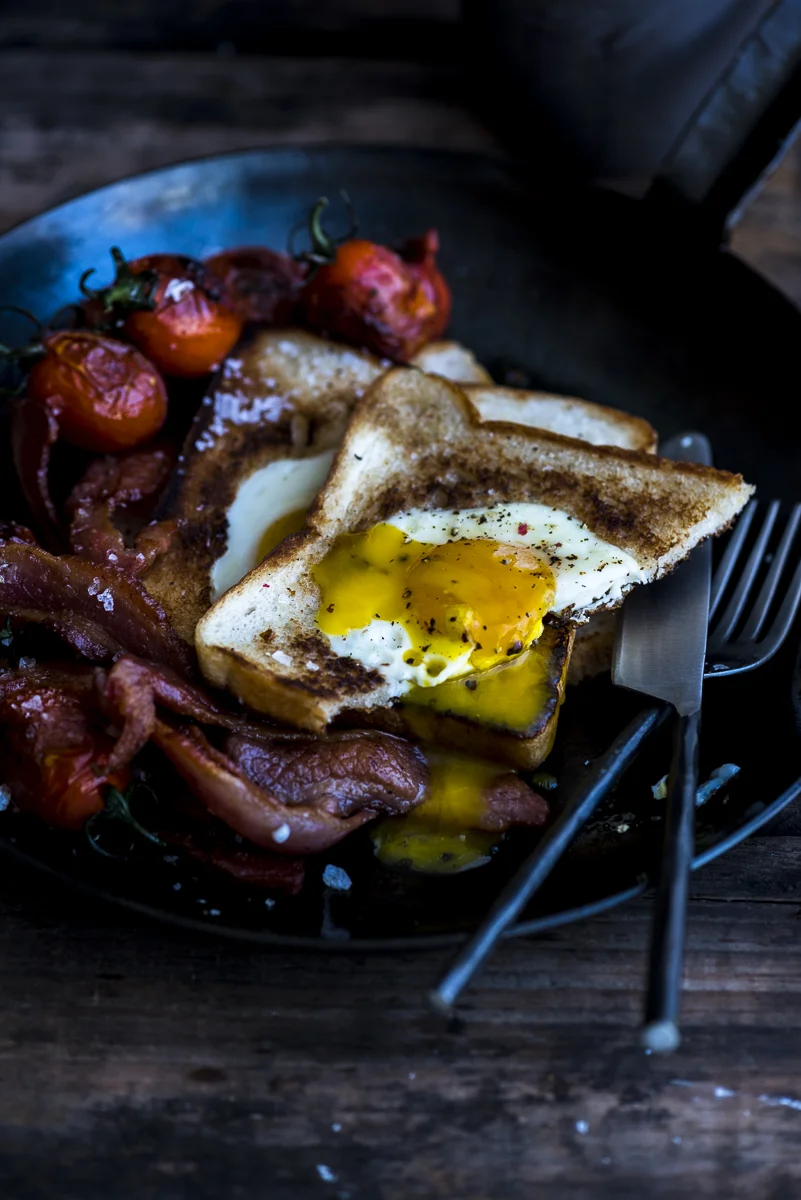
This egg toastie is a slice of bread fried in duck fat with an egg cooked in its centre. It makes a quick, crisp-edged breakfast or snack, with a soft or firm yolk depending on how long you leave it covered.
Ingredients
- 1 slicebread, not too thinly sliced
- 2 heaped teaspoonsduck fat
- 1egg
- to seasonsalt and pepper
Instructions
- 1
Cut a hole
Use a cookie cutter to remove a circle from the middle of the slice of bread.
- 2
Heat the fat
Warm one teaspoon of duck fat in a frying pan.
- 3
Fry the first side
Cook the bread over a medium-high heat for about 2–3 minutes, until the underside is golden and crisp.
- 4
Add the egg
Turn the bread over, add the second teaspoon of duck fat and gently crack the egg into the hole.
- 5
Cover the pan
Fry for another 2–3 minutes, then cover the pan and take it off the heat.
- 6
Finish cooking
Leave the egg in the covered pan to cook in the residual heat until it is done to your liking.
- 7
Season and serve
Season with salt and pepper, then serve immediately.
What is egg toast?
Egg toast is bread cooked with an egg set in a cut-out centre, a simple style of pan-fried breakfast often called egg-in-a-hole. This version uses duck fat for frying and keeps the method straightforward: crisp the bread first, then finish the egg under a lid.
The recipe says it makes one toastie, while the supplied serving count is four. The quantities and method below make one toastie, so check the intended yield before scaling or logging portions.
Nutrition and macros by portion
The nutrition label shows one serving as written: 70 calories, 2g protein, 3g carbs, 5g fat.
| Portion | Adjustment | kcal | Protein | Carbs | Fat |
|---|---|---|---|---|---|
| Lighter | Use less duck fat | 49 kcal | 2g | 2g | 4g |
| This serving | As written | 70 kcal | 2g | 3g | 5g |
| Hungry | Make a larger portion | 105 kcal | 3g | 5g | 8g |
Bread provides most of the carbohydrate, while the duck fat supplies most of the fat and the egg contributes protein as well as fat. The supplied yield is inconsistent: the recipe makes one toastie but lists four servings, so these estimates divide the ingredients across four; a practical way to balance the plate is to serve a portion with fresh fruit or vegetables.
Choosing the bread and fat
Bread: A slice that is not too thin gives the egg a stable rim and is less likely to tear when you turn it. A cookie cutter makes a neat opening, but leave enough bread around it to hold the egg.
Duck fat: Use one teaspoon for the first side and one for the second, as directed. It coats the pan and gives the bread a crisp, savoury finish.
Getting the egg into the hole
The opening needs to be large enough to hold the egg without leaving very little bread around it. Turn the slice carefully, then crack the egg gently into the centre so the yolk is less likely to break.
If some egg white runs over the bread, that is fine; let it set in the pan rather than trying to move the egg around.
Crisp bread, cooked egg
First side: Give the bread about 2–3 minutes over medium-high heat. Look for a golden, crisp underside before turning it.
Egg: After another 2–3 minutes, the covered pan continues cooking the egg off the heat. Leave it covered until the white and yolk reach your preferred doneness; the recipe does not specify a precise final time.
Timing and pan control
The listed frying time is about 4–6 minutes, followed by an untimed covered rest. Keep an eye on the first side, since pans and hob settings vary and the bread should brown rather than scorch.
Take the pan off the heat when you cover it, as the method relies on the heat already in the pan to finish cooking the egg.
Serving ideas
Serve the toastie straight away while the bread is crisp. A simple side of fresh fruit or sliced tomatoes can add freshness alongside the rich bread and egg.
For a more substantial plate, pair it with a salad or cooked vegetables; keep any added seasoning separate so the toastie can be seasoned to taste.
Recipe notes & tips
- Choose a slice thick enough to keep its shape when turned.
- Cut the hole before heating the pan so the bread is ready to fry.
- Let the first side turn golden and crisp before flipping.
- Crack the egg gently into the opening to help keep the yolk intact.
- Use the covered rest to cook the egg to your preferred doneness.
- Serve promptly so the bread stays crisp.
Variations
- Add herbs: Finish with chopped chives or parsley if you have them.
- Add chilli: Sprinkle over chilli flakes with the salt and pepper.
- Use another fat: Fry in butter or a neutral cooking oil instead of duck fat.
- Add cheese: Scatter a little grated cheese over the bread near the end of frying.
- Make it peppery: Add extra freshly ground black pepper just before serving.
Common mistakes to avoid
- Using very thin bread: It can tear or become soggy; choose a sturdier slice.
- Cutting too large a hole: It leaves little bread to support the egg; use a smaller cutter.
- Flipping too soon: The bread may not be crisp enough to turn cleanly; wait for a golden underside.
- Cooking over excessive heat: The bread can brown before the egg sets; watch the pan and adjust the heat.
- Skipping the covered rest: The egg may remain undercooked; leave the covered pan off the heat until it reaches your preferred doneness.
How to store
This toastie is best eaten immediately, as the bread loses its crispness after storage. If needed, refrigerate leftovers in a covered container and reheat in a frying pan until hot; the egg may cook further during reheating.
Frequently asked questions
How big should I cut the hole?
Make it large enough to hold the egg while leaving a substantial rim of bread. A cookie cutter gives a tidy opening, but the recipe does not specify a size.
Can I use a different fat?
Yes. Butter or a neutral cooking oil can be used instead, though the flavour will differ from duck fat.
How do I keep the yolk runny?
Use the shortest covered rest that cooks the egg to your liking, and check it before leaving it longer. The exact time depends on the pan and how much residual heat it holds.
Why does the recipe say four servings if it makes one toastie?
The supplied information gives both a four-serving count and a yield of one toastie. The method and quantities make one toastie, so confirm the intended serving count if preparing it for a group.
Can I make the toastie ahead?
It is best cooked just before serving so the bread stays crisp and the egg is freshly cooked.
Cook it from the original
This recipe comes from heinstirred.com. Their page has the author’s own photos, notes and tips — the best place to cook it from.
Open the recipe on heinstirred.com