
Stir-fried Egg Vegetable Noodles
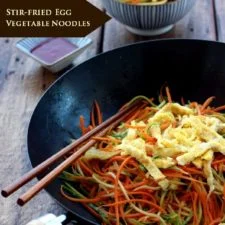
These quick stir-fried vegetable noodles pair thin ribbons of carrot and courgette with strips of omelette and a savoury splash of soy sauce. They make a colourful, speedy meal when you want plenty of vegetables without conventional noodles.
Ingredients
- 4 largecarrots, sliced into thin noodles with a julienne peeler
- 3 largecourgettes, sliced into thin noodles with a julienne peeler
- 4eggs, beaten
- 1 tablespoonsoy sauce
- to tastesalt
- a littleoil
- optionalSriracha
Instructions
- 1
Make vegetable noodles
Use a julienne peeler to cut the carrots and courgettes into thin noodles.
- 2
Cook the omelette
Beat the eggs, then cook them as an omelette in a large pan or wok. Flip it once the top has set.
- 3
Slice the egg
When the omelette is cooked through, take it out of the pan or wok and cut it into thin strips.
- 4
Stir-fry vegetables
In the same pan or wok, heat a little oil and stir-fry the vegetable noodles for about 10 minutes.
- 5
Add soy sauce
When the vegetables have softened, pour over the soy sauce and mix well.
- 6
Divide and serve
Split the noodles into four equal portions, top with the sliced omelette and serve with Sriracha.
What are vegetable noodles?
Vegetable noodles are thin strips of vegetables used in place of grain-based noodles. This version combines carrots and courgettes with egg, making a quick stir-fry with colour and a mix of tender textures.
The recipe is described as grain-free and takes inspiration from simple wok cooking: prepare the ingredients, cook them briefly and season at the end. Its separate omelette adds a substantial, savoury topping without complicating the method.
Nutrition and macros by portion
The nutrition label shows one serving as written: 180 calories, 10g protein, 19g carbs, 7g fat.
| Portion | Adjustment | kcal | Protein | Carbs | Fat |
|---|---|---|---|---|---|
| Lighter | Use less oil | 126 kcal | 7g | 13g | 5g |
| This serving | As written | 180 kcal | 10g | 19g | 7g |
| Hungry | Add another egg | 270 kcal | 15g | 29g | 11g |
Carrots and courgettes provide most of the carbohydrate, while the eggs supply most of the protein and some of the fat; the oil adds further fat. For a more balanced plate, pair a portion with edamame or another protein-rich side.
Choosing and cutting the vegetables
Carrots: Choose firm carrots and peel them into thin, even strands so they soften at a similar pace. A julienne peeler is specified; work carefully as the pieces become shorter near the core.
Courgettes: Use large courgettes and make the strands roughly similar in thickness to the carrots. Avoid pressing hard with the peeler, which can leave the ribbons uneven.
Cook the egg separately
Omelette: Beating the eggs first helps them cook evenly in the pan. Flip once the top has set, then cook until the omelette is done before removing it.
Strips: Let the omelette rest just long enough to handle safely, then slice it thinly. Keeping it aside while the vegetables cook prevents it from breaking up during the stir-fry.
Get the stir-fry texture right
Pan space: A large pan or wok gives the vegetable strands room to soften rather than pile up. If the pan is crowded, cook the vegetables in batches and combine them before adding the soy sauce.
Doneness: The method allows about 10 minutes of stir-frying; check that the strands have softened while still holding their shape. Courgette can release moisture, so keep the pan hot and stir regularly.
Season at the end
Soy sauce: Add it once the vegetables are softened, then mix thoroughly so the seasoning reaches the strands. Taste before adding salt, since soy sauce is already salty.
Sriracha: Serve it alongside rather than mixing it into the pan, so each person can choose how much heat to add.
Serve it as a complete meal
Divide the noodles evenly between four portions and arrange the omelette strips on top. The dish is best served straight away, while the vegetables are warm and the egg is tender.
For a more substantial plate, serve it with a side of edamame or another protein-rich accompaniment. A simple cucumber salad can add a cool contrast.
Recipe notes & tips
- Cut the vegetables into strands of similar thickness so they soften evenly.
- Have the omelette strips ready before you start stir-frying the vegetables.
- Use a large pan or wok to give the vegetable noodles room to cook.
- Taste the noodles before adding salt, as the soy sauce contributes saltiness.
- Keep Sriracha on the side so everyone can adjust the heat.
Variations
- Add garlic: Stir finely chopped garlic into the hot oil briefly before adding the vegetable noodles.
- Add ginger: Grate fresh ginger into the pan for a warm, aromatic note.
- Use tamari: Swap the soy sauce for tamari if that suits your needs.
- Add sesame: Finish with toasted sesame seeds for a nutty garnish.
- Make it spicy: Stir Sriracha through the noodles just before serving.
Common mistakes to avoid
- Uneven strands: Cut the carrots and courgettes to similar thickness so they cook at a similar rate.
- Crowded pan: The vegetables may soften unevenly; stir-fry them in batches if needed.
- Overcooked courgette: Check the noodles as they cook and stop once softened, before they lose their shape.
- Salting too early: Soy sauce is salty, so taste the finished vegetables before adding extra salt.
- Breaking up the omelette: Cook it through and slice it separately rather than stirring it into the pan.
How to store
Refrigerate leftovers in an airtight container and eat within 2 days. Reheat in a pan over medium heat until piping hot, stirring gently; the vegetable strands may soften further.
Frequently asked questions
Can I make the vegetable noodles without a julienne peeler?
Yes. Use a spiraliser, or carefully cut the vegetables into thin strips with a knife.
Can I prepare the vegetables ahead?
You can cut them a few hours ahead and keep them covered in the fridge. They are best stir-fried soon after cutting, as courgettes can release moisture.
How do I know when the vegetable noodles are done?
After about 10 minutes, check that the strands have softened but still hold together. Cooking time can vary with their thickness and the heat of the pan.
Can I use a different pan instead of a wok?
Yes. Use the largest frying pan you have so the vegetable noodles have enough room to cook.
Is Sriracha essential?
No, it is optional and served alongside the dish. Leave it out or let each person add it to taste.
Cook it from the original
This recipe comes from dishbydish.net. Their page has the author’s own photos, notes and tips — the best place to cook it from.
Open the recipe on dishbydish.net