
White Wine Poached Pears Wrapped in Dough
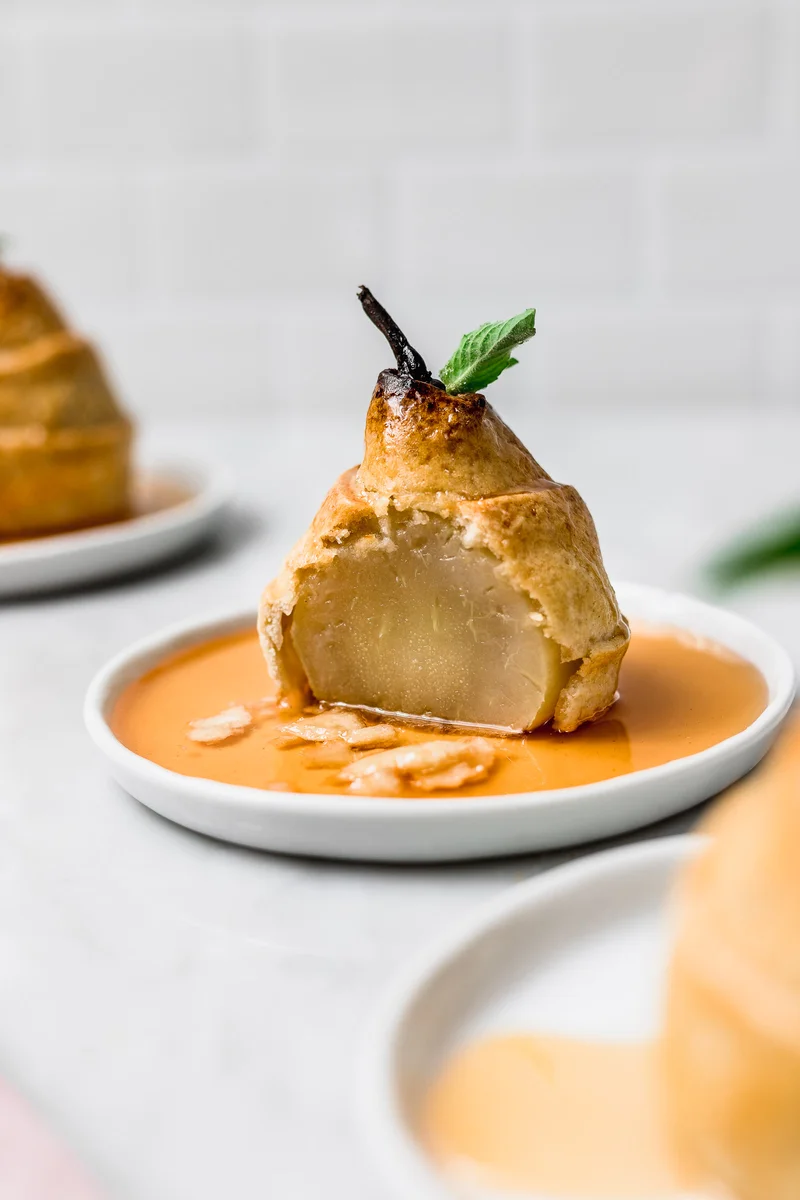
Pears are gently poached with white wine and warming spices, then wrapped in crisp strips of dough and baked until golden. Serve them warm or cold with the reduced poaching syrup for a striking dessert.
Ingredients
- 6pears
- 1 bottlewhite wine, such as Sauvignon Blanc
- 2cinnamon sticks
- 6cloves
- 200 ggranulated sugar
- zest from 1lemon
- optional, to tasteadditional aromatics such as star anise, orange zest or vanilla
- 250 gplain flour
- 2 tspsalt
- 5 tbspwater
- 4 tbspvegetable oil
- 4 tbspgranulated sugar
- 1egg
- 1 tbspwater
Instructions
- 1
Poach the pears
Peel the pears and put them in a large pan with the white wine, cinnamon sticks, cloves, 200 g sugar and lemon zest. Add enough water to cover the pears.
- 2
Check for softness
Cover the pan and cook over a medium heat until the pears are soft. Depending on their ripeness, this can take 10–40 minutes; check every 10 minutes. They are ready when a knife slides in easily.
- 3
Reduce the syrup
Lift the pears out of the pan. Boil the poaching liquid over a high heat, uncovered, and stop when bubbles begin to rise along the sides of the pan. Watch it closely so it does not burn. Strain the liquid through a colander or sieve and leave it to cool completely; it will become syrupy as it cools. If it is too thick, warm it gently, including in a microwave, and stir in a little water.
- 4
Mix the dough
Mix the flour, salt, 5 tbsp water, oil and 4 tbsp sugar until fully combined. Wrap the dough and leave it to rest in the fridge for 30 minutes.
- 5
Roll and cut
Roll out a portion of dough to about 5 mm thick. If using a pasta roller attachment, pass it through at thickness 1, then repeat at thicknesses 2 and 3. Alternatively, roll it by hand to 2 mm thick. Cut the dough into 5 mm strips and repeat with the remaining dough.
- 6
Wrap the pears
Once the pears have cooled to room temperature, wind the dough strips around them. Beat the egg with 1 tbsp water and brush the mixture over the dough.
- 7
Bake until golden
Bake in an oven preheated to 180°C for 1 hour to 1 hour 20 minutes, or until the dough is golden.
- 8
Serve with syrup
Serve the pears warm or cold with the sauce.
What are wine-poached pears?
Poached pears are fruit cooked gently in a flavoured liquid until tender. This version uses white wine, sugar, cinnamon, cloves and lemon, then wraps each pear in dough and bakes it.
The method brings together soft, aromatic fruit and a crisp pastry-like coating. The reduced poaching liquid is served alongside as a syrup.
Nutrition and macros by portion
The nutrition label shows one serving as written: 450 calories, 6g protein, 88g carbs, 8g fat.
| Portion | Adjustment | kcal | Protein | Carbs | Fat |
|---|---|---|---|---|---|
| Lighter | Use less syrup | 315 kcal | 4g | 62g | 6g |
| This serving | As written | 450 kcal | 6g | 88g | 8g |
| Hungry | Serve a larger pear | 675 kcal | 9g | 132g | 12g |
The pears and both amounts of sugar provide most of the carbohydrates, while the flour adds further carbs and a little protein. Vegetable oil and egg contribute most of the fat, and the flour dough also supplies the salt. Balance a pear with plain yoghurt and keep the syrup portion modest if you want a less sweet plate.
Choosing the pears and aromatics
Pears: Use fruit that holds its shape during cooking; very ripe pears may soften quickly, so check them early and often.
Aromatics: Cinnamon, cloves and lemon zest flavour the poaching liquid. Star anise, orange zest or vanilla are suggested optional additions, while water can replace the wine.
Poach gently and check often
The recipe gives a broad poaching time of 10–40 minutes because ripeness affects how quickly the pears soften. Keep the pan covered and test every 10 minutes with a knife.
Lift out the pears as soon as the knife enters easily. This helps them keep their shape for wrapping.
Getting the dough ready
Rest: Chilling the mixed dough for 30 minutes gives it time to firm up before rolling.
Thickness: The recipe describes rolling to about 5 mm before using the pasta roller, or rolling by hand to 2 mm. Cut the finished dough into 5 mm strips for wrapping.
Reduce the liquid carefully
Boil the strained poaching liquid uncovered until bubbles start to rise along the sides of the pan, then stop cooking. Keep a close eye on it, as the recipe warns that it can burn.
Let the liquid cool completely so it can turn syrupy. If it becomes too thick, warm it and add a little water.
Look for golden dough
Bake at 180°C for 1 hour to 1 hour 20 minutes, using the colour of the dough as the doneness cue. The recipe does not specify a particular baking tray or lining.
The pears should be at room temperature before wrapping, and the egg-and-water mixture is brushed over the dough before baking.
Serving the pears
These pears can be served warm or cold, with the reserved syrup spooned alongside. For a simple dessert plate, pair one pear with a spoonful of plain yoghurt or a small scoop of ice cream.
Recipe notes & tips
- Check the pears every 10 minutes because their ripeness affects the poaching time.
- Make sure the pears are at room temperature before wrapping them in dough.
- Keep the poaching liquid under close watch as it boils down so it does not burn.
- Let the syrup cool fully before judging its final thickness.
- Brush the dough evenly with the egg-and-water mixture for an even finish.
Variations
- Water poaching: Replace the wine with enough water to cover the pears and keep the aromatics.
- Star anise: Add it to the poaching liquid alongside the cinnamon and cloves.
- Orange zest: Use it as an aromatic addition in place of, or alongside, the lemon zest.
- Vanilla: Add vanilla to the poaching liquid for a softer, sweet aroma.
- Serve chilled: Cool the wrapped pears and serve them cold with the syrup.
Common mistakes to avoid
- Over-poaching: The pears can become too soft to wrap; test them every 10 minutes and remove them when a knife slides in easily.
- Burning the syrup: The liquid can catch as it reduces; watch for bubbles rising at the sides and stop at that point.
- Wrapping warm pears: Warm fruit can make the dough harder to handle; let the pears cool to room temperature first.
- Rolling unevenly: Thick patches may bake differently from thin ones; aim for an even sheet before cutting strips.
- Skipping the rest: Unrested dough may be less manageable; chill it for the full 30 minutes.
How to store
Store leftover pears and syrup in separate airtight containers in the fridge and use within 3 days. Reheat the pears gently in the oven or microwave, or serve them cold; warm the syrup separately if needed.
Frequently asked questions
Can I poach the pears without wine?
Yes. The recipe suggests using water instead, with the aromatics, and adding enough to cover the pears.
How do I know when the pears are ready?
A knife should slide into a pear easily. Begin checking after 10 minutes and repeat every 10 minutes, as the total time can range from 10 to 40 minutes.
Can I make the syrup ahead?
Yes. Strain the poaching liquid and let it cool completely so it thickens. If it becomes too thick, warm it and add a little water.
Do I need a pasta roller?
No. The recipe gives a hand-rolling alternative: roll the dough to 2 mm, then cut it into 5 mm strips.
Can these pears be served cold?
Yes. The recipe says to serve them either warm or cold, with the sauce.
How long should I bake them?
Bake at 180°C for 1 hour to 1 hour 20 minutes, until the dough is golden.
Cook it from the original
This recipe comes from cravingsjournal.com. Their page has the author’s own photos, notes and tips — the best place to cook it from.
Open the recipe on cravingsjournal.com